


Arg Polyclonal Antibody
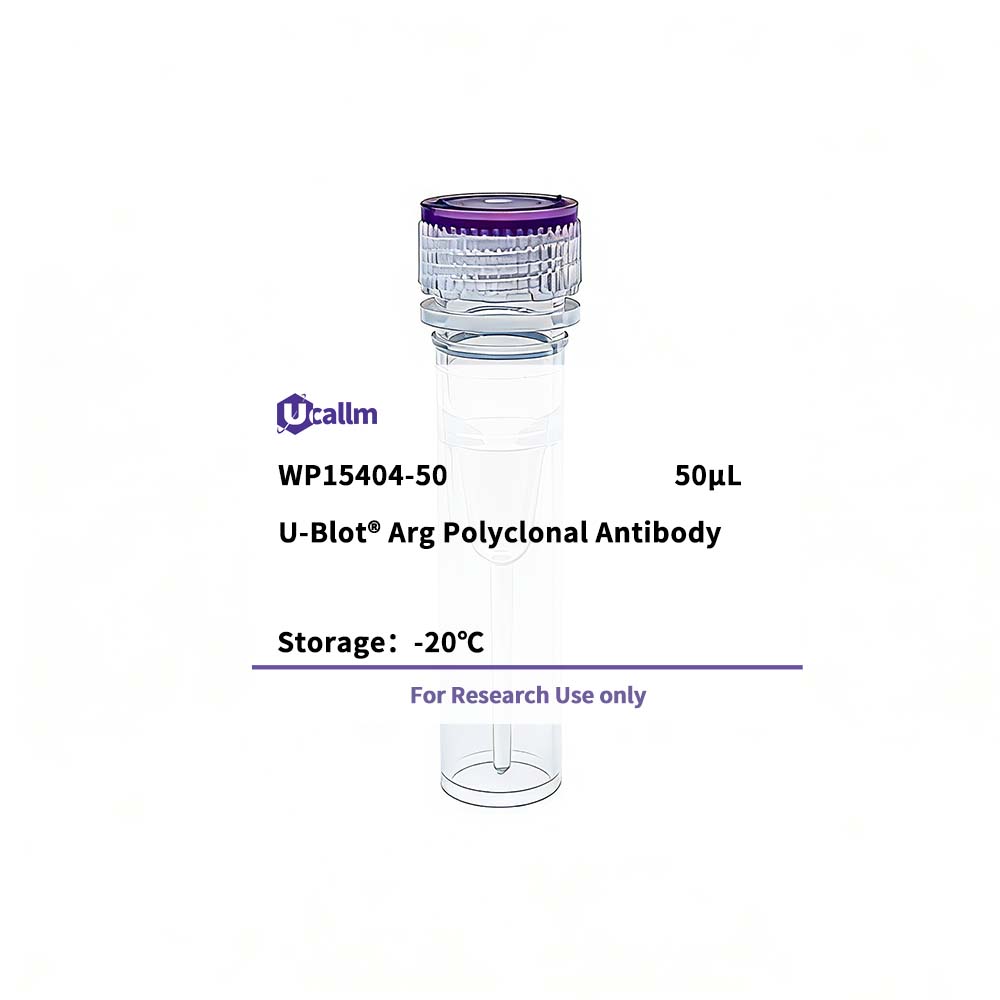
Ucallm_WP15404-50
Price range: $268.00 through $328.00
Product details
Background:
This gene encodes a member of the Abelson family of nonreceptor tyrosine protein kinases. The protein is highly similar to the c-abl oncogene 1 protein, including the tyrosine kinase, SH2 and SH3 domains, and it plays a role in cytoskeletal rearrangements through its C-terminal F-actin- and microtubule-binding sequences. This gene is expressed in both normal and tumor cells, and is involved in translocation with the ets variant 6 gene in leukemia. Multiple alternatively spliced transcript variants encoding different protein isoforms have been found for this gene. [provided by RefSeq, Nov 2009],
Specifications
| Size | 50μL/100μL |
| Target | ARG |
| Reactivity | Human, Mouse, Rat |
| Applications | WB, IHC, IF, ELISA |
| MW(Calculated) | |
| MW(Observed) | 130kD |
| Host Species | Rabbit |
| Isotype | IgG |
| Conjugate/Modification | Unmodified |
| Recommended Dilution Ratio | WB 1:500-1:2000; IHC: 1:100-1:300; ELISA 1:20000; IF 1:50-200 / Note: For IHC, we suggest antigen retrieval with TE buffer pH 9.0 (Cat#WT1004) |
| Formulation | Liquid in PBS containing 50% glycerol, 0.5% BSA and 0.02% sodium azide. |
| Purification | The antibody was affinity-purified from rabbit antiserum by affinity-chromatography using epitope-specific immunogen. |
| Storage | -15°C to -25°C/1 year(Do not lower than -25°C) |
| Concentration | 1 mg/ml |
| Clonality | Polyclonal |
| Clone Number | |
| Immunogen | The antiserum was produced against synthesized peptide derived from the Internal region of human ABL2. AA range:601-650 |
| Specificity | ARG Polyclonal Antibody detects endogenous levels of ARG protein. |
| Gene Name | ABL2 |
| Protein Name | Abelson tyrosine-protein kinase 2 |
| Other Name | ABL2; / ABLL; / ARG; / Abelson tyrosine-protein kinase 2; / Abelson murine leukemia viral oncogene homolog 2; / Abelson-related gene protein; / Tyrosine-protein kinase ARG |
| Species | Human |
| Gene ID | 27 |
| Uniprot | P42684, |
| Species.1 | Mouse |
| Gene ID.1 | |
| Uniprot.1 | Q4JIM5 |
| Species.2 | |
| Gene ID.2 | |
| Uniprot.2 | |
| Cellular Localization | Cytoplasm, cytoskeleton. |
| Tissue Expression | Widely expressed. |
| Signaling_pathway | Environmental Information Processing >> Signal transduction >> ErbB signaling pathway;Environmental Information Processing >> Signal transduction >> Ras signaling pathway |
| Research Areas | >>ErbB signaling pathway; / >>Ras signaling pathway; / >>Chemical carcinogenesis - reactive oxygen species; / >>Viral myocarditis |
| Function | Catalytic activity:ATP + a [protein]-L-tyrosine = ADP + a [protein]-L-tyrosine phosphate.,Caution:The sequence shown here is derived from an Ensembl automatic analysis pipeline and should be considered as preliminary data.,cofactor:Magnesium or manganese.,enzyme regulation:Stabilized in the inactive form by an association between the SH3 domain and the SH2-TK linker region, interactions of the amino-terminal cap, and contributions from an amino-terminal myristoyl group and phospholipids. Activated by autophosphorylation as well as by SRC-family kinase-mediated phosphorylation. Activated by RIN1 binding to the SH2 and SH3 domains. Inhibited by imatinib mesylate (Gleevec) which is used for the treatment of chronic myeloid leukemia (CML).,Function:Regulates cytoskeleton remodeling during cell differentiation, cell division and cell adhesion. Localizes to dynamic actin structures, and phosphorylates CRK and CRKL, DOK1, and other proteins controlling cytoskeleton dynamics.,PTM:Phosphorylated upon DNA damage, probably by ATM or ATR.,similarity:Belongs to the protein kinase superfamily. Tyr protein kinase family.,similarity:Belongs to the protein kinase superfamily. Tyr protein kinase family. ABL subfamily.,similarity:Contains 1 protein kinase domain.,similarity:Contains 1 SH2 domain.,similarity:Contains 1 SH3 domain.,tissue specificity:Widely expressed., |
Please login to post questions
Related products



