SKU: WP10290 Categories: ,

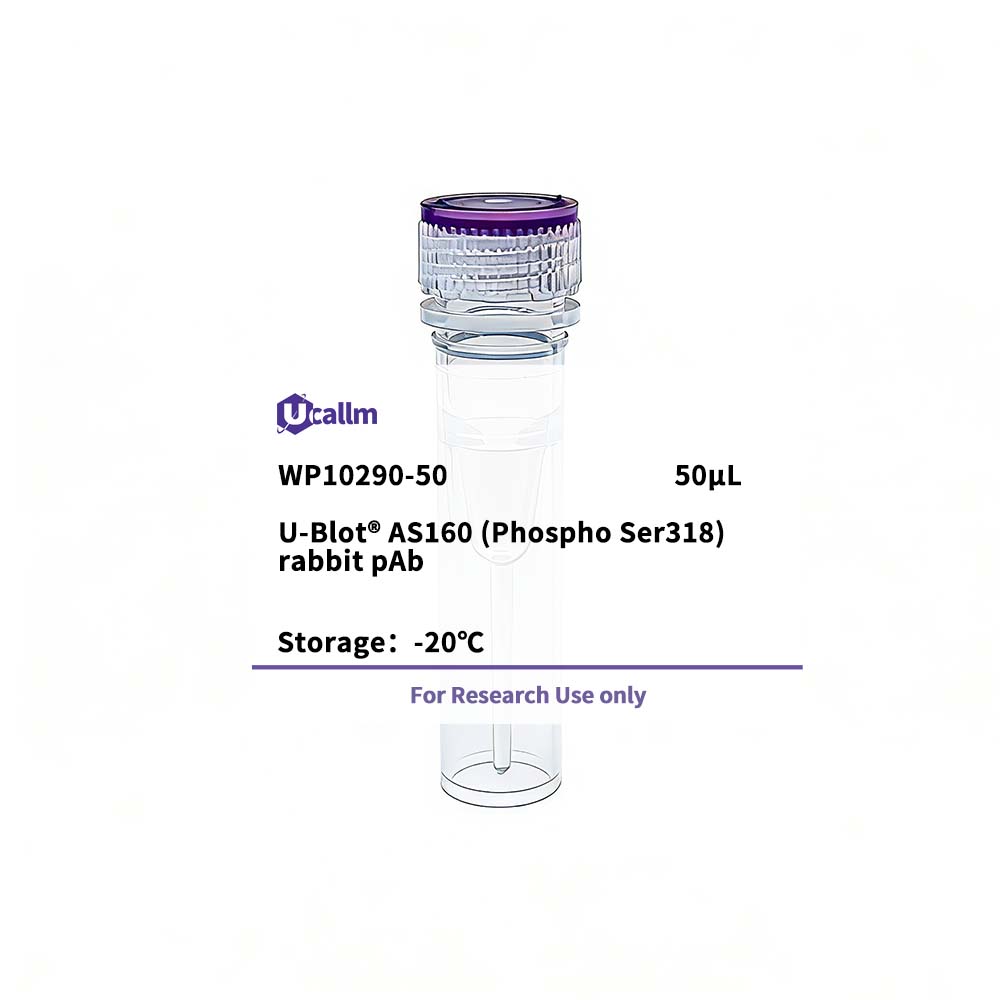
AS160 (Phospho Ser318) rabbit pAb

Price range: $288.00 through $368.00

SKU: WP10290-100
Enter the quantity you would like, or drag the panel to find the quantity and price that best for you
Bulk QuoteAuthorize OEM & ODM

Product details

Background:

This gene is a member of the Tre-2/BUB2/CDC16 domain family. The protein encoded by this gene is a Rab-GTPase-activating protein, and contains two phopshotyrosine-binding domains (PTB1 and PTB2), a calmodulin-binding domain (CBD), a Rab-GTPase domain, and multiple AKT phosphomotifs. This protein is thought to play an important role in glucose homeostasis by regulating the insulin-dependent trafficking of the glucose transporter 4 (GLUT4), important for removing glucose from the bloodstream into skeletal muscle and fat tissues. Reduced expression of this gene results in an increase in GLUT4 levels at the plasma membrane, suggesting that this protein is important in intracellular retention of GLUT4 under basal conditions. When exposed to insulin, this protein is phosphorylated, dissociates from GLUT4 vesicles, resulting in increased GLUT4 at the cell surface, and enhanced glucose transport. Ph


Specifications

Size50μL/100μL
TargetAS160 Phospho Ser318
ReactivityHuman, Mouse, Rat
ApplicationsWB
MW(Calculated)
MW(Observed)145kD
Host SpeciesRabbit
IsotypeIgG
Conjugate/Modificationphosphate
Recommended Dilution RatioWB 1:1000-2000
FormulationLiquid in PBS containing 50% glycerol, 0.5% BSA and 0.02% sodium azide.
PurificationThe antibody was affinity-purified from rabbit serum by affinity-chromatography using specific immunogen.
Storage-15°C to -25°C/1 year(Do not lower than -25°C)
Concentration1 mg/ml
ClonalityPolyclonal
Clone Number
ImmunogenSynthesized phosho peptide around human AS160 (Ser318)
SpecificityThis antibody detects endogenous levels of Human AS160 (phospho-Ser318)
Gene NameTBC1D4 AS160 KIAA0603
Protein NameAS160 (Ser318)
Other NameTBC1 domain family member 4; / Akt substrate of 160 kDa; / AS160
SpeciesHuman
Gene ID9882
UniprotO60343,
Species.1Mouse
Gene ID.1210789
Uniprot.1Q8BYJ6
Species.2
Gene ID.2
Uniprot.2
Cellular LocalizationCytoplasm . Isoform 2 shows a cytoplasmic perinuclear localization in a myoblastic cell line in resting and insulin-stimulated cells.
Tissue ExpressionWidely expressed. Isoform 2 is the highest overexpressed in most tissues. Isoform 1 is highly expressed in skeletal muscle and heart, but was not detectable in the liver nor in adipose tissue. Isoform 2 is strongly expressed in adrenal and thyroid gland, and also in lung, kidney, colon, brain and adipose tissue. Isoform 2 is moderately expressed in skeletal muscle. Expressed in pancreatic Langerhans islets, including beta cells (at protein level). Expression is decreased by twofold in pancreatic islets in type 2 diabetes patients compared to control subjects. Up-regulated in T-cells from patients with atopic dermatitis.
Signaling_pathwayOrganismal Systems >> Endocrine system >> Thyroid hormone signaling pathway
Research Areas>>Thyroid hormone signaling pathway; / >>Insulin resistance; / >>Diabetic cardiomyopathy
FunctionDisease:May be involved in atopic dermatitis (AD).,Function:May act as a GTPase-activating protein for RAB2A, RAB8A, RAB10 and RAB14. Isoform 2 promotes insulin-induced glucose transporter SLC2A4/GLUT4 translocation at the plasma membrane, thus increasing glucose uptake.,PTM:Insulin-stimulated phosphorylation is required for SLC2A4/GLUT4 translocation.,PTM:Phosphorylated by AKT1; insulin-induced.,PTM:Physiological hyperinsulinemia increases phosphorylation in skeletal muscle. Insulin-stimulated phosphorylation is reduced by 39% in type 2 diabetic patients.,similarity:Contains 1 Rab-GAP TBC domain.,similarity:Contains 2 PID domains.,subcellular location:Isoform 2 shows a cytoplasmic perinuclear localization in a myoblastic cell line in resting and insulin-stimulated cells.,tissue specificity:Widely expressed, but differential expression for isoforms 1 and 2, with highest overall expression of isoform 2 in most tissues. Isoform 1 is highly expressed in skeletal muscle and heart, but was not detectable in the liver nor in adipose tissue. Isoform 2 strongly expressed in adrenal and thyroid gland, and also in lung, kidney, colon, brain and adipose tissue. Moderate isoform 2 expression in skeletal muscle. Expressed in pancreatic Langerhans islets, including beta cells (at protein level). Expression is decreased by twofold in pancreatic islets in type 2 diabetes patients compared to control subjects.,
Please login to post questions
Back to Top
Product has been added to your cart

