SKU: WP2082 Categories: ,

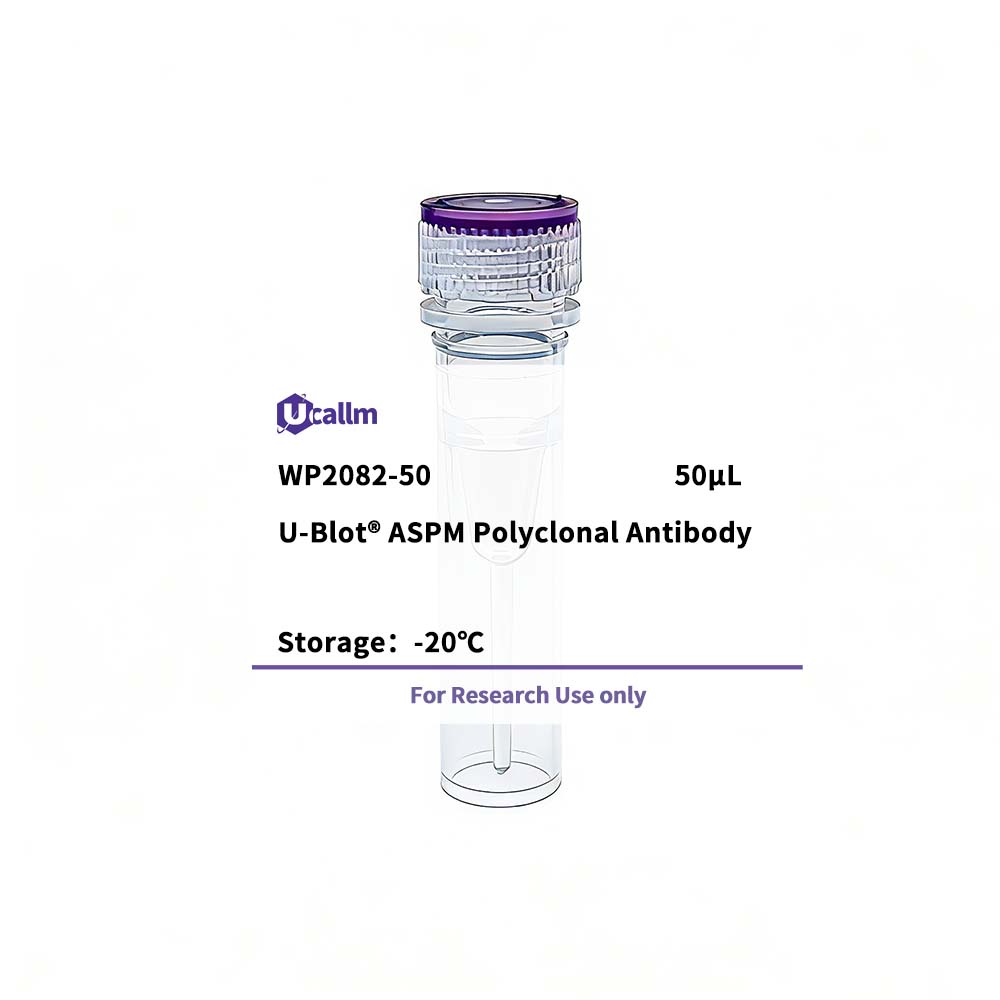
ASPM Polyclonal Antibody

Price range: $268.00 through $328.00

SKU: WP2082-100
Enter the quantity you would like, or drag the panel to find the quantity and price that best for you
Bulk QuoteAuthorize OEM & ODM

Product details

Background:

This gene is the human ortholog of the Drosophila melanogaster 'abnormal spindle' gene (asp), which is essential for normal mitotic spindle function in embryonic neuroblasts. Studies in mouse also suggest a role of this gene in mitotic spindle regulation, with a preferential role in regulating neurogenesis. Mutations in this gene are associated with microcephaly primary type 5. Multiple transcript variants encoding different isoforms have been found for this gene.[provided by RefSeq, May 2011],

Specifications

TargetASPM
ReactivityHuman, Mouse
ApplicationsWB, IHC, IF
MW(Calculated)
MW(Observed)382kD
Host SpeciesRabbit
IsotypeIgG
Conjugate/ModificationUnmodified
Modification
Recommended Dilution RatioIHC 1:50-300; IF 1:50-200; WB 1:1000-1:5000 / Note: For IHC, we suggest antigen retrieval with TE buffer pH 9.0 (Cat#YS0004)
FormulationLiquid in PBS containing 50% glycerol,0.5% BSA and 0.02% sodium azide.
Source
PurificationThe antibody was affinity-purified from rabbit antiserum by affinity-chromatography using epitope-specific immunogen.
Purity
Storage-15°C to -25°C/1 year(Do not lower than -25°C)
Concentration1 mg/ml
ClonalityPolyclonal
Clone Number
ImmunogenSynthesized peptide derived from human protein . at AA range: 1230-1310
Sequence
SpecificityASPM Polyclonal Antibody detects endogenous levels of protein.
Gene NameASPM MCPH5
Protein NameAbnormal spindle-like microcephaly-associated protein (Abnormal spindle protein homolog) (Asp homolog)
Other Name
SpeciesHuman
Gene ID-1259266
UniprotQ8IZT6,
Species.1Mouse
Gene ID-2
Uniprot.1Q8CJ27
Species.2
Gene ID-3
Uniprot.2
Organism-4
Gene ID-4
SwissProt-4
BackgroundThis gene is the human ortholog of the Drosophila melanogaster ' abnormal spindle' gene (asp), which is essential for normal mitotic spindle function in embryonic neuroblasts. Studies in mouse also suggest a role of this gene in mitotic spindle regulation, with a preferential role in regulating neurogenesis. Mutations in this gene are associated with microcephaly primary type 5. Multiple transcript variants encoding different isoforms have been found for this gene.[provided by RefSeq, May 2011],
Cellular LocalizationCytoplasm . Cytoplasm, cytoskeleton, spindle . Nucleus . The nuclear-cytoplasmic distribution could be regulated by the availability of calmodulin (By similarity). Localizes to spindle poles during mitosis (PubMed:19690332). Associates with microtubule minus ends (By similarity). .
Tissue ExpressionColon adenocarcinoma,Epithelium,Fetal brain,Kidney,Lymph,Tongue,
Signaling_pathway
Research Areas
FunctionDisease:Defects in ASPM are the cause of microcephaly primary type 5 (MCPH5) [MIM:608716]; also known as true microcephaly or microcephaly vera. Microcephaly is defined as a head circumference more than 3 standard deviations below the age-related mean. Brain weight is markedly reduced and the cerebral cortex is disproportionately small. Despite this marked reduction in size, the gyral pattern is relatively well preserved, with no major abnormality in cortical architecture. Primary microcephaly is further defined by the absence of other syndromic features or significant neurological deficits. This entity is inherited as autosomal recessive trait.,Function:Probable role in mitotic spindle regulation and coordination of mitotic processes (By similarity). May have a preferential role in regulating neurogenesis.,similarity:Contains 2 CH (calponin-homology) domains.,similarity:Contains 39 IQ domains.,subcellular location:The nuclear-cytoplasmic distribution could be regulated by the availability of calmodulin.,
RRID
Please login to post questions
Back to Top
Product has been added to your cart