SKU: WP11170 Categories: ,

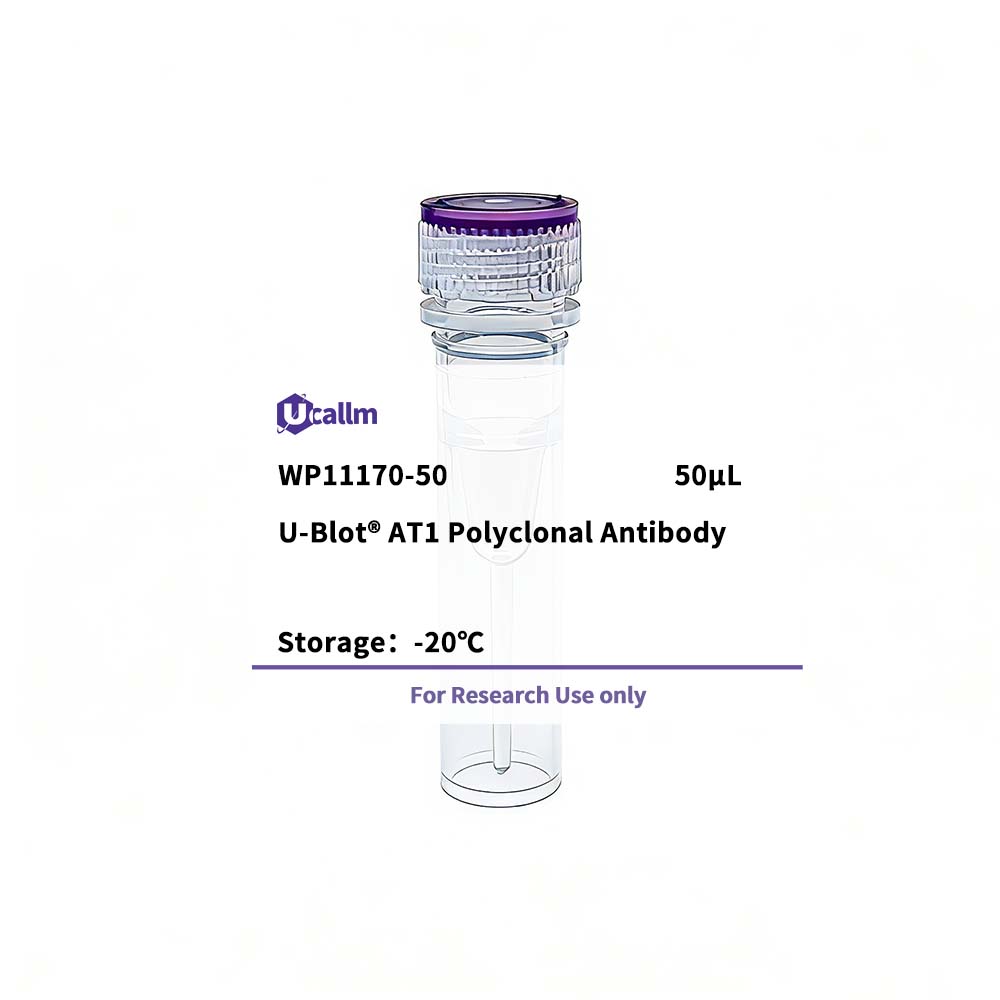
AT1 Polyclonal Antibody

Price range: $268.00 through $328.00

SKU: WP11170-100
Enter the quantity you would like, or drag the panel to find the quantity and price that best for you
Bulk QuoteAuthorize OEM & ODM

Product details

Background:

Angiotensin II is a potent vasopressor hormone and a primary regulator of aldosterone secretion. It is an important effector controlling blood pressure and volume in the cardiovascular system. It acts through at least two types of receptors. This gene encodes the type 1 receptor which is thought to mediate the major cardiovascular effects of angiotensin II. This gene may play a role in the generation of reperfusion arrhythmias following restoration of blood flow to ischemic or infarcted myocardium. It was previously thought that a related gene, denoted as AGTR1B, existed; however, it is now believed that there is only one type 1 receptor gene in humans. Multiple alternatively spliced transcript variants have been reported for this gene. [provided by RefSeq, Jul 2012],
Specifications

TargetAGTR1
ReactivityHuman, Mouse, Rat
ApplicationsWB, IHC, IF, ELISA
MW(Calculated)
MW(Observed)41kD
Host SpeciesRabbit
IsotypeIgG
Conjugate/ModificationUnmodified
Modification
Recommended Dilution RatioWB 1:500-1:2000; IHC 1:100-1:300; IF 1:200-1:1000; ELISA 1:10000; Not yet tested in other applications. / Note: For IHC, we suggest antigen retrieval with TE buffer pH 9.0 (Cat#YS0004)
FormulationLiquid in PBS containing 50% glycerol, 0.5% BSA and 0.02% sodium azide.
Source
PurificationThe antibody was affinity-purified from rabbit antiserum by affinity-chromatography using epitope-specific immunogen.
Purity
Storage-15°C to -25°C/1 year(Do not lower than -25°C)
Concentration1 mg/ml
ClonalityPolyclonal
Clone Number
ImmunogenThe antiserum was produced against synthesized peptide derived from human AGTR1. AA range:101-150
Sequence
SpecificityAT1 Polyclonal Antibody detects endogenous levels of AT1 protein.
Gene NameAGTR1 AGTR1A AGTR1B AT2R1 AT2R1B
Protein NameType-1 angiotensin II receptor
Other NameAGTR1; / AGTR1A; / AGTR1B; / AT2R1; / AT2R1B; / Type-1 angiotensin II receptor; / AT1AR; / AT1BR; / Angiotensin II type-1 receptor; / AT1
SpeciesHuman
Gene ID-1185
UniprotP30556,
Species.1
Gene ID-2
Uniprot.1
Species.2Rat
Gene ID-324180
Uniprot.2P25095
Organism-4
Gene ID-4
SwissProt-4
BackgroundAngiotensin II is a potent vasopressor hormone and a primary regulator of aldosterone secretion. It is an important effector controlling blood pressure and volume in the cardiovascular system. It acts through at least two types of receptors. This gene encodes the type 1 receptor which is thought to mediate the major cardiovascular effects of angiotensin II. This gene may play a role in the generation of reperfusion arrhythmias following restoration of blood flow to ischemic or infarcted myocardium. It was previously thought that a related gene, denoted as AGTR1B, existed; however, it is now believed that there is only one type 1 receptor gene in humans. Multiple alternatively spliced transcript variants have been reported for this gene. [provided by RefSeq, Jul 2012],
Cellular LocalizationCell membrane; Multi-pass membrane protein .
Tissue ExpressionLiver, lung, adrenal and adrenocortical adenomas.
Signaling_pathwayOrganismal Systems >> Endocrine system >> Renin-angiotensin system;Organismal Systems >> Endocrine system >> Aldosterone synthesis and secretion;Organismal Systems >> Circulatory system >> Adrenergic signaling in cardiomyocytes;Organismal Systems >> Circulatory system >> Vascular smooth muscle contraction;Human Diseases >> Cancer: overview >> Pathways in cancer;Environmental Information Processing >> Signal transduction >> Apelin signaling pathway;Environmental Information Processing >> Signal transduction >> Calcium signaling pathway;Environmental Information Processing >> Signal transduction >> Phospholipase D signaling pathway;Environmental Information Processing >> Signal transduction >> cGMP-PKG signaling pathway
Research Areas>>Calcium signaling pathway; / >>cGMP-PKG signaling pathway; / >>Phospholipase D signaling pathway; / >>Neuroactive ligand-receptor interaction; / >>Adrenergic signaling in cardiomyocytes; / >>Vascular smooth muscle contraction; / >>Apelin signaling pathway; / >>Renin-angiotensin system; / >>Renin secretion; / >>Aldosterone synthesis and secretion; / >>Cortisol synthesis and secretion; / >>AGE-RAGE signaling pathway in diabetic complications; / >>Cushing syndrome; / >>Coronavirus disease - COVID-19; / >>Pathways in cancer; / >>Diabetic cardiomyopathy
FunctionDisease:Defects in AGTR1 are a cause of renal tubular dysgenesis (RTD) [MIM:267430]. RTD is an autosomal recessive severe disorder of renal tubular development characterized by persistent fetal anuria and perinatal death, probably due to pulmonary hypoplasia from early-onset oligohydramnios (the Potter phenotype).,Function:Receptor for angiotensin II. Mediates its action by association with G proteins that activate a phosphatidylinositol-calcium second messenger system.,online information:Angiotensin receptor entry,online information:The Singapore human mutation and polymorphism database,PTM:C-terminal Ser or Thr residues may be phosphorylated.,similarity:Belongs to the G-protein coupled receptor 1 family.,tissue specificity:Liver, lung, adrenal and adrenocortical adenomas.,
RRID
Please login to post questions
Back to Top
Product has been added to your cart