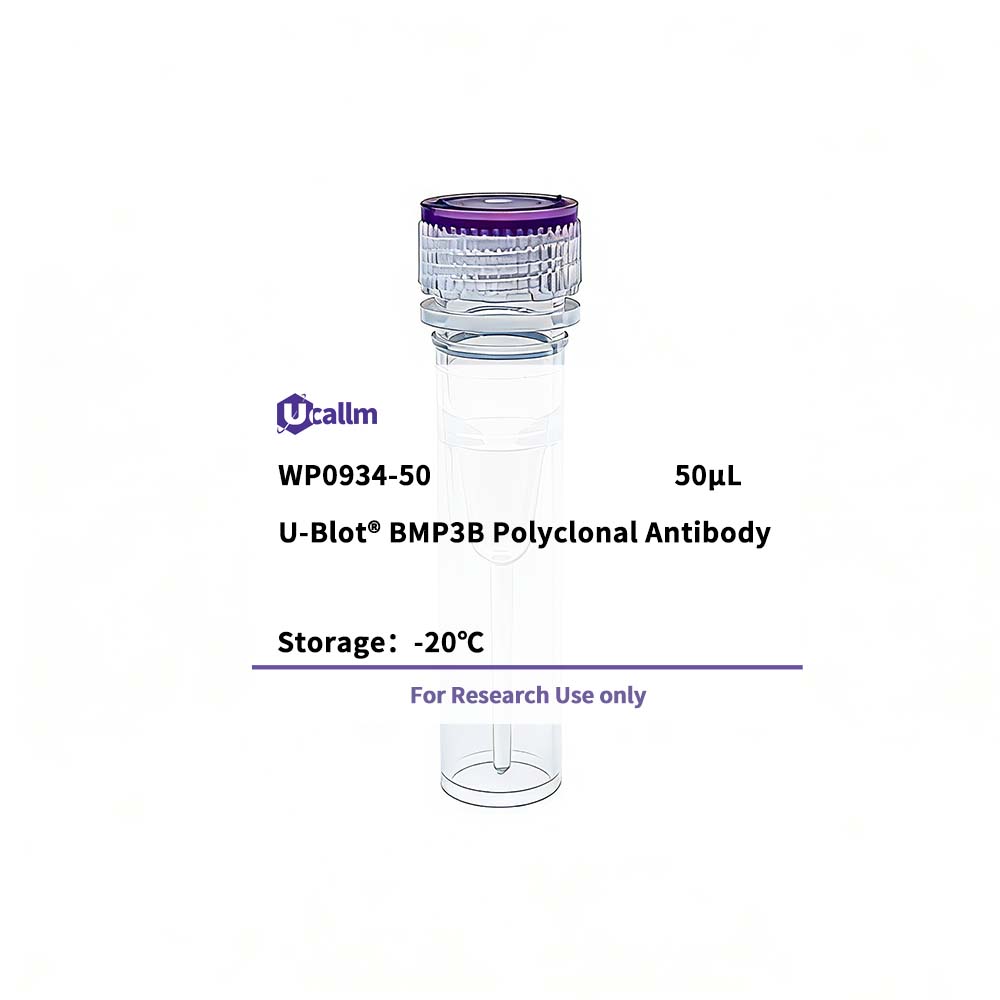
SKU: WP0934 Categories: ,

BMP3B Polyclonal Antibody

Price range: $268.00 through $328.00

SKU: WP0934-100
Enter the quantity you would like, or drag the panel to find the quantity and price that best for you
Bulk QuoteAuthorize OEM & ODM

Product details

Background:

growth differentiation factor 10(GDF10) Homo sapiens This gene encodes a secreted ligand of the TGF-beta (transforming growth factor-beta) superfamily of proteins. Ligands of this family bind various TGF-beta receptors leading to recruitment and activation of SMAD family transcription factors that regulate gene expression. The encoded preproprotein is proteolytically processed to generate each subunit of the disulfide-linked homodimer. This promotes neural repair after stroke. Additionally, this protein may act as a tumor suppressor and reduced expression of this gene is associated with oral cancer. [provided by RefSeq, Jul 2016],

Specifications

Size50μL/100μL
TargetBMP-3B
ReactivityHuman, Mouse, Rat
ApplicationsWB, ELISA
MW(Calculated)
MW(Observed)52kD
Host SpeciesRabbit
IsotypeIgG
Conjugate/ModificationUnmodified
Recommended Dilution RatioWB 1:500-2000; ELISA 1:5000-20000
FormulationLiquid in PBS containing 50% glycerol,0.5% BSA and 0.02% sodium azide.
PurificationThe antibody was affinity-purified from rabbit antiserum by affinity-chromatography using epitope-specific immunogen.
Storage-15°C to -25°C/1 year(Do not lower than -25°C)
Concentration1 mg/ml
ClonalityPolyclonal
Clone Number
ImmunogenSynthesized peptide derived from part region of human protein AA range: 421-470
SpecificityBMP3B Polyclonal Antibody detects endogenous levels of protein.
Gene NameGDF10 BMP3B
Protein NameBone morphogenetic protein 3B (BMP-3B) (Bone-inducing protein) (BIP) (Growth/differentiation factor 10) (GDF-10)
Other Name
SpeciesHuman
Gene ID2662
UniprotP55107,
Species.1Mouse
Gene ID.1
Uniprot.1P97737,
Species.2Rat
Gene ID.2
Uniprot.2P55108
Cellular LocalizationSecreted .
Tissue ExpressionExpressed in femur, brain, lung, skeletal muscle, pancreas and testis.
Signaling_pathwayEnvironmental Information Processing >> Signaling molecules and interaction >> Cytokine-cytokine receptor interaction
Research Areas>>Cytokine-cytokine receptor interaction
Functionsimilarity:Belongs to the TGF-beta family.,subunit:Homodimer or heterodimer .,tissue specificity:Expressed in femur, brain, lung, skeletal muscle, pancreas and testis.,
Please login to post questions
Back to Top
Product has been added to your cart

