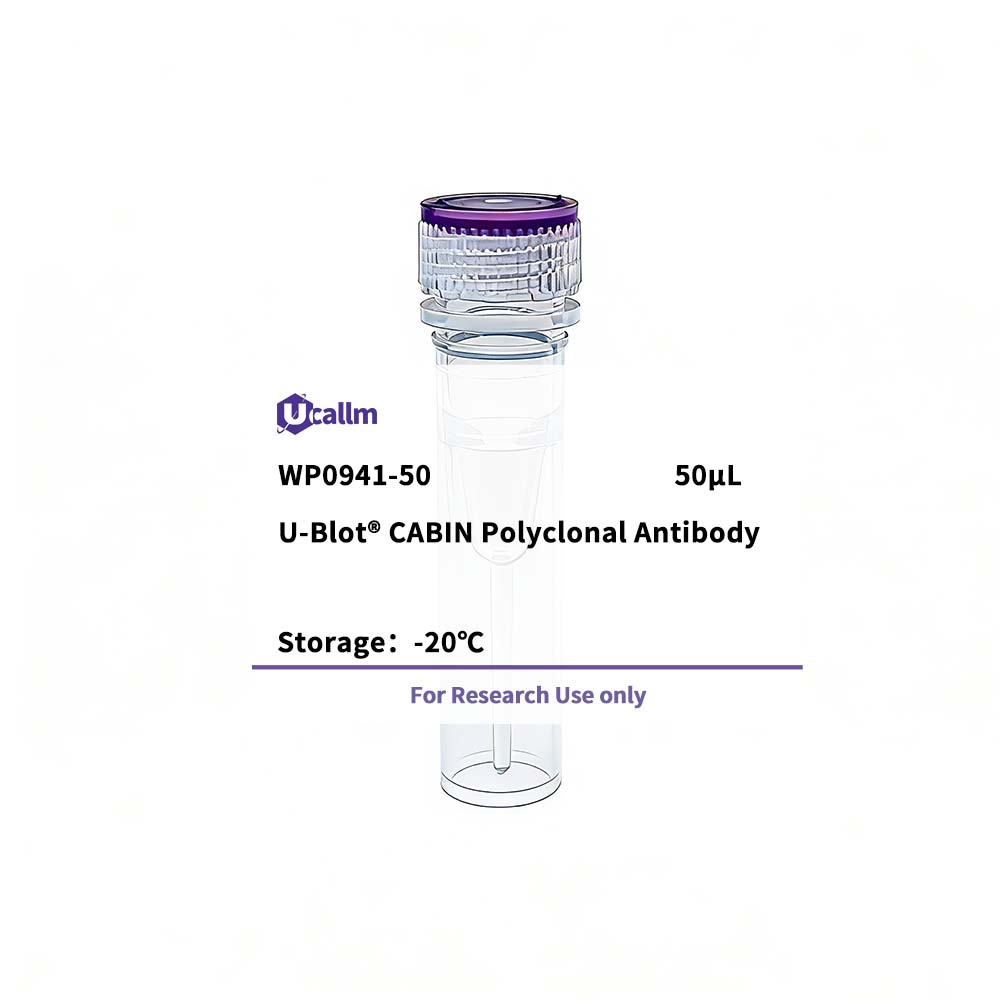
SKU: WP0941 Categories: ,

CABIN Polyclonal Antibody

Price range: $268.00 through $328.00

SKU: WP0941-100
Enter the quantity you would like, or drag the panel to find the quantity and price that best for you
Bulk QuoteAuthorize OEM & ODM

Product details

Background:

Calcineurin plays an important role in the T-cell receptor-mediated signal transduction pathway. The protein encoded by this gene binds specifically to the activated form of calcineurin and inhibits calcineurin-mediated signal transduction. The encoded protein is found in the nucleus and contains a leucine zipper domain as well as several PEST motifs, sequences which confer targeted degradation to those proteins which contain them. Alternative splicing results in multiple transcript variants encoding two different isoforms. [provided by RefSeq, Jan 2011],


Specifications

Size50μL/100μL
TargetCABIN
ReactivityHuman, Rat
ApplicationsWB, ELISA
MW(Calculated)
MW(Observed)244kD
Host SpeciesRabbit
IsotypeIgG
Conjugate/ModificationUnmodified
Recommended Dilution RatioWB 1:500-2000; ELISA 1:5000-20000
FormulationLiquid in PBS containing 50% glycerol,0.5% BSA and 0.02% sodium azide.
PurificationThe antibody was affinity-purified from rabbit antiserum by affinity-chromatography using epitope-specific immunogen.
Storage-15°C to -25°C/1 year(Do not lower than -25°C)
Concentration1 mg/ml
ClonalityPolyclonal
Clone Number
ImmunogenSynthesized peptide derived from part region of human protein
SpecificityCABIN Polyclonal Antibody detects endogenous levels of protein.
Gene NameCABIN1 KIAA0330
Protein NameCalcineurin-binding protein cabin-1 (Calcineurin inhibitor) (CAIN)
Other Name
SpeciesHuman
Gene ID23523
UniprotQ9Y6J0,
Species.1
Gene ID.1
Uniprot.1
Species.2Rat
Gene ID.2
Uniprot.2O88480
Cellular LocalizationNucleus .
Tissue ExpressionWidely expressed in different tissues.
Signaling_pathway
Research Areas
FunctionFunction:May be required for replication-independent chromatin assembly. May serve as a negative regulator of T-cell receptor (TCR) signaling via inhibition of calcineurin. Inhibition of activated calcineurin is dependent on both PKC and calcium signals.,PTM:Activated through PKC-mediated hyperphosphorylation. Phosphorylated upon DNA damage, probably by ATM or ATR.,similarity:Contains 6 TPR repeats.,subunit:Component of a complex that includes at least ASF1A, CABIN1, HIRA, histone H3.3 and UBN1. Interacts with calcineurin. Interacts with MEF2B.,tissue specificity:Widely expressed in different tissues.,
Please login to post questions
Back to Top
Product has been added to your cart
