SKU: WM1768 Categories: ,

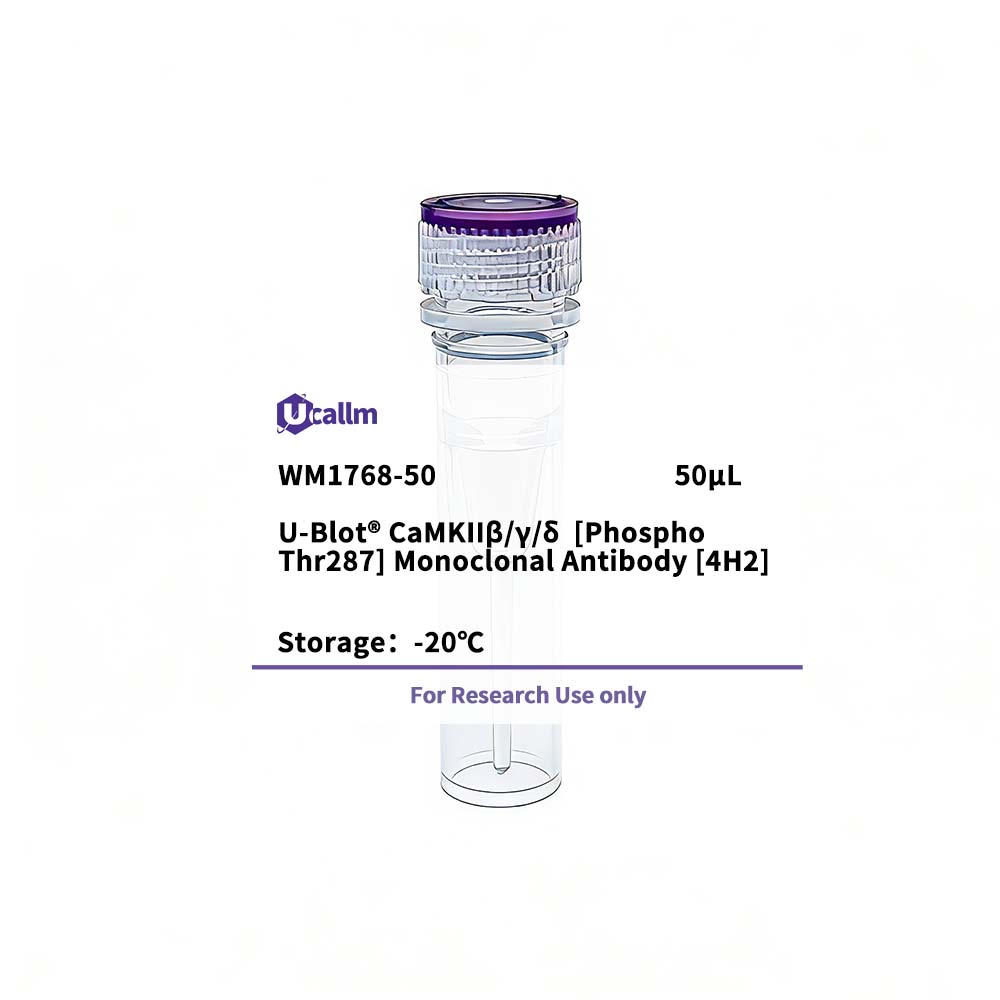
CaMKIIβ/γ/δ [Phospho Thr287] Monoclonal Antibody [4H2]

Price range: $288.00 through $368.00

SKU: WM1768-50
Enter the quantity you would like, or drag the panel to find the quantity and price that best for you
Bulk QuoteAuthorize OEM & ODM

Product details

Background:
The product of this gene belongs to the serine/threonine protein kinase family and to the Ca(2+)/calmodulin-dependent protein kinase subfamily. Calcium signaling is crucial for several aspects of plasticity at glutamatergic synapses. In mammalian cells, the enzyme is composed of four different chains: alpha, beta, gamma, and delta. The product of this gene is a beta chain. It is possible that distinct isoforms of this chain have different cellular localizations and interact differently with calmodulin. Alternative splicing results in multiple transcript variants. [provided by RefSeq, May 2014],


Specifications

Size50μL/100μL
TargetCaMKIIβ/γ/δ Phospho Thr287
ReactivityHuman, Mouse, Rat
ApplicationsIHC, IF
MW(Calculated)
MW(Observed)50kD
Host SpeciesMouse
Isotype
Conjugate/Modificationphosphate
Recommended Dilution RatioIHC 1:100-200; IF 1:50-200 / Note: For IHC, we suggest antigen retrieval with TE buffer pH 9.0 (Cat#WT1004)
FormulationLiquid in PBS containing 50% glycerol, 0.5% BSA and 0.02% sodium azide.
PurificationThe antibody was affinity-purified from mouse ascites by affinity-chromatography using specific immunogen.
Storage-15°C to -25°C/1 year(Do not lower than -25°C)
Concentration1 mg/ml
ClonalityMonoclonal
Clone Number4H2
ImmunogenSynthetic Peptide of CaMKIIβ/γ/δ (Phospho Thr287)
SpecificityCaMKIIβ/γ/δ (Phospho Thr287) protein detects endogenous levels of CaMKIIβ/γ/δ (Phospho Thr287)
Gene NameCAMK2B
Protein NameCalcium/calmodulin-dependent protein kinase type II subunit beta
Other NameCAMK2B; / CAM2; / CAMK2; / CAMKB; / Calcium/calmodulin-dependent protein kinase type II subunit beta; / CaM kinase II subunit beta; / CaMK-II subunit beta; / CAMK2G; / CAMK; / CAMK-II; / CAMKG; / Calcium/calmodulin-dependent protein kinase type II subunit gamma
SpeciesHuman
Gene ID816;817;818
UniprotQ13554;Q13555;Q13557,
Species.1Mouse
Gene ID.112323;12325;108058,
Uniprot.1
Species.2Rat
Gene ID.224245;171140;24246
Uniprot.2P08413;P11730;P15791
Cellular LocalizationCytoplasm, cytoskeleton . Cytoplasm, cytoskeleton, microtubule organizing center, centrosome . Sarcoplasmic reticulum membrane; Peripheral membrane protein; Cytoplasmic side . Cell junction, synapse . In slow-twitch muscle, evenly distributed between longitudinal SR and junctional SR.
Tissue ExpressionWidely expressed. Expressed in adult and fetal brain. Expression is slightly lower in fetal brain. Expressed in skeletal muscle.
Signaling_pathwayCellular Processes >> Cell growth and death >> Necroptosis;Organismal Systems >> Endocrine system >> Insulin secretion;Organismal Systems >> Endocrine system >> Glucagon signaling pathway;Organismal Systems >> Endocrine system >> GnRH signaling pathway;Organismal Systems >> Endocrine system >> Oxytocin signaling pathway;Organismal Systems >> Endocrine system >> Aldosterone synthesis and secretion;Organismal Systems >> Circulatory system >> Adrenergic signaling in cardiomyocytes;Organismal Systems >> Nervous system >> Cholinergic synapse;Organismal Systems >> Nervous system >> Dopaminergic synapse;Organismal Systems >> Nervous system >> Neurotrophin signaling pathway;Organismal Systems >> Sensory system >> Inflammatory mediator regulation of TRP channels;Human Diseases >> Cancer: overview >> Pathways in cancer;Human Diseases >> Cancer: specific types >> Glioma;Human Diseases >> Neurodegenerative disease >> Parkinson disease;Human Diseases >> Neurodegenerative disease >> Pathways of neurodegeneration - multiple diseases;Environmental Information Processing >> Signal transduction >> ErbB signaling pathway;Environmental Information Processing >> Signal transduction >> Wnt signaling pathway;Environmental Information Processing >> Signal transduction >> HIF-1 signaling pathway;Environmental Information Processing >> Signal transduction >> Calcium signaling pathway;Environmental Information Processing >> Signal transduction >> cAMP signaling pathway
Research Areas>>ErbB signaling pathway; / >>Calcium signaling pathway; / >>cAMP signaling pathway; / >>HIF-1 signaling pathway; / >>Oocyte meiosis; / >>Necroptosis; / >>Adrenergic signaling in cardiomyocytes; / >>Wnt signaling pathway; / >>Axon guidance; / >>Circadian entrainment; / >>Long-term potentiation; / >>Neurotrophin signaling pathway; / >>Cholinergic synapse; / >>Dopaminergic synapse; / >>Olfactory transduction; / >>Inflammatory mediator regulation of TRP channels; / >>Insulin secretion; / >>GnRH signaling pathway; / >>Melanogenesis; / >>Oxytocin signaling pathway; / >>Glucagon signaling pathway; / >>Aldosterone synthesis and secretion; / >>Cushing syndrome; / >>Gastric acid secretion; / >>Parkinson disease; / >>Pathways of neurodegeneration - multiple diseases; / >>Amphetamine addiction; / >>Tuberculosis; / >>Pathways in cancer; / >>Proteoglycans in cancer; / >>Glioma; / >>Diabetic cardiomyopathy; / >>Lipid and atherosclerosis
FunctionAlternative products:The variable region of the CAMK2B protein is encoded by at least 7 exons (V1 to V7). Alternative splicing within this region gives rise to CAMK2B isoforms,Catalytic activity:ATP + a protein = ADP + a phosphoprotein.,enzyme regulation:Autophosphorylation of CAMK2 plays an important role in the regulation of the kinase activity.,Function:CaM-kinase II (CAMK2) is a prominent kinase in the central nervous system that may function in long-term potentiation and neurotransmitter release. Member of the NMDAR signaling complex in excitatory synapses, it may regulate NMDAR-dependent potentiation of the AMPAR and synaptic plasticity.,similarity:Belongs to the protein kinase superfamily.,similarity:Belongs to the protein kinase superfamily. CAMK Ser/Thr protein kinase family. CaMK subfamily.,similarity:Contains 1 protein kinase domain.,subunit:CAMK2 is composed of four different chains: alpha, beta, gamma, and delta. The different isoforms assemble into homo- or heteromultimeric holoenzymes composed of 8 to 12 subunits. Interacts with SYNGAP1 and CAMK2N2 (By similarity). Interacts with MPDZ.,tissue specificity:Widely expressed. Expressed in adult and fetal brain. Expression is slightly lower in fetal brain.,
Please login to post questions
Back to Top
Product has been added to your cart