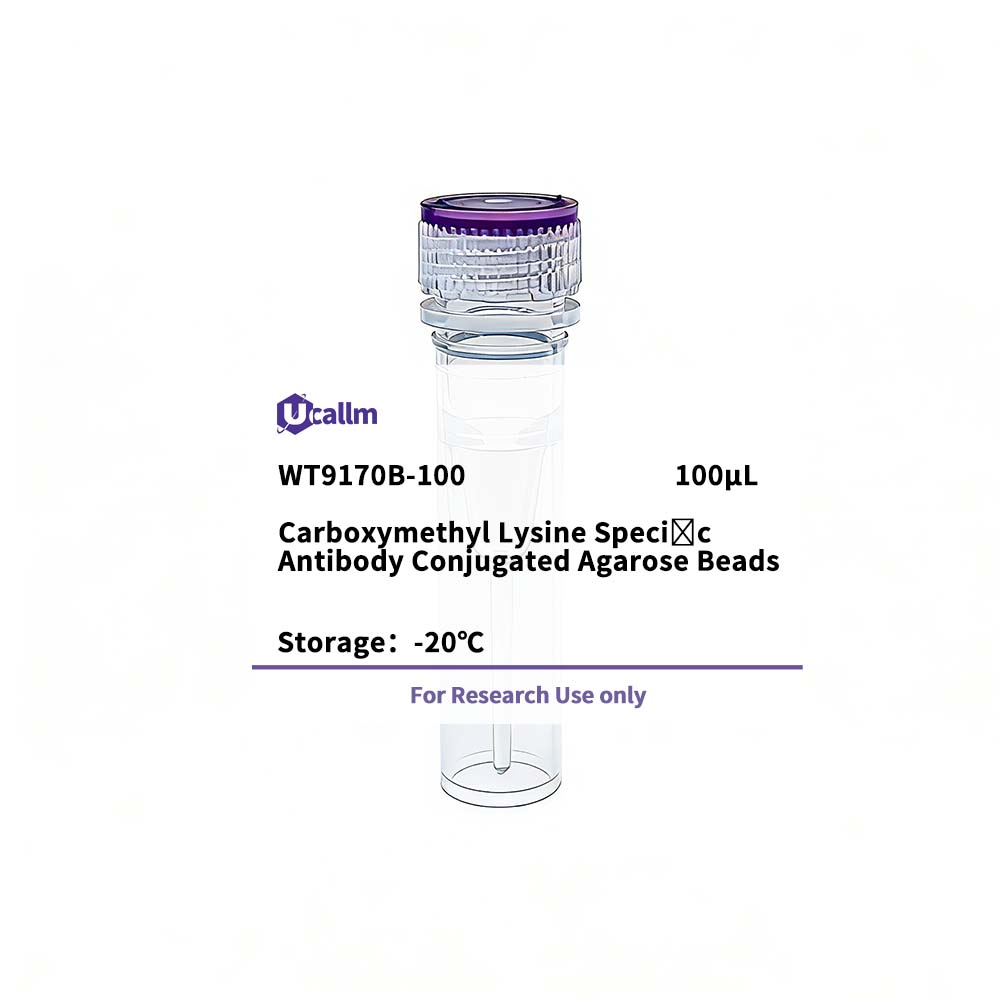
Carboxymethyl Lysine Specific Antibody Conjugated Agarose Beads

$999.00

SKU: WT9170B-300
Enter the quantity you would like, or drag the panel to find the quantity and price that best for you
Bulk QuoteAuthorize OEM & ODM

Product details

Carboxymethyl Lysine Specific Antibody Conjugated Agarose Beads is developed using carboxymethylated KLH as immunogen, and affinity purified with CML-agarose. The purified CML antibody is chemically linked to beaded agarose through a stable covalent linkage. The immobilized CML antibody-agarose can be utilized for reversible immunoprecipitation and affinity purification of proteins/peptides with carboxymethyl lysine residues.


Specifications

TargetCarboxymethyl Lysine
ReactivitySpecies Independent
ApplicationIAC, IP
MW(Calculated)
MW(Observed)
Host Species
Isotype
Conjugate
Modification
Modified site
Recommended dilution ratio
Composition500 μL of beads in 1 mL of slurry with 50% glycerol
Purification process
Purity
StorageProduct is stable for several weeks at 4°C. For extended storage, store product at –20ºC. Shake it well before use.
StabilityExpiration date is 12 months from the date of shipping if properly stored.
ClonalPolyclonal
Clone Number
ImmunogenCarboxymethylated KLH
Sequence
Specificity
Gene name
Protein Name
Alternative name
Organism-1
GeneID-1
SwissProt-1
Organism-2
GeneID-2
SwissProt-2
Organism-3
GeneID-3
SwissProt-3
Organism-4
GeneID-4
SwissProt-4
BackgroundLysine carboxymethylation, also known as carboxymethyllysine (CML), is a typical advanced glycation end product (AGE). It is formed by the non-enzymatic reaction between reducing sugars and the ε-amino group of lysine residues in proteins under oxidative stress and hyperglycemic conditions. This modification changes protein structure, stability and physiological function, and disrupts normal protein-protein interactions.CML accumulates progressively in tissues during aging. Abnormal CML formation and accumulation are closely linked to diabetes, diabetic complications, cardiovascular diseases, neurodegeneration and age-related disorders.
Cellular Localization
Please login to post questions
Back to Top
Product has been added to your cart