SKU: WP11462 Categories: ,

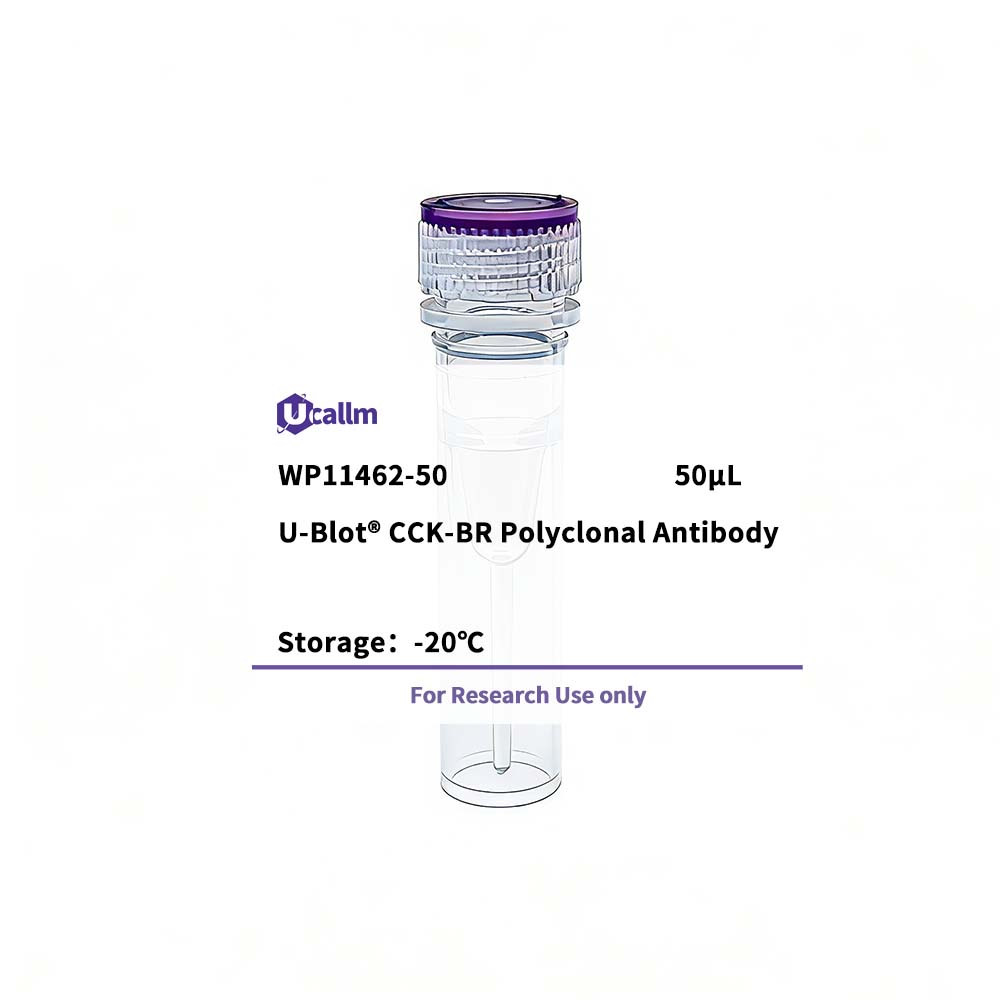
CCK-BR Polyclonal Antibody

Price range: $268.00 through $328.00

SKU: WP11462-100
Enter the quantity you would like, or drag the panel to find the quantity and price that best for you
Bulk QuoteAuthorize OEM & ODM

Product details

Background:

This gene encodes a G-protein coupled receptor for gastrin and cholecystokinin (CCK), regulatory peptides of the brain and gastrointestinal tract. This protein is a type B gastrin receptor, which has a high affinity for both sulfated and nonsulfated CCK analogs and is found principally in the central nervous system and the gastrointestinal tract. Alternative splicing results in multiple transcript variants. A misspliced transcript variant including an intron has been observed in cells from colorectal and pancreatic tumors. [provided by RefSeq, Dec 2015],

Specifications

Size50μL/100μL
TargetCCKBR
ReactivityHuman, Mouse, Rat, Monkey
ApplicationsWB, ELISA
MW(Calculated)
MW(Observed)48kD
Host SpeciesRabbit
IsotypeIgG
Conjugate/ModificationUnmodified
Recommended Dilution RatioWB 1:500-1:2000; ELISA 1:20000; Not yet tested in other applications.
FormulationLiquid in PBS containing 50% glycerol, 0.5% BSA and 0.02% sodium azide.
PurificationThe antibody was affinity-purified from rabbit antiserum by affinity-chromatography using epitope-specific immunogen.
Storage-15°C to -25°C/1 year(Do not lower than -25°C)
Concentration1 mg/ml
ClonalityPolyclonal
Clone Number
ImmunogenThe antiserum was produced against synthesized peptide derived from human CCKBR. AA range:11-60
SpecificityCCK-BR Polyclonal Antibody detects endogenous levels of CCK-BR protein.
Gene NameCCKBR
Protein NameGastrin/cholecystokinin type B receptor
Other NameCCKBR; / CCKRB; / Gastrin/cholecystokinin type B receptor; / CCK-B receptor; / CCK-BR; / Cholecystokinin-2 receptor; / CCK2-R
SpeciesHuman
Gene ID887
UniprotP32239,
Species.1Mouse
Gene ID.112426
Uniprot.1P56481,
Species.2Rat
Gene ID.225706
Uniprot.2P30553
Cellular LocalizationCell membrane; Multi-pass membrane protein.
Tissue ExpressionIsoform 1 is expressed in brain, pancreas, stomach, the colon cancer cell line LoVo and the T-lymphoblastoma Jurkat, but not in heart, placenta, liver, lung, skeletal muscle, kidney or the stomach cancer cell line AGS. Expressed at high levels in the small cell lung cancer cell line NCI-H510, at lower levels in NCI-H345, NCI-H69 and GLC-28 cell lines, not expressed in GLC-19 cell line. Within the stomach, expressed at high levels in the mucosa of the gastric fundus and at low levels in the antrum and duodenum. Isoform 2 is present in pancreatic cancer cells and colorectal cancer cells, but not in normal pancreas or colonic mucosa. Isoform 3 is expressed in brain, pancreas, stomach, the stomach cancer cell line AGS and the colon cancer cell line LoVo.
Signaling_pathwayEnvironmental Information Processing >> Signal transduction >> Calcium signaling pathway
Research Areas>>Calcium signaling pathway; / >>Neuroactive ligand-receptor interaction; / >>Gastric acid secretion
FunctionFunction:Receptor for gastrin and cholecystokinin. The CKK-B receptors occur throughout the central nervous system where they modulate anxiety, analgesia, arousal, and neuroleptic activity. This receptor mediates its action by association with G proteins that activate a phosphatidylinositol-calcium second messenger system. Isoform 2 may regulate cancer cell proliferation via a gastrin-independent mechanism.,online information:Cholecystokinin receptor entry,similarity:Belongs to the G-protein coupled receptor 1 family.,tissue specificity:Isoform 1 is expressed in brain, pancreas, stomach, the colon cancer cell line LoVo and the T-lymphoblastoma Jurkat, but not in heart, placenta, liver, lung, skeletal muscle, kidney or the stomach cancer cell line AGS. Expressed at high levels in the small cell lung cancer cell line H510, at lower levels in H345, H69 and GLC28, not expressed in GLC19. Within the stomach, expressed at high levels in the mucosa of the gastric fundus and at low levels in the antrum and duodenum. Isoform 2 is present in pancreatic cancer cells and colorectal cancer cells, but not in normal pancreas or colonic mucosa. Isoform 3 is expressed in brain, pancreas, stomach, the stomach cancer cell line AGS and the colon cancer cell line LoVo.,
Please login to post questions
Back to Top
Product has been added to your cart