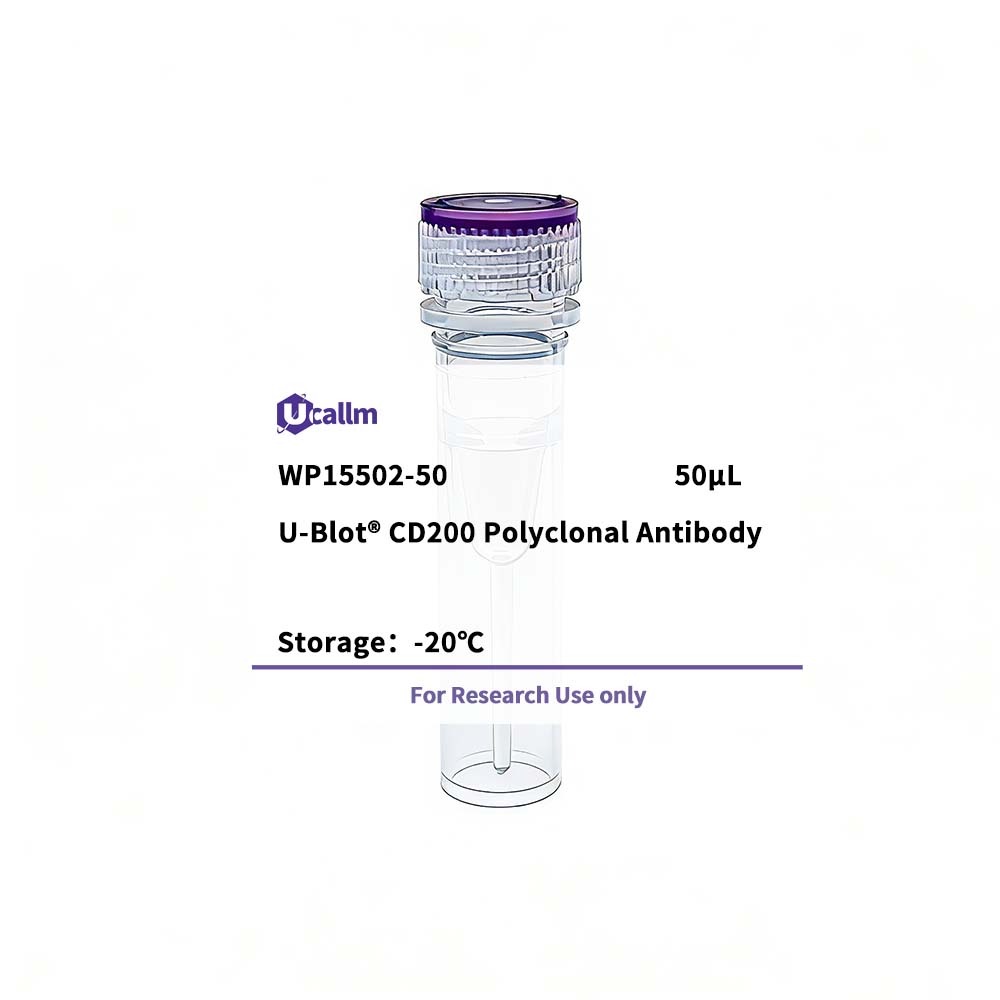
SKU: WP15502 Categories: ,

CD200 Polyclonal Antibody

Price range: $268.00 through $328.00

SKU: WP15502-100
Enter the quantity you would like, or drag the panel to find the quantity and price that best for you
Bulk QuoteAuthorize OEM & ODM

Product details

Background:

This gene encodes a type I membrane glycoprotein containing two extracellular immunoglobulin domains, a transmembrane and a cytoplasmic domain. This gene is expressed by various cell types, including B cells, a subset of T cells, thymocytes, endothelial cells, and neurons. The encoded protein plays an important role in immunosuppression and regulation of anti-tumor activity. Alternative splicing results in multiple transcript variants encoding different isoforms. [provided by RefSeq, Jan 2016],


Specifications

Size50μL/100μL
TargetCD200
ReactivityHuman, Mouse, Rat
ApplicationsWB, IHC, IF, ELISA
MW(Calculated)
MW(Observed)31kD
Host SpeciesRabbit
IsotypeIgG
Conjugate/ModificationUnmodified
Recommended Dilution RatioWB 1:500-1:2000; IHC: 1:100-1:300; ELISA 1:20000; IF 1:50-200 / Note: For IHC, we suggest antigen retrieval with TE buffer pH 9.0 (Cat#WT1004)
FormulationLiquid in PBS containing 50% glycerol, 0.5% BSA and 0.02% sodium azide.
PurificationThe antibody was affinity-purified from rabbit antiserum by affinity-chromatography using epitope-specific immunogen.
Storage-15°C to -25°C/1 year(Do not lower than -25°C)
Concentration1 mg/ml
ClonalityPolyclonal
Clone Number
ImmunogenThe antiserum was produced against synthesized peptide derived from the Internal region of human CD200. AA range:171-220
SpecificityCD200 Polyclonal Antibody detects endogenous levels of CD200 protein.
Gene NameCD200
Protein NameOX-2 membrane glycoprotein
Other NameCD200; / MOX1; / MOX2; / My033; / OX-2 membrane glycoprotein; / CD200
SpeciesHuman
Gene ID4345
UniprotP41217,
Species.1Mouse
Gene ID.1
Uniprot.1O54901,
Species.2Rat
Gene ID.2
Uniprot.2P04218
Cellular LocalizationCell membrane; Single-pass type I membrane protein.
Tissue ExpressionBlood,Brain,Fetal brain,
Signaling_pathway
Research Areas
FunctionFunction:Costimulates T-cell proliferation. May regulate myeloid cell activity in a variety of tissues.,similarity:Contains 1 Ig-like C2-type (immunoglobulin-like) domain.,similarity:Contains 1 Ig-like V-type (immunoglobulin-like) domain.,subunit:Interacts with CD200R1.,
Please login to post questions
Back to Top
Product has been added to your cart
