SKU: WM0098 Categories: ,

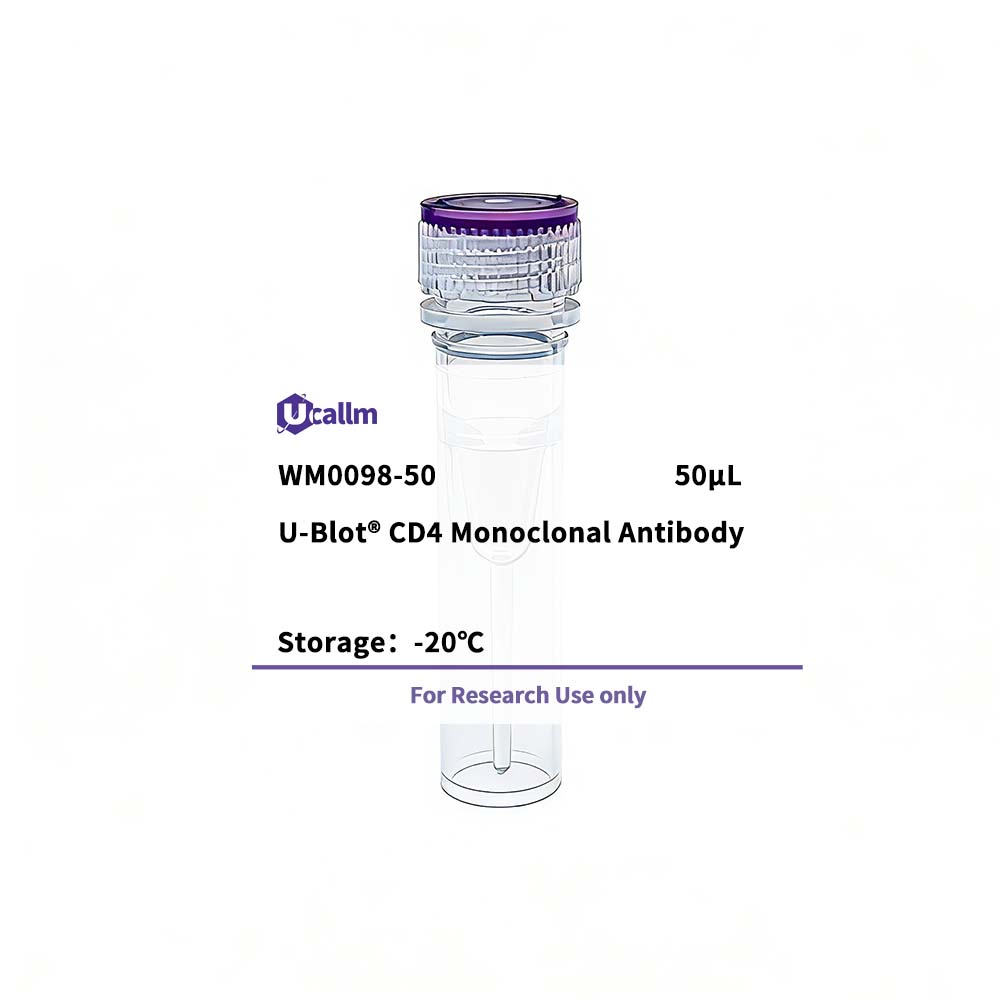
CD4 Monoclonal Antibody

Price range: $268.00 through $328.00

SKU: WM0098-50
Enter the quantity you would like, or drag the panel to find the quantity and price that best for you
Bulk QuoteAuthorize OEM & ODM

Product details

Background:
This gene encodes a membrane glycoprotein of T lymphocytes that interacts with major histocompatibility complex class II antigenes and is also a receptor for the human immunodeficiency virus. This gene is expressed not only in T lymphocytes, but also in B cells, macrophages, and granulocytes. It is also expressed in specific regions of the brain. The protein functions to initiate or augment the early phase of T-cell activation, and may function as an important mediator of indirect neuronal damage in infectious and immune-mediated diseases of the central nervous system. Multiple alternatively spliced transcript variants encoding different isoforms have been identified in this gene. [provided by RefSeq, Aug 2010],
Specifications

TargetCD4
ReactivityHuman
ApplicationsFC, ELISA
MW(Calculated)
MW(Observed)
Host SpeciesMouse
Isotype
Conjugate/ModificationUnmodified
Modification
Recommended Dilution RatioFlow Cyt 1:200-1:400; ELISA 1:10000; Not yet tested in other applications;
FormulationLiquid in PBS containing 50% glycerol, 0.5% BSA and 0.02% sodium azide.
Source
PurificationAffinity purification
Purity
Storage-15°C to -25°C/1 year(Do not lower than -25°C)
Concentration
ClonalityMonoclonal
Clone Number20D10
ImmunogenPurified recombinant fragment of human CD4 expressed in E. Coli.
Sequence
SpecificityCD4 Monoclonal Antibody detects endogenous levels of CD4 protein.
Gene NameCD4
Protein NameT-cell surface glycoprotein CD4
Other NameCD4; / T-cell surface glycoprotein CD4; / T-cell surface antigen T4/Leu-3; / CD antigen CD4
SpeciesHuman
Gene ID-1920
UniprotP01730,
Species.1Mouse
Gene ID-2
Uniprot.1P06332
Species.2
Gene ID-3
Uniprot.2
Organism-4
Gene ID-4
SwissProt-4
BackgroundThis gene encodes a membrane glycoprotein of T lymphocytes that interacts with major histocompatibility complex class II antigenes and is also a receptor for the human immunodeficiency virus. This gene is expressed not only in T lymphocytes, but also in B cells, macrophages, and granulocytes. It is also expressed in specific regions of the brain. The protein functions to initiate or augment the early phase of T-cell activation, and may function as an important mediator of indirect neuronal damage in infectious and immune-mediated diseases of the central nervous system. Multiple alternatively spliced transcript variants encoding different isoforms have been identified in this gene. [provided by RefSeq, Aug 2010],

Cellular LocalizationCell membrane; Single-pass type I membrane protein . Localizes to lipid rafts (PubMed:12517957, PubMed:9168119). Removed from plasma membrane by HIV-1 Nef protein that increases clathrin-dependent endocytosis of this antigen to target it to lysosomal degradation. Cell surface expression is also down-modulated by HIV-1 Envelope polyprotein gp160 that interacts with, and sequesters CD4 in the endoplasmic reticulum.
Tissue ExpressionHighly expressed in T-helper cells. The presence of CD4 is a hallmark of T-helper cells which are specialized in the activation and growth of cytotoxic T-cells, regulation of B cells, or activation of phagocytes. CD4 is also present in other immune cells such as macrophages, dendritic cells or NK cells.
Signaling_pathwayOrganismal Systems >> Immune system >> Hematopoietic cell lineage;Organismal Systems >> Immune system >> Antigen processing and presentation;Organismal Systems >> Immune system >> T cell receptor signaling pathway;Organismal Systems >> Immune system >> Th1 and Th2 cell differentiation;Organismal Systems >> Immune system >> Th17 cell differentiation;Human Diseases >> Cancer: overview >> PD-L1 expression and PD-1 checkpoint pathway in cancer;Human Diseases >> Immune disease >> Primary immunodeficiency;Environmental Information Processing >> Signaling molecules and interaction >> Cytokine-cytokine receptor interaction;Environmental Information Processing >> Signaling molecules and interaction >> Cell adhesion molecules
Research Areas>>Viral life cycle - HIV-1; / >>Cytokine-cytokine receptor interaction; / >>Cell adhesion molecules; / >>Antigen processing and presentation; / >>Hematopoietic cell lineage; / >>Th1 and Th2 cell differentiation; / >>Th17 cell differentiation; / >>T cell receptor signaling pathway; / >>Yersinia infection; / >>Human T-cell leukemia virus 1 infection; / >>Human immunodeficiency virus 1 infection; / >>PD-L1 expression and PD-1 checkpoint pathway in cancer; / >>Primary immunodeficiency
FunctionFunction:Accessory protein for MHC class-II antigen/T-cell receptor interaction. May regulate T-cell activation. Induces the aggregation of lipid rafts.,miscellaneous:Primary receptor for HIV-1.,online information:CD4 entry,PTM:Palmitoylation and association with LCK contribute to the enrichment of CD4 in lipid rafts.,similarity:Contains 1 Ig-like V-type (immunoglobulin-like) domain.,similarity:Contains 3 Ig-like C2-type (immunoglobulin-like) domains.,subcellular location:Localizes to lipid rafts. Removed from plasma membrane by HIV-1 Nef protein that increases clathrin-dependent endocytosis of this antigen to target it to lysosomal degradation. Cell surface expression is also down-modulated by HIV-1 Envelope polyprotein gp160 that interacts with, and sequesters CD4 in the endoplasmic reticulum.,subunit:Associates with LCK. Binds to HIV-1 gp120 and to P4HB/PDI and upon HIV-1 binding to the cell membrane, is part of P4HB/PDI-CD4-CXCR4-gp120 complex. Interacts with HIV-1 Envelope polyprotein gp160 and protein Vpu. Interacts with Human Herpes virus 7 capsid proteins.,
RRID
Please login to post questions
Back to Top
Product has been added to your cart