SKU: WR4078 Categories: ,

U-Blot® Cyclin E1 Rabbit mAb

Price range: $268.00 through $328.00

SKU: WR4078-50
Enter the quantity you would like, or drag the panel to find the quantity and price that best for you
Bulk QuoteAuthorize OEM & ODM

Product details

Background:The protein encoded by this gene belongs to the highly conserved cyclin family, whose members are characterized by a dramatic periodicity in protein abundance through the cell cycle. Cyclins function as regulators of CDK kinases. Different cyclins exhibit distinct expression and degradation patterns which contribute to the temporal coordination of each mitotic event. This cyclin forms a complex with and functions as a regulatory subunit of CDK2, whose activity is required for cell cycle G1/S transition. This protein accumulates at the G1-S phase boundary and is degraded as cells progress through S phase. Overexpression of this gene has been observed in many tumors, which results in chromosome instability, and thus may contribute to tumorigenesis. This protein was found to associate with, and be involved in, the phosphorylation of NPAT protein (nuclear protein mapped to the ATM locus), which participates in

Specifications

Size50μL/100μL
TargetCyclin E1
ReactivityHuman, Mouse, Rat, Pig
ApplicationsWB, IHC, IF, IP, ELISA
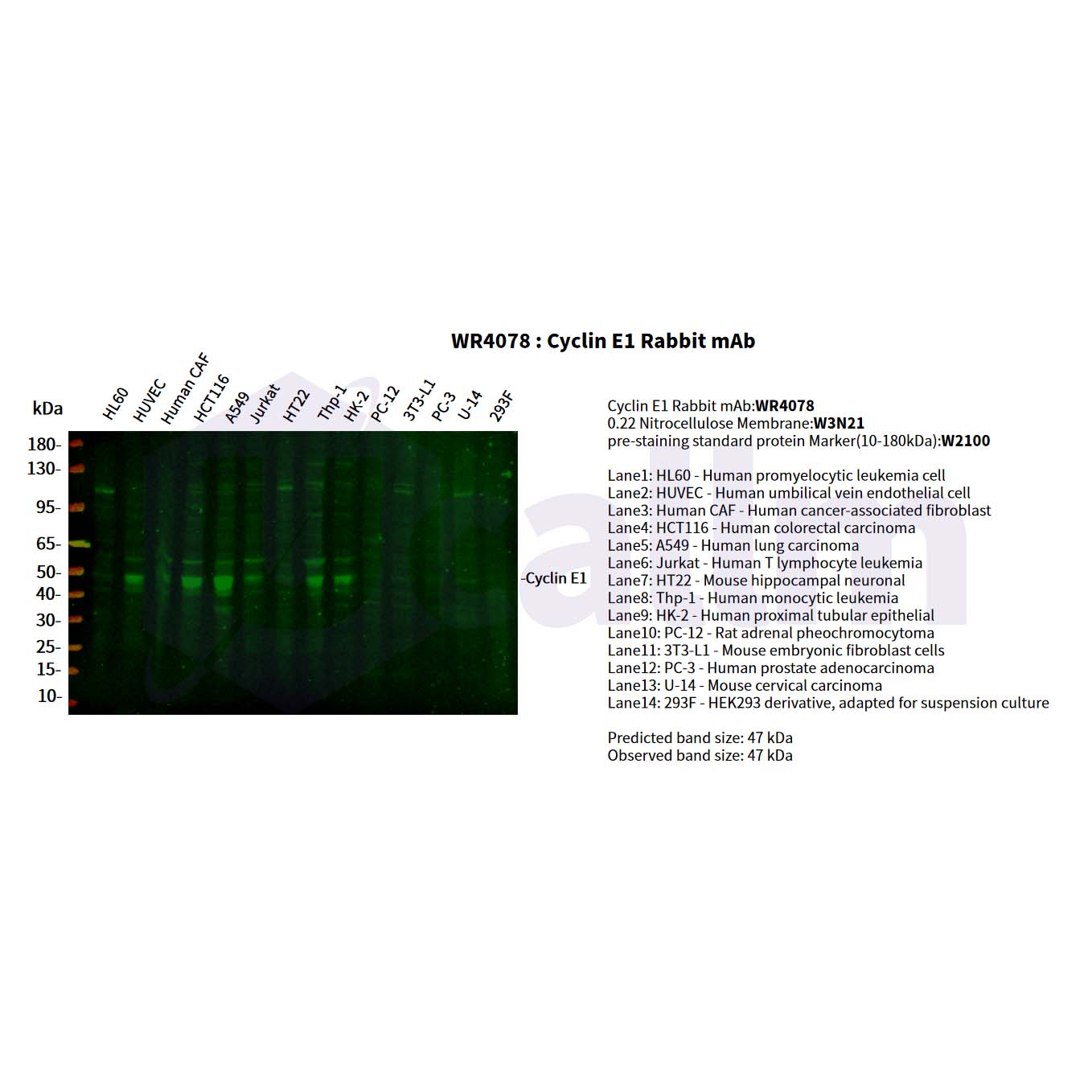
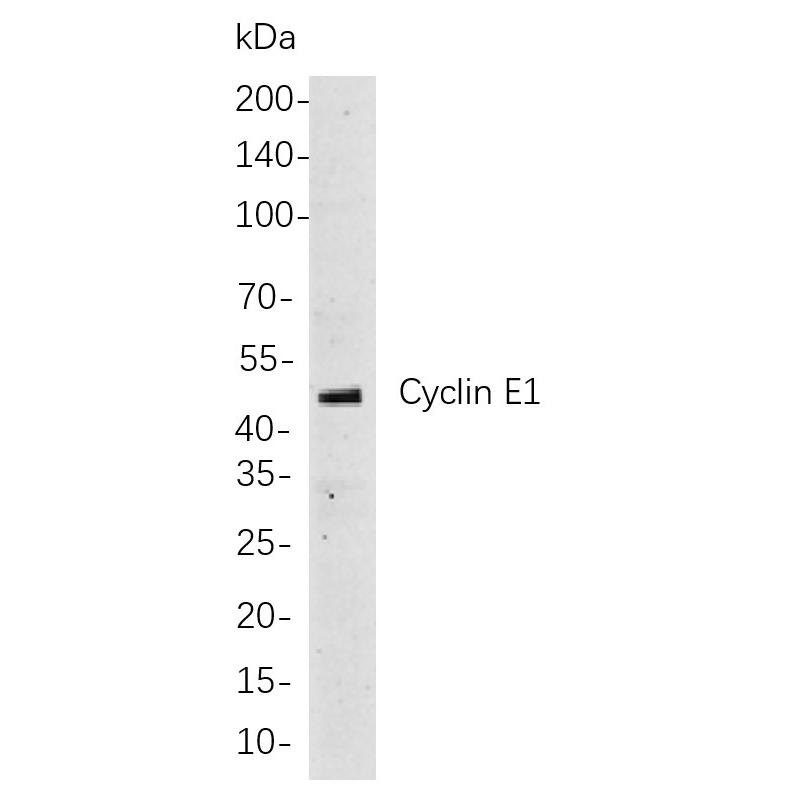
MW(Calculated)47kD
MW(Observed)47kD
Host SpeciesRabbit
IsotypeIgG,Kappa
Conjugate/ModificationUnmodified
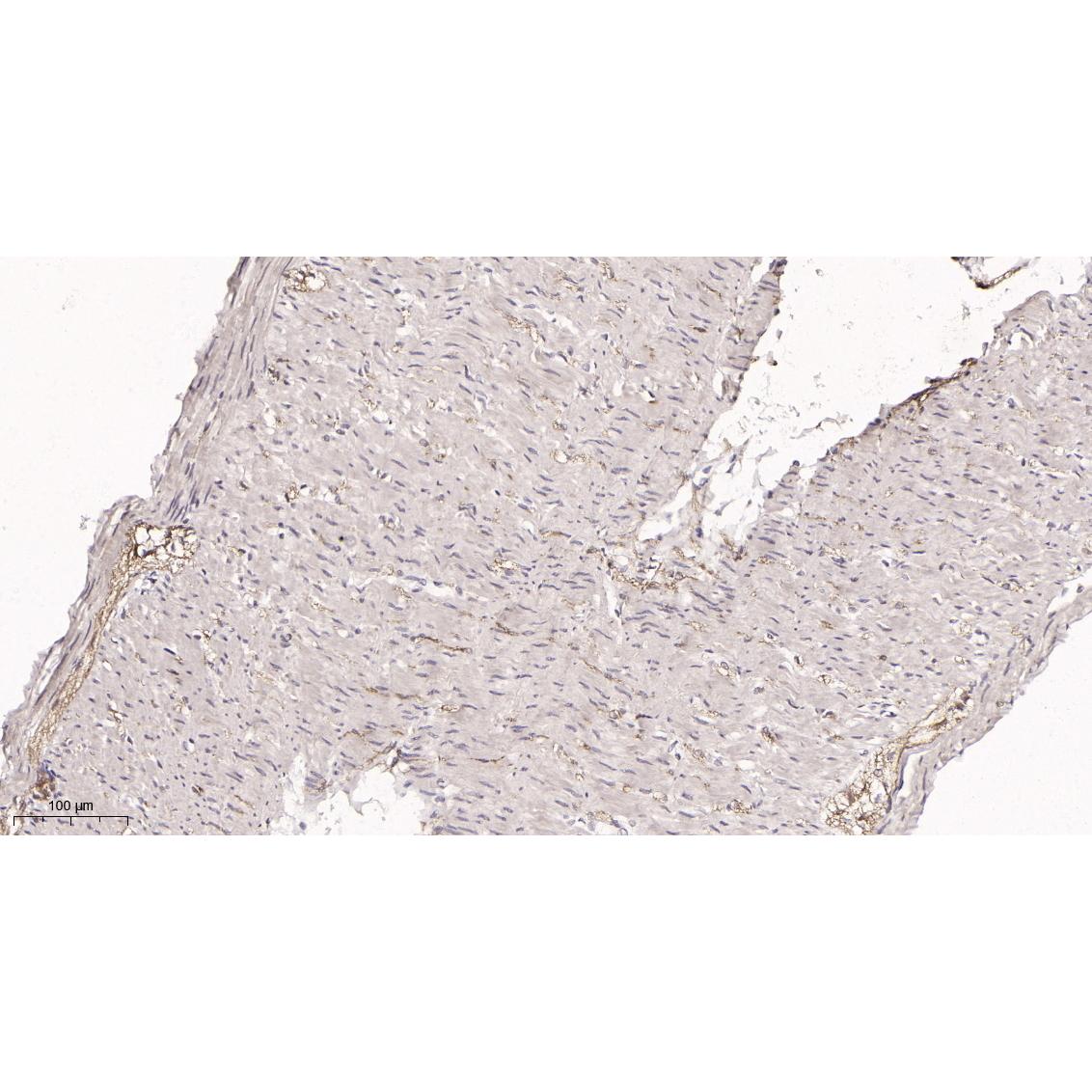
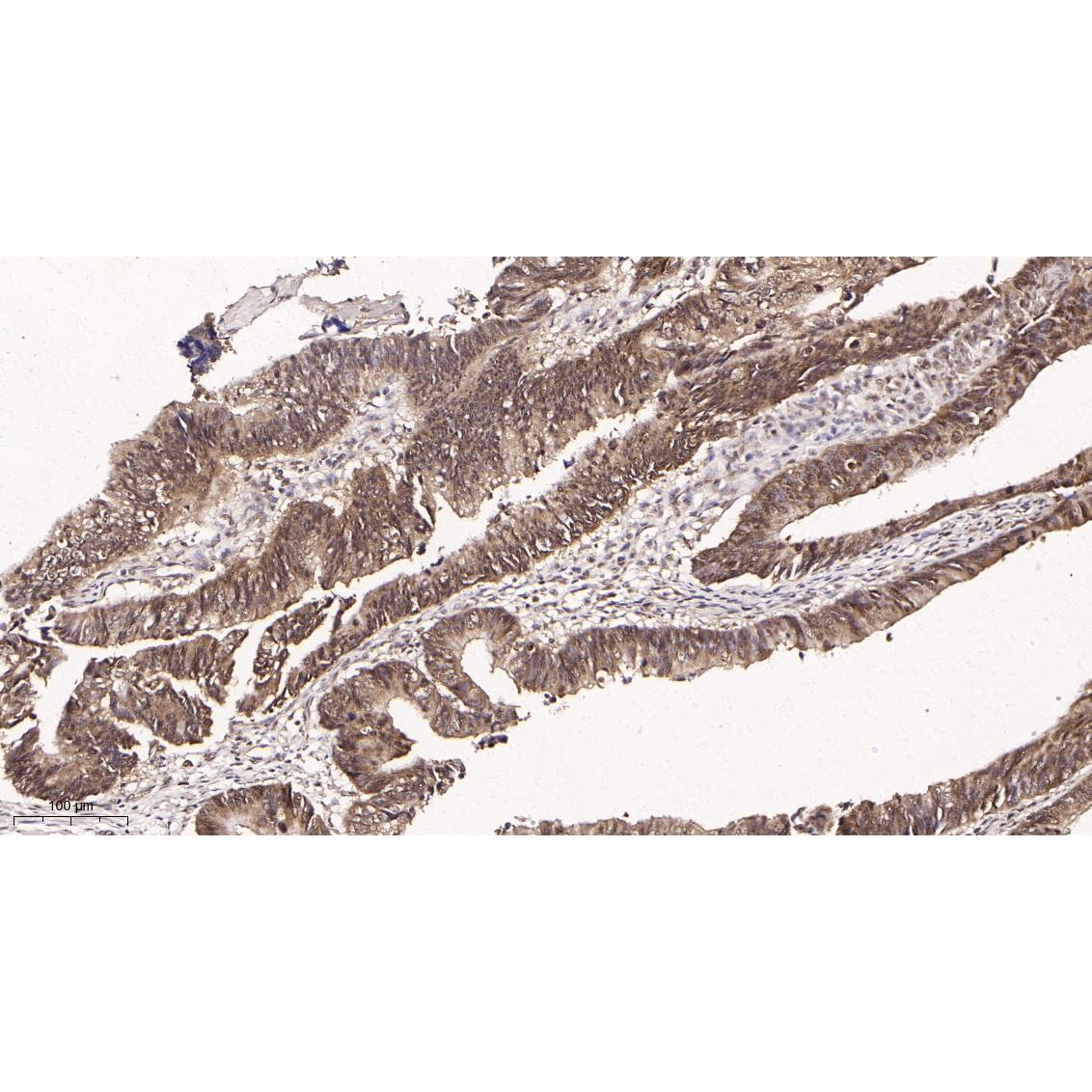
Recommended Dilution RatioIHC 1:400-1000; WB 1:1000-5000; IF 1:200-1000; ELISA 1:5000-20000; IP 1:50-200 / Note: For IHC, we suggest antigen retrieval with TE buffer pH 9.0 (Cat#WT1004)
FormulationPBS, 50% glycerol, 0.05% Proclin 300, 0.05%BSA
PurificationRecombinant Antibody expressed in animal component-free (ACF) media, purified via Protein A affinity chromatography.
Storage-15°C to -25°C/1 year(Do not lower than -25°C)
Concentration
ClonalityMonoclonal
Clone NumberRM0164R
ImmunogenThe specific immunogen used to produce this antibody is proprietary information.
SpecificityEndogenous
Gene NameCCNE1
Protein NameG1/S-specific cyclin-E1
Other NameCCNE1; / CCNE; / G1/S-specific cyclin-E1
SpeciesHuman
Gene ID898
UniprotP24864,
Species.1Mouse
Gene ID.112447
Uniprot.1Q61457,
Species.2Rat
Gene ID.2
Uniprot.2P39949
Cellular LocalizationNuclear
Tissue ExpressionHighly expressed in testis and placenta. Low levels in bronchial epithelial cells.
Signaling_pathwayCellular Processes >> Cell growth and death >> Cell cycle;Cellular Processes >> Cell growth and death >> p53 signaling pathway;Cellular Processes >> Cell growth and death >> Cellular senescence;Human Diseases >> Cancer: overview >> Pathways in cancer;Human Diseases >> Cancer: overview >> MicroRNAs in cancer;Human Diseases >> Cancer: specific types >> Gastric cancer;Human Diseases >> Cancer: specific types >> Prostate cancer;Human Diseases >> Cancer: specific types >> Small cell lung cancer;Environmental Information Processing >> Signal transduction >> PI3K-Akt signaling pathway
Research Areas>>Cell cycle; / >>Oocyte meiosis; / >>p53 signaling pathway; / >>PI3K-Akt signaling pathway; / >>Cellular senescence; / >>Cushing syndrome; / >>Hepatitis B; / >>Measles; / >>Human papillomavirus infection; / >>Human T-cell leukemia virus 1 infection; / >>Epstein-Barr virus infection; / >>Pathways in cancer; / >>Viral carcinogenesis; / >>MicroRNAs in cancer; / >>Prostate cancer; / >>Small cell lung cancer; / >>Gastric cancer
FunctionFunction:Essential for the control of the cell cycle at the G1/S (start) transition.,PTM:Phosphorylation of Thr-395 by GSK3 and of Ser-399 by CDK2 accelerates degradation via the ubiquitin proteasome pathway. Phosphorylated upon DNA damage, probably by ATM or ATR.,similarity:Belongs to the cyclin family. Cyclin E subfamily.,subunit:Interacts with a member of the CDK2/CDK protein kinases to form a serine/threonine kinase holoenzyme complex. The cyclin subunit imparts substrate specificity to the complex. Interacts with retinoblastoma binding protein 3 and retinoblastoma-like protein 1. Found in a complex with CDK2, CABLES1 and CCNA1 (By similarity). Part of a complex consisting of UHRF2, CDK2 and CCNE1.,tissue specificity:Highly expressed in testis and placenta. Low levels in bronchial epithelial cells.,
Please login to post questions

Back to Top
Product has been added to your cart

