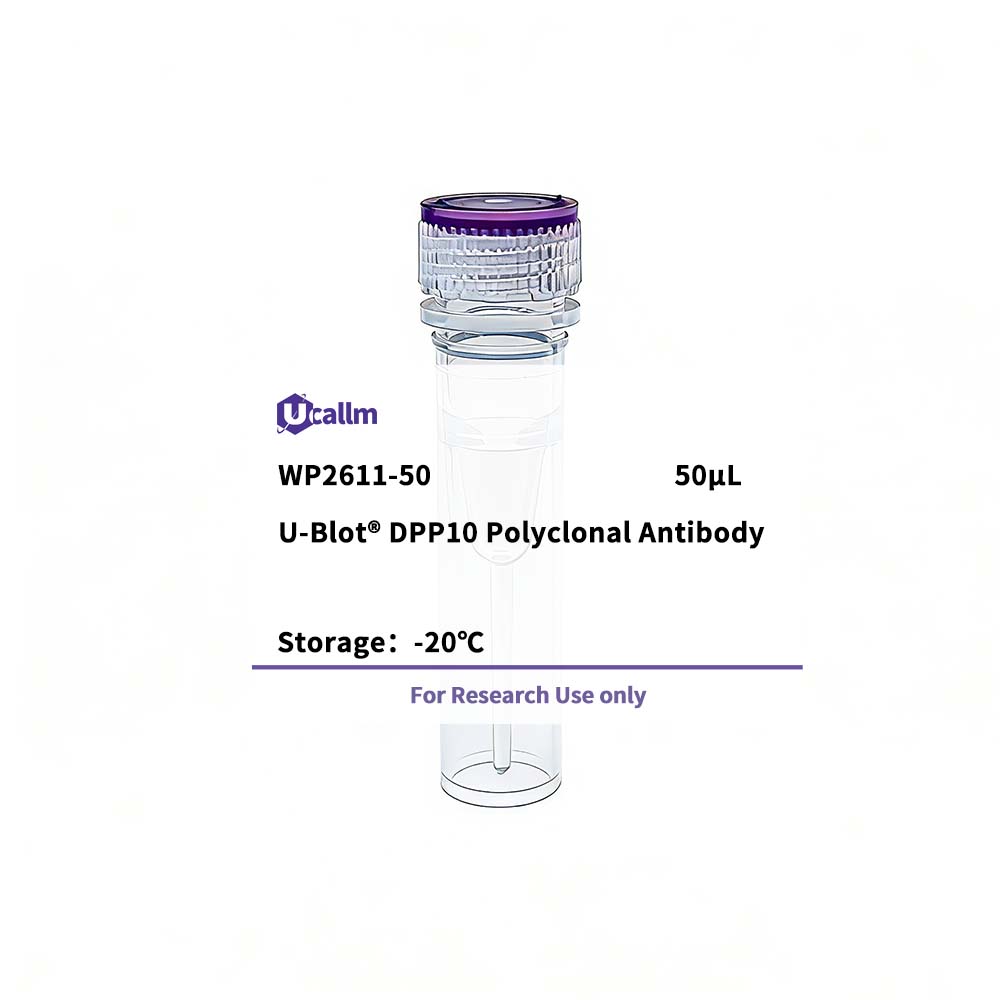
SKU: WP2611 Categories: ,

DPP10 Polyclonal Antibody

Price range: $268.00 through $328.00

SKU: WP2611-100
Enter the quantity you would like, or drag the panel to find the quantity and price that best for you
Bulk QuoteAuthorize OEM & ODM

Product details

Background:

This gene encodes a single-pass type II membrane protein that is a member of the S9B family in clan SC of the serine proteases. This protein has no detectable protease activity, most likely due to the absence of the conserved serine residue normally present in the catalytic domain of serine proteases. However, it does bind specific voltage-gated potassium channels and alters their expression and biophysical properties. Mutations in this gene have been associated with asthma. Alternate transcriptional splice variants, encoding different isoforms, have been characterized. [provided by RefSeq, Jul 2008],


Specifications

Size50μL/100μL
TargetDPP10
ReactivityHuman, Mouse, Rat
ApplicationsWB, ELISA
MW(Calculated)
MW(Observed)87kD
Host SpeciesRabbit
IsotypeIgG
Conjugate/ModificationUnmodified
Recommended Dilution RatioWB 1:500-2000; ELISA 1:5000-20000
FormulationLiquid in PBS containing 50% glycerol,0.5% BSA and 0.02% sodium azide.
PurificationThe antibody was affinity-purified from rabbit antiserum by affinity-chromatography using epitope-specific immunogen.
Storage-15°C to -25°C/1 year(Do not lower than -25°C)
Concentration1 mg/ml
ClonalityPolyclonal
Clone Number
ImmunogenSynthesized peptide derived from part region of human protein
SpecificityDPP10 Polyclonal Antibody detects endogenous levels of protein.
Gene NameDPP10 DPRP3 KIAA1492
Protein NameInactive dipeptidyl peptidase 10 (Dipeptidyl peptidase IV-related protein 3) (DPRP-3) (Dipeptidyl peptidase X) (DPP X) (Dipeptidyl peptidase-like protein 2) (DPL2)
Other Name
SpeciesHuman
Gene ID57628
UniprotQ8N608,
Species.1Mouse
Gene ID.1
Uniprot.1Q6NXK7,
Species.2Rat
Gene ID.2
Uniprot.2Q6Q629
Cellular LocalizationCell membrane; Single-pass type II membrane protein .
Tissue ExpressionFound in serum, T-cells and brain (at protein level). Expressed in brain, pancreas, spinal cord and adrenal glands.
Signaling_pathway
Research Areas
FunctionAlternative products:Additional isoforms seem to exist, which may have different subcellular locations,Caution:Gly-651 is present instead of the conserved Ser which is expected to be an active site residue.,Disease:Defects in DPP10 may be a cause of susceptibility to asthma. Defects in splicing have been observed.,Function:Has no dipeptidyl aminopeptidase activity. May modulate cell surface expression and activity of the potassium channels KCND1 and KCND2.,PTM:N-glycosylated.,similarity:Belongs to the peptidase S9B family. DPPIV subfamily.,subunit:May form oligomers. Interacts with KCND1 (Probable). Interacts with KCND2.,tissue specificity:Found in serum, T-cells and brain (at protein level). Expressed in brain, pancreas, spinal cord and adrenal glands.,
Please login to post questions
Back to Top
Product has been added to your cart
