SKU: WM0674 Categories: ,

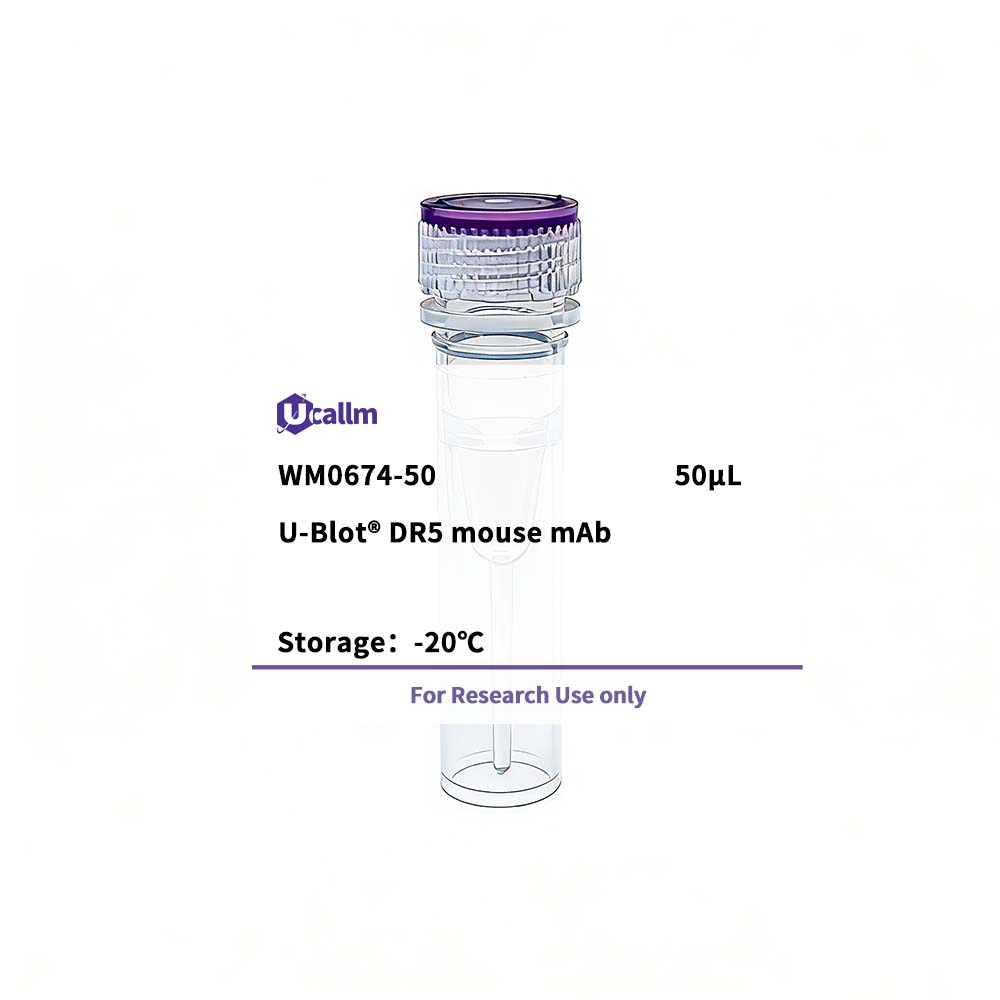
DR5 mouse mAb

Price range: $268.00 through $328.00

SKU: WM0674-50
Enter the quantity you would like, or drag the panel to find the quantity and price that best for you
Bulk QuoteAuthorize OEM & ODM

Product details

Background:
The protein encoded by this gene is a member of the TNF-receptor superfamily, and contains an intracellular death domain. This receptor can be activated by tumor necrosis factor-related apoptosis inducing ligand (TNFSF10/TRAIL/APO-2L), and transduces an apoptosis signal. Studies with FADD-deficient mice suggested that FADD, a death domain containing adaptor protein, is required for the apoptosis mediated by this protein. Two transcript variants encoding different isoforms and one non-coding transcript have been found for this gene. [provided by RefSeq, Mar 2009],


Specifications

Size50μL/100μL
TargetDR5
ReactivityHuman, Mouse
ApplicationsWB, ICC
MW(Calculated)
MW(Observed)48kD
Host SpeciesMouse
Isotype
Conjugate/ModificationUnmodified
Recommended Dilution RatioWB 1:500-1:2000; ICC 1:100
FormulationLiquid in PBS containing 50% glycerol, 0.5% BSA and 0.02% sodium azide.
PurificationThe antibody was affinity-purified from mouse ascites by affinity-chromatography using epitope-specific immunogen.
Storage-15°C to -25°C/1 year(Do not lower than -25°C)
Concentration
ClonalityMonoclonal
Clone Number19D4
ImmunogenPurified recombinant human DR5 protein fragments expressed in E.coli.
SpecificityThis antibody detects endogenous levels of DR5 and does not cross-react with related proteins.
Gene NameTNFRSF10B DR5 KILLER TRAILR2 TRICK2 ZTNFR9 UNQ160/PRO186
Protein NameTumor necrosis factor receptor superfamily member 10B
Other NameFas like protein; / Apoptosis inducing protein TRICK2A/2B; / Apoptosis inducing receptor TRAIL R2; / CD 262; / CD262; / CD262 antigen; / Cytotoxic TRAIL receptor 2; / Death domain containing receptor for TRAIL/Apo 2L; / Death domain containing receptor for TRAIL/Apo2L; / Death receptor 5; / DR 5; / DR5; / Fas like protein precursor; / KILLER; / KILLER/DR5; / OTTHUMP00000123492; / OTTHUMP00000123493; / p53 regulated DNA damage inducible cell death receptor; / killer; / p53 regulated DNA damage inducible cell death receptor; / killer; / TNF related apoptosis inducing ligand receptor 2; / TNF related apoptosis inducing ligand receptor 2; / TNF-related apoptosis-inducing ligand receptor 2; / TNFRSF10B; / TR10B_HUMAN; / TRAIL R2; / TRAIL receptor 2; / TRAIL-R2; / TRAILR2; / TRANCER; / TRICK2; / TRICK2A; / TRICK2B; / TRICKB; / Tumor necrosis factor receptor like protein ZTNFR9; / Tumor necrosis factor receptor like protein ZTNFR9; / Tumor necrosis factor receptor superfamily member 10b; / Tumor necrosis factor receptor superfamily, member 10b; / ZTNFR9.
SpeciesHuman
Gene ID8795
UniprotO14763,
Species.1Mouse
Gene ID.121933
Uniprot.1Q9QZM4
Species.2
Gene ID.2
Uniprot.2
Cellular LocalizationMembrane; Single-pass type I membrane protein.
Tissue ExpressionWidely expressed in adult and fetal tissues; very highly expressed in tumor cell lines such as HeLaS3, K-562, HL-60, SW480, A-549 and G-361; highly expressed in heart, peripheral blood lymphocytes, liver, pancreas, spleen, thymus, prostate, ovary, uterus, placenta, testis, esophagus, stomach and throughout the intestinal tract; not detectable in brain.
Signaling_pathwayCellular Processes >> Cell growth and death >> Apoptosis;Cellular Processes >> Cell growth and death >> Necroptosis;Cellular Processes >> Cell growth and death >> p53 signaling pathway;Organismal Systems >> Immune system >> Natural killer cell mediated cytotoxicity;Environmental Information Processing >> Signaling molecules and interaction >> Cytokine-cytokine receptor interaction;Environmental Information Processing >> Signaling molecules and interaction >> Viral protein interaction with cytokine and cytokine receptor
Research Areas>>Cytokine-cytokine receptor interaction; / >>Viral protein interaction with cytokine and cytokine receptor; / >>p53 signaling pathway; / >>Apoptosis; / >>Necroptosis; / >>Natural killer cell mediated cytotoxicity; / >>Pathogenic Escherichia coli infection; / >>Salmonella infection; / >>Influenza A; / >>Lipid and atherosclerosis
FunctionDisease:Defects in TNFRSF10B may be a cause of squamous cell carcinoma of the head and neck (HNSCC) [MIM:275355].,Function:Receptor for the cytotoxic ligand TNFSF10/TRAIL. The adapter molecule FADD recruits caspase-8 to the activated receptor. The resulting death-inducing signaling complex (DISC) performs caspase-8 proteolytic activation which initiates the subsequent cascade of caspases (aspartate-specific cysteine proteases) mediating apoptosis. Promotes the activation of NF-kappa-B.,induction:TNFRSF10B is regulated by the tumor suppressor p53.,similarity:Contains 1 death domain.,similarity:Contains 3 TNFR-Cys repeats.,subunit:Homotrimer. Can interact with TRADD and RIP.,tissue specificity:Widely expressed in adult and fetal tissues; very highly expressed in tumor cell lines such as HeLa S3, K562, HL-60, SW480, A549 and G361; highly expressed in heart, peripheral blood lymphocytes, liver, pancreas, spleen, thymus, prostate, ovary, uterus, placenta, testis, esophagus, stomach and throughout the intestinal tract; not detectable in brain.,
Please login to post questions
Back to Top
Product has been added to your cart
