SKU: WP3265 Categories: ,

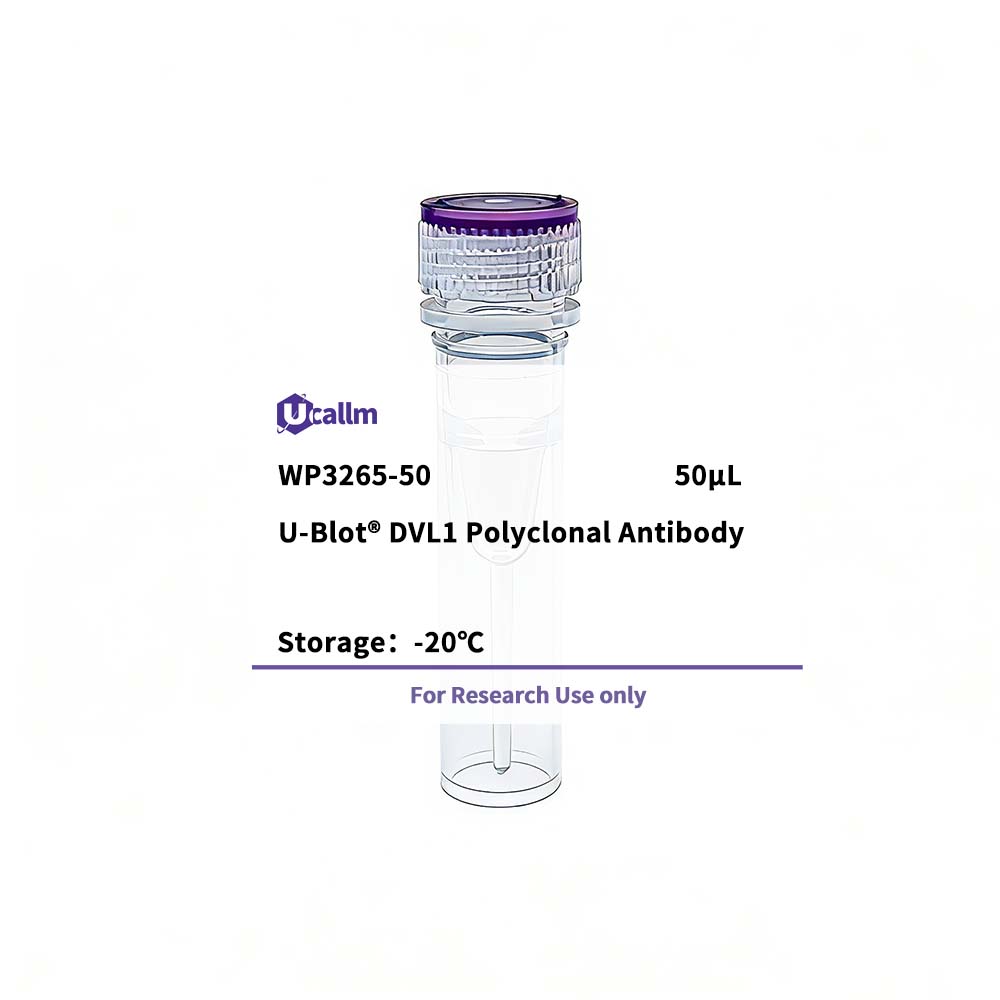
DVL1 Polyclonal Antibody

Price range: $268.00 through $328.00

SKU: WP3265-100
Enter the quantity you would like, or drag the panel to find the quantity and price that best for you
Bulk QuoteAuthorize OEM & ODM

Product details

Background:

DVL1, the human homolog of the Drosophila dishevelled gene (dsh) encodes a cytoplasmic phosphoprotein that regulates cell proliferation, acting as a transducer molecule for developmental processes, including segmentation and neuroblast specification. DVL1 is a candidate gene for neuroblastomatous transformation. The Schwartz-Jampel syndrome and Charcot-Marie-Tooth disease type 2A have been mapped to the same region as DVL1. The phenotypes of these diseases may be consistent with defects which might be expected from aberrant expression of a DVL gene during development. [provided by RefSeq, Jul 2008],


Specifications

Size50μL/100μL
TargetDVL1
ReactivityHuman, Mouse, Rat
ApplicationsWB, ELISA
MW(Calculated)
MW(Observed)76kD
Host SpeciesRabbit
IsotypeIgG
Conjugate/ModificationUnmodified
Recommended Dilution RatioWB 1:500-2000; ELISA 1:5000-20000
FormulationLiquid in PBS containing 50% glycerol,0.5% BSA and 0.02% sodium azide.
PurificationThe antibody was affinity-purified from rabbit antiserum by affinity-chromatography using epitope-specific immunogen.
Storage-15°C to -25°C/1 year(Do not lower than -25°C)
Concentration1 mg/ml
ClonalityPolyclonal
Clone Number
ImmunogenSynthesized peptide derived from part region of human protein
SpecificityDVL1 Polyclonal Antibody detects endogenous levels of protein.
Gene NameDVL1
Protein NameSegment polarity protein dishevelled homolog DVL-1 (Dishevelled-1) (DSH homolog 1)
Other Name
SpeciesHuman
Gene ID1855
UniprotO14640,
Species.1Mouse
Gene ID.1
Uniprot.1P51141,
Species.2Rat
Gene ID.2
Uniprot.2Q9WVB9
Cellular LocalizationCell membrane; Peripheral membrane protein; Cytoplasmic side . Cytoplasm, cytosol . Cytoplasmic vesicle . Localizes at the cell membrane upon interaction with frizzled family members. .
Tissue ExpressionBrain,Eye,Peripheral Nervous System,Sympathetic ganglion,Testis,
Signaling_pathwayCellular Processes >> Cellular community - eukaryotes >> Signaling pathways regulating pluripotency of stem cells;Human Diseases >> Cancer: overview >> Pathways in cancer;Human Diseases >> Cancer: specific types >> Hepatocellular carcinoma;Human Diseases >> Cancer: specific types >> Gastric cancer;Human Diseases >> Cancer: specific types >> Basal cell carcinoma;Human Diseases >> Cancer: specific types >> Breast cancer;Human Diseases >> Neurodegenerative disease >> Alzheimer disease;Human Diseases >> Neurodegenerative disease >> Pathways of neurodegeneration - multiple diseases;Environmental Information Processing >> Signal transduction >> Wnt signaling pathway;Environmental Information Processing >> Signal transduction >> Notch signaling pathway;Environmental Information Processing >> Signal transduction >> Hippo signaling pathway;Environmental Information Processing >> Signal transduction >> mTOR signaling pathway
Research Areas>>mTOR signaling pathway; / >>Wnt signaling pathway; / >>Notch signaling pathway; / >>Hippo signaling pathway; / >>Signaling pathways regulating pluripotency of stem cells; / >>Melanogenesis; / >>Cushing syndrome; / >>Alzheimer disease; / >>Pathways of neurodegeneration - multiple diseases; / >>Human papillomavirus infection; / >>Pathways in cancer; / >>Basal cell carcinoma; / >>Breast cancer; / >>Hepatocellular carcinoma; / >>Gastric cancer
FunctionDisease:May be partly responsible for CATCH22 syndromes. This denomination includes developmental defects which associate cardiac defect, abnormal facies, thymic hypoplasia, cleft palate, hypocalcemia, and chromosome 22 deletions.,Function:May play a role in the signal transduction pathway mediated by multiple Wnt genes.,PTM:Ubiquitinated, leading to its subsequent degradation by the ubiquitin-proteasome. The interaction with INVS is required for ubiquitination.,similarity:Belongs to the DSH family.,similarity:Contains 1 DEP domain.,similarity:Contains 1 DIX domain.,similarity:Contains 1 PDZ (DHR) domain.,subunit:Interacts with CXXC4. Interacts (via PDZ domain) with NXN (By similarity). Interacts with BRD7 and INVS. Interacts through its PDZ domain with the C-terminal regions of VANGL1, VANGL2 and CCDC88C/DAPLE.,tissue specificity:Expressed in the thymus and, at high levels, in the heart.,
Please login to post questions
Back to Top
Product has been added to your cart