


E2F-2 Polyclonal Antibody
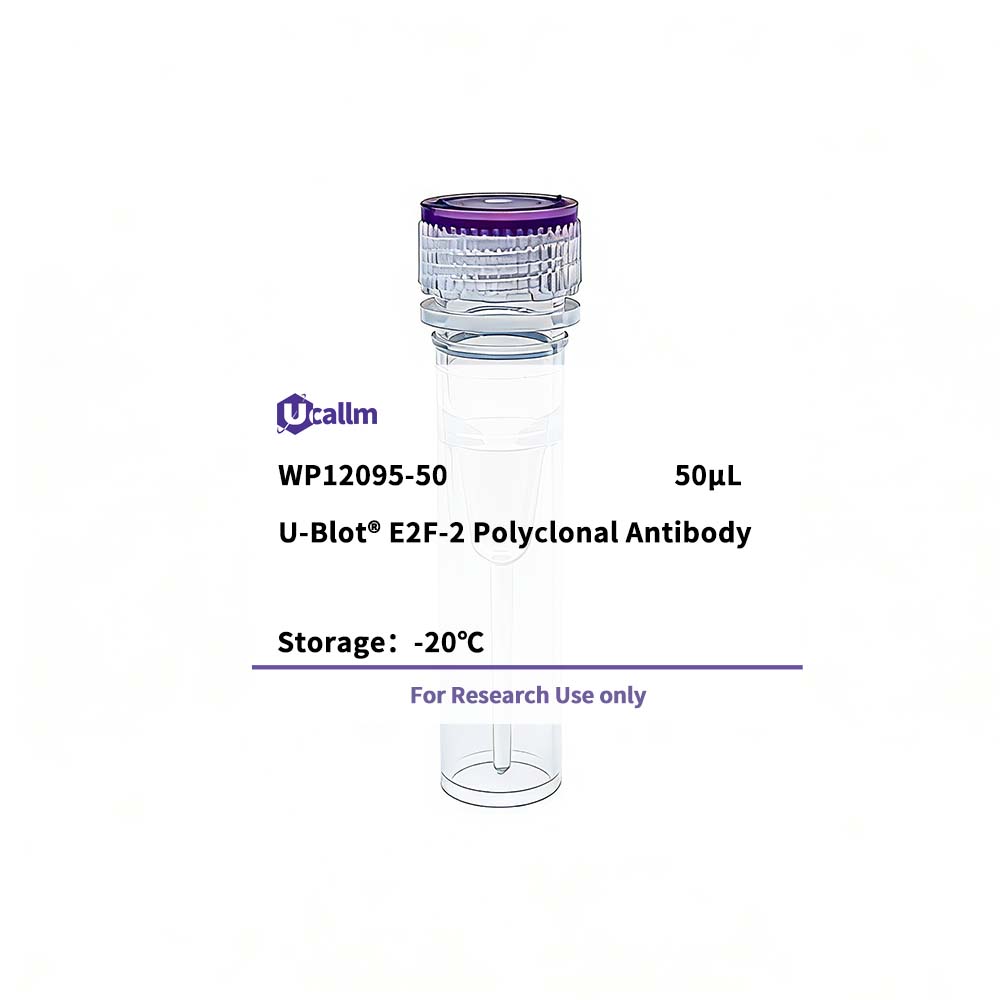
Ucallm_WP12095-50
Price range: $268.00 through $328.00
Product details
Background:
The protein encoded by this gene is a member of the E2F family of transcription factors. The E2F family plays a crucial role in the control of cell cycle and action of tumor suppressor proteins and is also a target of the transforming proteins of small DNA tumor viruses. The E2F proteins contain several evolutionally conserved domains found in most members of the family. These domains include a DNA binding domain, a dimerization domain which determines interaction with the differentiation regulated transcription factor proteins (DP), a transactivation domain enriched in acidic amino acids, and a tumor suppressor protein association domain which is embedded within the transactivation domain. This protein and another 2 members, E2F1 and E2F3, have an additional cyclin binding domain. This protein binds specifically to retinoblastoma protein pRB in a cell-cycle dependent manner, and it exhibits
Specifications
| Size | 50μL/100μL |
| Target | E2F-2 |
| Reactivity | Human, Mouse |
| Applications | WB, IHC, IF, ELISA |
| MW(Calculated) | |
| MW(Observed) | 48kD |
| Host Species | Rabbit |
| Isotype | IgG |
| Conjugate/Modification | Unmodified |
| Recommended Dilution Ratio | WB 1:500-1:2000; IHC 1:100-1:300; ELISA 1:40000; IF 1:50-200 / Note: For IHC, we suggest antigen retrieval with TE buffer pH 9.0 (Cat#WT1004) |
| Formulation | Liquid in PBS containing 50% glycerol, 0.5% BSA and 0.02% sodium azide. |
| Purification | The antibody was affinity-purified from rabbit antiserum by affinity-chromatography using epitope-specific immunogen. |
| Storage | -15°C to -25°C/1 year(Do not lower than -25°C) |
| Concentration | 1 mg/ml |
| Clonality | Polyclonal |
| Clone Number | |
| Immunogen | The antiserum was produced against synthesized peptide derived from human E2F2. AA range:221-270 |
| Specificity | E2F-2 Polyclonal Antibody detects endogenous levels of E2F-2 protein. |
| Gene Name | E2F2 |
| Protein Name | Transcription factor E2F2 |
| Other Name | E2F2; / Transcription factor E2F2; / E2F-2 |
| Species | Human |
| Gene ID | 1870 |
| Uniprot | Q14209, |
| Species.1 | Mouse |
| Gene ID.1 | 242705 |
| Uniprot.1 | P56931 |
| Species.2 | |
| Gene ID.2 | |
| Uniprot.2 | |
| Cellular Localization | Nucleus. |
| Tissue Expression | Highest level of expression is found in placenta, low levels are found in lung. Found as well in many immortalized cell lines derived from tumor samples. |
| Signaling_pathway | Cellular Processes >> Cell growth and death >> Cell cycle;Cellular Processes >> Cell growth and death >> Cellular senescence;Human Diseases >> Cancer: overview >> Pathways in cancer;Human Diseases >> Cancer: overview >> MicroRNAs in cancer;Human Diseases >> Cancer: specific types >> Pancreatic cancer;Human Diseases >> Cancer: specific types >> Hepatocellular carcinoma;Human Diseases >> Cancer: specific types >> Gastric cancer;Human Diseases >> Cancer: specific types >> Glioma;Human Diseases >> Cancer: specific types >> Chronic myeloid leukemia;Human Diseases >> Cancer: specific types >> Melanoma;Human Diseases >> Cancer: specific types >> Bladder cancer;Human Diseases >> Cancer: specific types >> Prostate cancer;Human Diseases >> Cancer: specific types >> Breast cancer;Human Diseases >> Cancer: specific types >> Small cell lung cancer;Human Diseases >> Cancer: specific types >> Non-small cell lung cancer |
| Research Areas | >>Endocrine resistance; / >>Cell cycle; / >>Cellular senescence; / >>Cushing syndrome; / >>Hepatitis C; / >>Hepatitis B; / >>Human cytomegalovirus infection; / >>Human T-cell leukemia virus 1 infection; / >>Kaposi sarcoma-associated herpesvirus infection; / >>Epstein-Barr virus infection; / >>Pathways in cancer; / >>MicroRNAs in cancer; / >>Pancreatic cancer; / >>Glioma; / >>Prostate cancer; / >>Melanoma; / >>Bladder cancer; / >>Chronic myeloid leukemia; / >>Small cell lung cancer; / >>Non-small cell lung cancer; / >>Breast cancer; / >>Hepatocellular carcinoma; / >>Gastric cancer |
| Function | Function:Transcription activator that binds DNA cooperatively with DP proteins through the E2 recognition site, 5'-TTTC[CG]CGC-3' found in the promoter region of a number of genes whose products are involved in cell cycle regulation or in DNA replication. The DRTF1/E2F complex functions in the control of cell-cycle progression from g1 to s phase. E2F-2 binds specifically to RB1 protein, in a cell-cycle dependent manner.,PTM:Phosphorylated by CDK2 and cyclin A-CDK2 in the S-phase.,similarity:Belongs to the E2F/DP family.,subunit:Component of the DRTF1/E2F transcription factor complex. Forms heterodimers with DP family members. The E2F-2 complex binds specifically hypophosphorylated retinoblastoma protein RB1. During the cell cycle, RB1 becomes phosphorylated in mid-to-late G1 phase, detaches from the DRTF1/E2F complex, rendering E2F transcriptionally active. Viral oncoproteins, notably E1A, T-antigen and HPV E7, are capable of sequestering RB protein, thus releasing the active complex. Binds EAPP.,tissue specificity:Highest level of expression is found in placenta, low levels are found in lung. Found as well in many immortalized cell lines derived from tumor samples., |
Please login to post questions
Related products





