


EGF Monoclonal Antibody
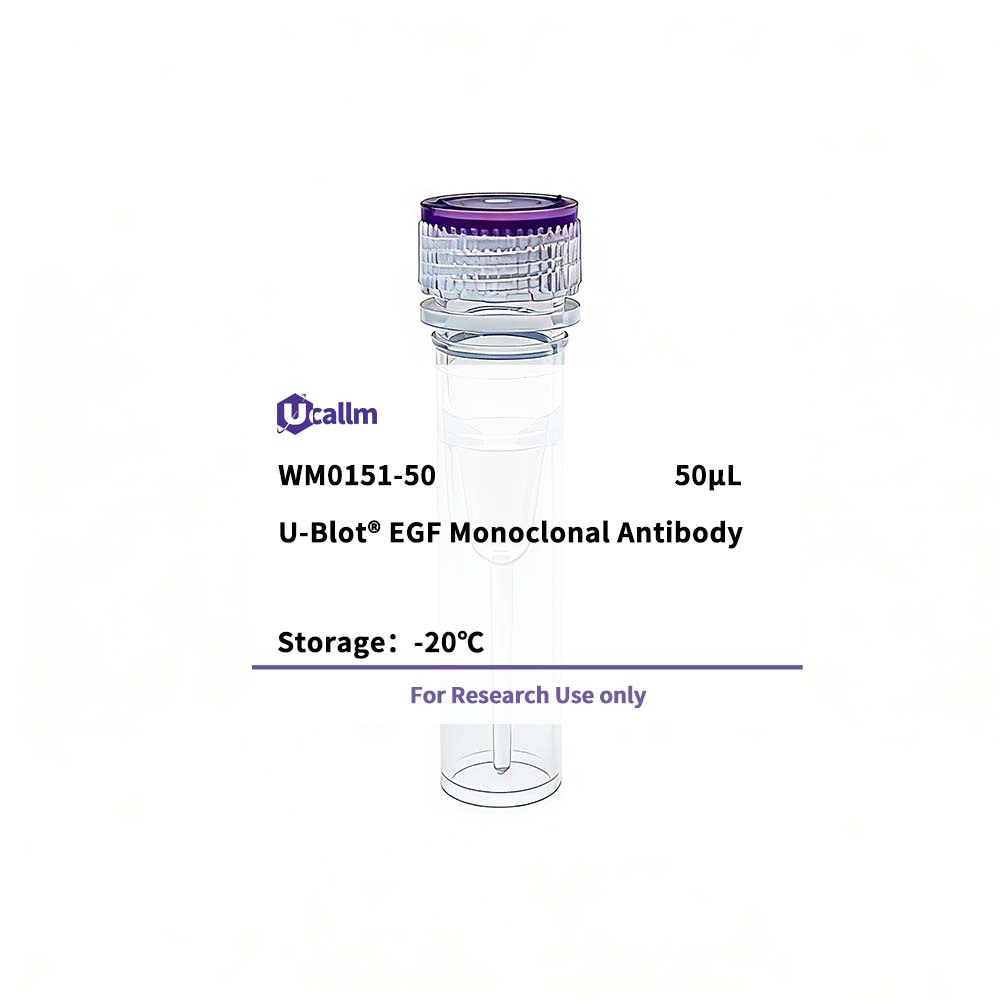
Ucallm_WM0151-50
Price range: $268.00 through $328.00
Product details
Background:
This gene encodes a member of the epidermal growth factor superfamily. The encoded preproprotein is proteolytically processed to generate the 53-amino acid epidermal growth factor peptide. This protein acts a potent mitogenic factor that plays an important role in the growth, proliferation and differentiation of numerous cell types. This protein acts by binding with high affinity to the cell surface receptor, epidermal growth factor receptor. Defects in this gene are the cause of hypomagnesemia type 4. Dysregulation of this gene has been associated with the growth and progression of certain cancers. Alternative splicing results in multiple transcript variants, at least one of which encodes a preproprotein that is proteolytically processed. [provided by RefSeq, Jan 2016],
Specifications
| Size | 50μL/100μL |
| Target | EGF |
| Reactivity | Human |
| Applications | WB, IF, ELISA |
| MW(Calculated) | 134kD |
| MW(Observed) | |
| Host Species | Mouse |
| Isotype | |
| Conjugate/Modification | Unmodified |
| Recommended Dilution Ratio | WB 1:500-1:2000; IF 1:200-1:1000; ELISA 1:10000; Not yet tested in other applications. |
| Formulation | Liquid in PBS containing 50% glycerol, 0.5% BSA and 0.02% sodium azide. |
| Purification | Affinity purification |
| Storage | -15°C to -25°C/1 year(Do not lower than -25°C) |
| Concentration | |
| Clonality | Monoclonal |
| Clone Number | 17B12 |
| Immunogen | Purified recombinant fragment of human EGF expressed in E. Coli. |
| Specificity | EGF Monoclonal Antibody detects endogenous levels of EGF protein. |
| Gene Name | EGF |
| Protein Name | Pro-epidermal growth factor |
| Other Name | EGF; / Pro-epidermal growth factor; / EGF |
| Species | Human |
| Gene ID | 1950 |
| Uniprot | P01133, |
| Species.1 | Mouse |
| Gene ID.1 | 13645 |
| Uniprot.1 | P01132 |
| Species.2 | |
| Gene ID.2 | |
| Uniprot.2 | |
| Cellular Localization | Membrane; Single-pass type I membrane protein. |
| Tissue Expression | Expressed in kidney, salivary gland, cerebrum and prostate. |
| Signaling_pathway | Cellular Processes >> Cellular community - eukaryotes >> Focal adhesion;Cellular Processes >> Cellular community - eukaryotes >> Gap junction;Cellular Processes >> Cell motility >> Regulation of actin cytoskeleton;Human Diseases >> Cancer: overview >> Pathways in cancer;Human Diseases >> Cancer: overview >> PD-L1 expression and PD-1 checkpoint pathway in cancer;Human Diseases >> Cancer: specific types >> Colorectal cancer;Human Diseases >> Cancer: specific types >> Pancreatic cancer;Human Diseases >> Cancer: specific types >> Gastric cancer;Human Diseases >> Cancer: specific types >> Glioma;Human Diseases >> Cancer: specific types >> Melanoma;Human Diseases >> Cancer: specific types >> Bladder cancer;Human Diseases >> Cancer: specific types >> Prostate cancer;Human Diseases >> Cancer: specific types >> Endometrial cancer;Human Diseases >> Cancer: specific types >> Breast cancer;Human Diseases >> Cancer: specific types >> Non-small cell lung cancer;Environmental Information Processing >> Signal transduction >> MAPK signaling pathway;Environmental Information Processing >> Signal transduction >> ErbB signaling pathway;Environmental Information Processing >> Signal transduction >> Ras signaling pathway;Environmental Information Processing >> Signal transduction >> Rap1 signaling pathway;Environmental Information Processing >> Signal transduction >> JAK-STAT signaling pathway;Environmental Information Processing >> Signal transduction >> HIF-1 signaling pathway;Environmental Information Processing >> Signal transduction >> FoxO signaling pathway;Environmental Information Processing >> Signal transduction >> Calcium signaling pathway;Environmental Information Processing >> Signal transduction >> Phospholipase D signaling pathway;Environmental Information Processing >> Signal transduction >> PI3K-Akt signaling pathway |
| Research Areas | >>EGFR tyrosine kinase inhibitor resistance; / >>MAPK signaling pathway; / >>ErbB signaling pathway; / >>Ras signaling pathway; / >>Rap1 signaling pathway; / >>Calcium signaling pathway; / >>HIF-1 signaling pathway; / >>FoxO signaling pathway; / >>Phospholipase D signaling pathway; / >>PI3K-Akt signaling pathway; / >>Focal adhesion; / >>Gap junction; / >>JAK-STAT signaling pathway; / >>Regulation of actin cytoskeleton; / >>Hepatitis C; / >>Human papillomavirus infection; / >>Pathways in cancer; / >>Chemical carcinogenesis - receptor activation; / >>Chemical carcinogenesis - reactive oxygen species; / >>Colorectal cancer; / >>Pancreatic cancer; / >>Endometrial cancer; / >>Glioma; / >>Prostate cancer; / >>Melanoma; / >>Bladder cancer; / >>Non-small cell lung cancer; / >>Breast cancer; / >>Gastric cancer; / >>Choline metabolism in cancer; / >>PD-L1 expression and PD-1 checkpoint pathway in cancer |
| Function | Disease:Defects in EGF are the cause of hypomagnesemia type 4 (HOMG4) [MIM:611718]; also known as renal hypomagnesemia normocalciuric. HOMG4 is a disorder characterized by massive renal hypomagnesemia and normal levels of serum calcium and calcium excretion. Clinical features include seizures, mild-to mederate psychomotor retardation, and brisk tendon reflexes.,Function:EGF stimulates the growth of various epidermal and epithelial tissues in vivo and in vitro and of some fibroblasts in cell culture. Magnesiotropic hormone that stimulates magnesium reabsorption in the renal distal convoluted tubule via engagement of EGFR and activation of the magnesium channel TRPM6.,online information:Epidermal growth factor entry,similarity:Contains 9 EGF-like domains.,similarity:Contains 9 LDL-receptor class B repeats.,tissue specificity:Expressed in kidney, salivary gland, cerebrum and prostate., |
Please login to post questions
Related products




