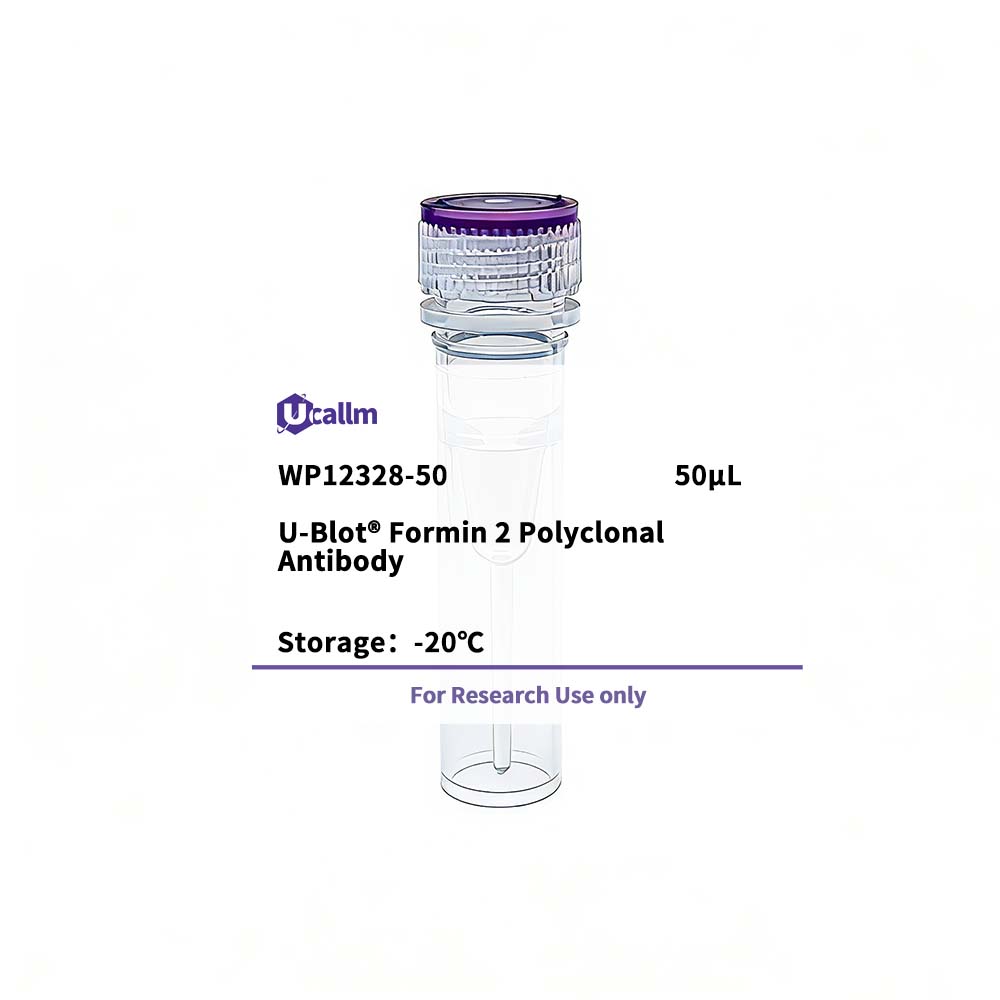
SKU: WP12328 Categories: ,

Formin 2 Polyclonal Antibody

Price range: $268.00 through $328.00

SKU: WP12328-100
Enter the quantity you would like, or drag the panel to find the quantity and price that best for you
Bulk QuoteAuthorize OEM & ODM

Product details

Background:

This gene is a member of the formin homology protein family. The encoded protein is thought to have essential roles in organization of the actin cytoskeleton and in cell polarity. Mutations in this gene have been associated with mental retardation autosomal recessive 47 (MRT47). Alternatively spliced transcript variants have been identified. [provided by RefSeq, Mar 2015],

Specifications

Size50μL/100μL
TargetFormin 2
ReactivityHuman, Mouse
ApplicationsIHC, IF, ELISA
MW(Calculated)180kD
MW(Observed)
Host SpeciesRabbit
IsotypeIgG
Conjugate/ModificationUnmodified
Recommended Dilution RatioIHC 1:100-1:300; ELISA 1:40000; IF 1:50-200 / Note: For IHC, we suggest antigen retrieval with TE buffer pH 9.0 (Cat#WT1004)
FormulationLiquid in PBS containing 50% glycerol, 0.5% BSA and 0.02% sodium azide.
PurificationThe antibody was affinity-purified from rabbit antiserum by affinity-chromatography using epitope-specific immunogen.
Storage-15°C to -25°C/1 year(Do not lower than -25°C)
Concentration1 mg/ml
ClonalityPolyclonal
Clone Number
ImmunogenThe antiserum was produced against synthesized peptide derived from human FMN2. AA range:1541-1590
SpecificityFormin 2 Polyclonal Antibody detects endogenous levels of Formin 2 protein.
Gene NameFMN2
Protein NameFormin-2
Other NameFMN2; / Formin-2
SpeciesHuman
Gene ID56776
UniprotQ9NZ56,
Species.1Mouse
Gene ID.154418
Uniprot.1Q9JL04
Species.2
Gene ID.2
Uniprot.2
Cellular LocalizationCytoplasm, cytoskeleton . Cytoplasm, cytosol . Cytoplasm, perinuclear region . Nucleus . Nucleus, nucleolus . Cell membrane; Peripheral membrane protein; Cytoplasmic side . Cytoplasmic vesicle membrane; Peripheral membrane protein; Cytoplasmic side . Cytoplasm, cell cortex . Colocalizes with the actin cytoskeleton (PubMed:20082305). Recruited to the membranes via its interaction with SPIRE1 (By similarity). Detected at the cleavage furrow during asymmetric oocyte division and polar body extrusion (By similarity). Accumulates in the nucleus following DNA damage (PubMed:26287480). .
Tissue ExpressionExpressed almost exclusively in the developing and mature central nervous system.
Signaling_pathway
Research Areas
FunctionPTM:Phosphorylated upon DNA damage, probably by ATM or ATR.,sequence Caution:Contaminating sequence. Sequence of unknown origin in the C-terminal part.,similarity:Belongs to the formin homology family. Cappuccino subfamily.,similarity:Contains 1 FH1 (formin homology 1) domain.,similarity:Contains 1 FH2 (formin homology 2) domain.,tissue specificity:Expressed almost exclusively in the developing and mature central nervous system.,
Please login to post questions
Back to Top
Product has been added to your cart


