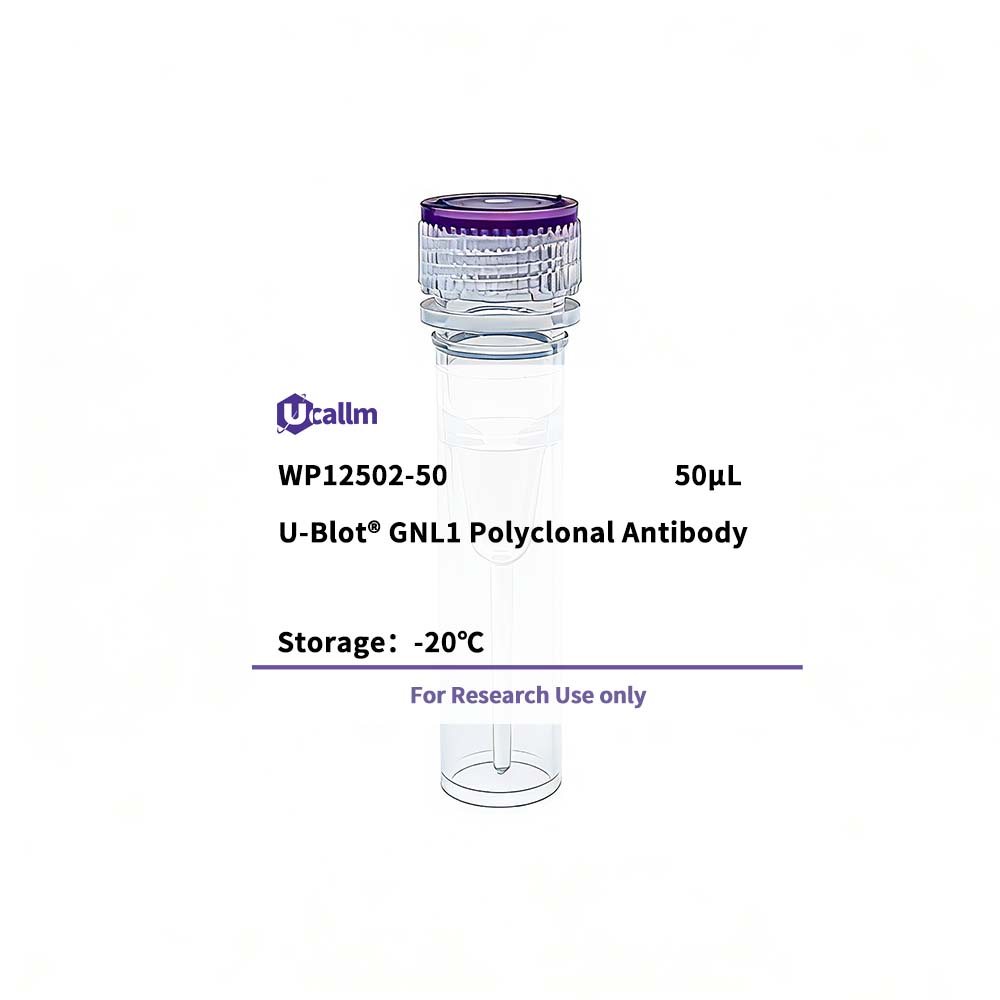
SKU: WP12502 Categories: ,

GNL1 Polyclonal Antibody

Price range: $268.00 through $328.00

SKU: WP12502-100
Enter the quantity you would like, or drag the panel to find the quantity and price that best for you
Bulk QuoteAuthorize OEM & ODM

Product details

Background:

The GNL1 gene, identified in the human major histocompatibility complex class I region, shows a high degree of similarity with its mouse counterpart. The GNL1 gene is located less than 2 kb centromeric to HLA-E, in the same transcriptional orientation. GNL1 is telomeric to HLA-B and HLA-C. [provided by RefSeq, Jul 2008],

Specifications

Size50μL/100μL
TargetGNL1
ReactivityHuman, Mouse, Rat
ApplicationsWB, ELISA
MW(Calculated)
MW(Observed)69kD
Host SpeciesRabbit
IsotypeIgG
Conjugate/ModificationUnmodified
Recommended Dilution RatioWB 1:500-1:2000; ELISA 1:20000; Not yet tested in other applications.
FormulationLiquid in PBS containing 50% glycerol, 0.5% BSA and 0.02% sodium azide.
PurificationThe antibody was affinity-purified from rabbit antiserum by affinity-chromatography using epitope-specific immunogen.
Storage-15°C to -25°C/1 year(Do not lower than -25°C)
Concentration1 mg/ml
ClonalityPolyclonal
Clone Number
ImmunogenThe antiserum was produced against synthesized peptide derived from human GNL1. AA range:61-110
SpecificityGNL1 Polyclonal Antibody detects endogenous levels of GNL1 protein.
Gene NameGNL1
Protein NameGuanine nucleotide-binding protein-like 1
Other NameGNL1; / HSR1; / Guanine nucleotide-binding protein-like 1; / GTP-binding protein HSR1
SpeciesHuman
Gene ID2794
UniprotP36915,
Species.1Mouse
Gene ID.114670
Uniprot.1P36916,
Species.2Rat
Gene ID.2309593
Uniprot.2Q6MG06
Cellular Localizationextracellular space,nucleus,
Tissue ExpressionCervix,Muscle,Peripheral blood leukocyte,Skin,T-cell,
Signaling_pathway
Research Areas
FunctionDomain:In contrast to other GTP-binding proteins, this family is characterized by a circular permutation of the GTPase motifs described by a G4-G1-G3 pattern.,Function:Possible regulatory or functional link with the histocompatibility cluster.,PTM:Phosphorylated upon DNA damage, probably by ATM or ATR.,similarity:Belongs to the MMR1/HSR1 GTP-binding protein family.,
Please login to post questions
Back to Top
Product has been added to your cart

