SKU: WP1182 Categories: ,

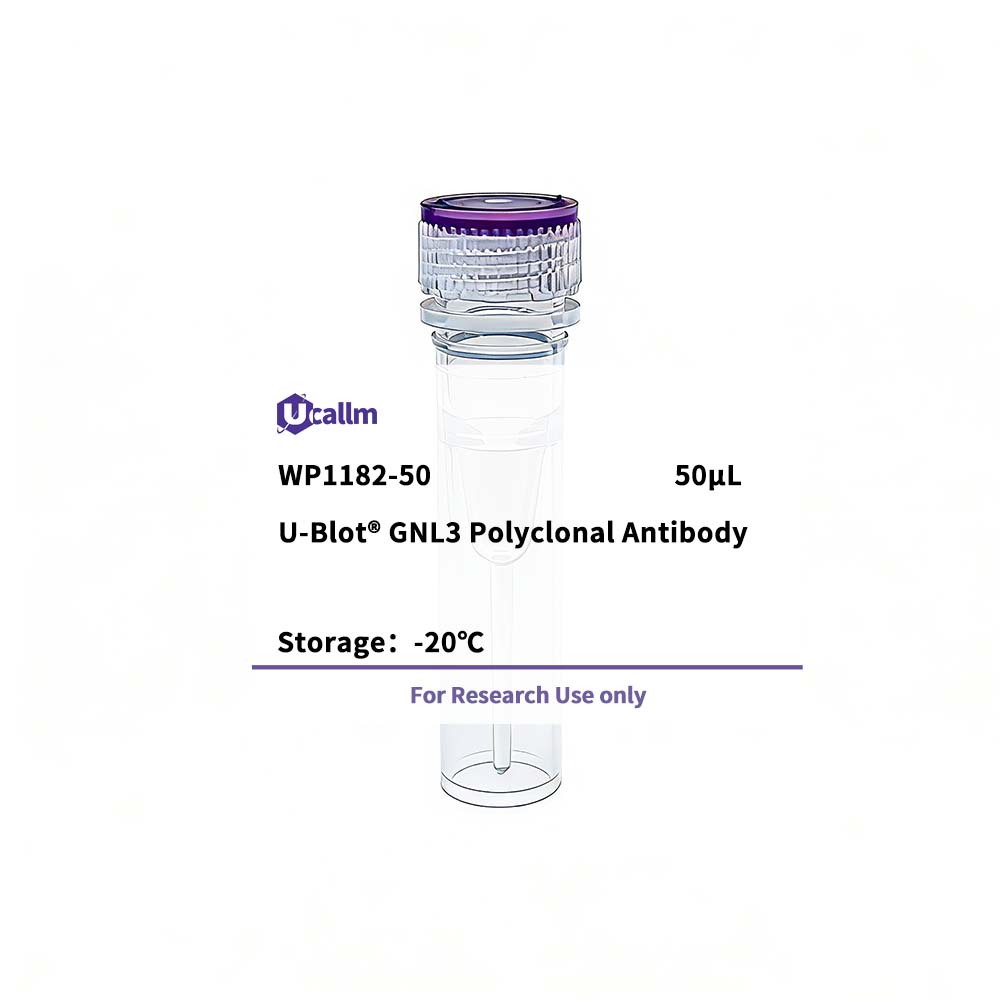
GNL3 Polyclonal Antibody

Price range: $268.00 through $328.00

SKU: WP1182-100
Enter the quantity you would like, or drag the panel to find the quantity and price that best for you
Bulk QuoteAuthorize OEM & ODM

Product details

Background:

The protein encoded by this gene may interact with p53 and may be involved in tumorigenesis. The encoded protein also appears to be important for stem cell proliferation. This protein is found in both the nucleus and nucleolus. Three transcript variants encoding two different isoforms have been found for this gene. [provided by RefSeq, Nov 2010],


Specifications

Size50μL/100μL
TargetGNL3
ReactivityHuman, Mouse, Rat
ApplicationsWB, ELISA
MW(Calculated)
MW(Observed)60kD
Host SpeciesRabbit
IsotypeIgG
Conjugate/ModificationUnmodified
Recommended Dilution RatioWB 1:500-2000; ELISA 1:5000-20000
FormulationLiquid in PBS containing 50% glycerol,0.5% BSA and 0.02% sodium azide.
PurificationThe antibody was affinity-purified from rabbit antiserum by affinity-chromatography using epitope-specific immunogen.
Storage-15°C to -25°C/1 year(Do not lower than -25°C)
Concentration1 mg/ml
ClonalityPolyclonal
Clone Number
ImmunogenSynthesized peptide derived from part region of human protein
SpecificityGNL3 Polyclonal Antibody detects endogenous levels of protein.
Gene NameGNL3 E2IG3 NS
Protein NameGuanine nucleotide-binding protein-like 3 (E2-induced gene 3 protein) (Novel nucleolar protein 47) (NNP47) (Nucleolar GTP-binding protein 3) (Nucleostemin)
Other Name
SpeciesHuman
Gene ID26354
UniprotQ9BVP2,
Species.1Mouse
Gene ID.1
Uniprot.1Q8CI11,
Species.2Rat
Gene ID.2
Uniprot.2Q811S9
Cellular LocalizationNucleus . Nucleus, nucleolus . Shuttles between the nucleus and nucleolus. .
Tissue ExpressionIncreased levels in lung tissue in cancer patients.
Signaling_pathway
Research Areas>>Ribosome biogenesis in eukaryotes
FunctionDomain:In contrast to other GTP-binding proteins, this family is characterized by a circular permutation of the GTPase motifs described by a G4-G1-G3 pattern.,Domain:The basic domain (B) allows nucleolar localization in the absence of GTP. The intermediate domain (I) inhibits nucleolar localization by the B domain and is required for exit from the nucleolus. Exit from the nucleolus to the nucleoplasm requires both the I and the acidic (A) domains, and may be triggered by GTP hydrolysis.,Function:May be required to maintain the proliferative capacity of stem cells and may play an important role in tumorigenesis.,similarity:Belongs to the MMR1/HSR1 GTP-binding protein family.,subcellular location:Shuttles between the nucleus and nucleolus.,subunit:May interact with p53/TP53 via its basic domain.,tissue specificity:Increased levels in lung tissue in cancer patients.,
Please login to post questions
Back to Top
Product has been added to your cart
