SKU: WM1713 Categories: ,

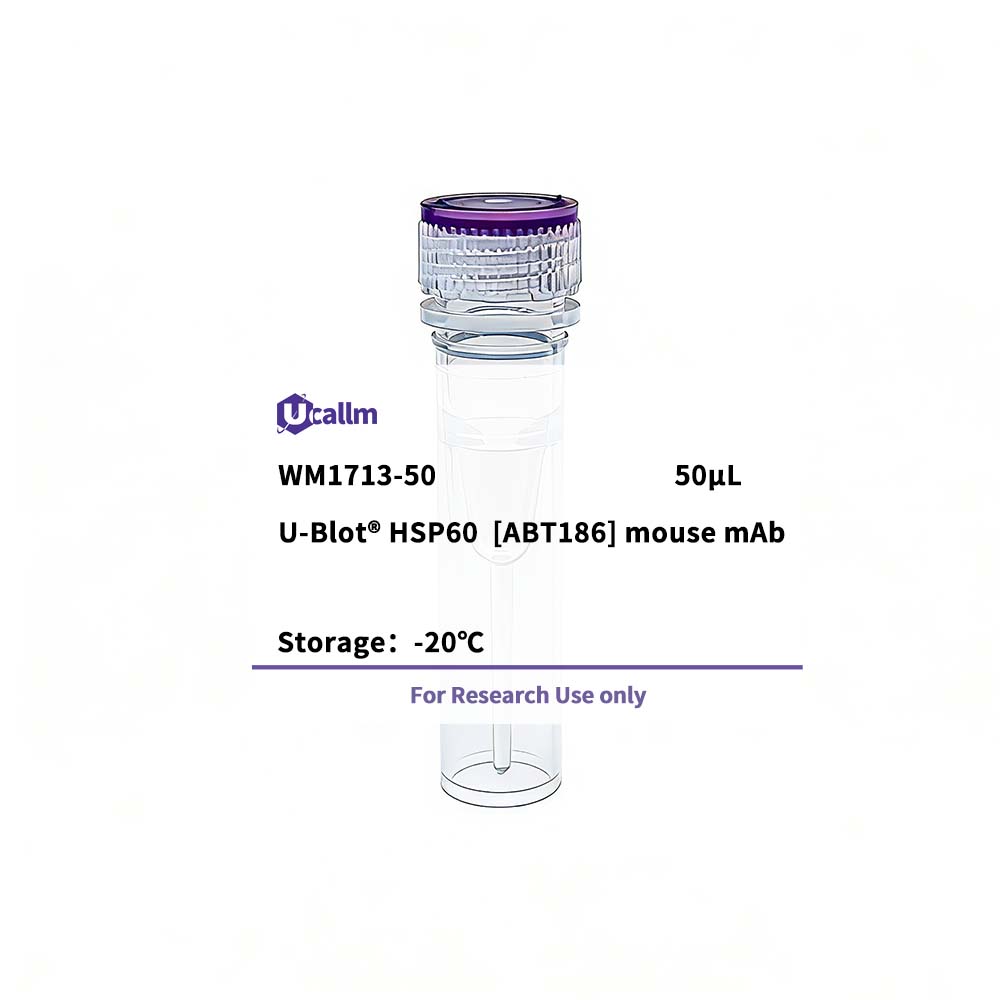
HSP60 [ABT186] mouse mAb

Price range: $268.00 through $328.00

SKU: WM1713-50
Enter the quantity you would like, or drag the panel to find the quantity and price that best for you
Bulk QuoteAuthorize OEM & ODM

Product details

Background:
This gene encodes a member of the chaperonin family. The encoded mitochondrial protein may function as a signaling molecule in the innate immune system. This protein is essential for the folding and assembly of newly imported proteins in the mitochondria. This gene is adjacent to a related family member and the region between the 2 genes functions as a bidirectional promoter. Several pseudogenes have been associated with this gene. Two transcript variants encoding the same protein have been identified for this gene. Mutations associated with this gene cause autosomal recessive spastic paraplegia 13. [provided by RefSeq, Jun 2010],

Specifications

Size50μL/100μL
TargetHsp60
ReactivityHuman, Mouse, Rat
ApplicationsIHC, ELISA
MW(Calculated)60kD
MW(Observed)60kD
Host SpeciesMouse
IsotypeIgG2b,Kappa
Conjugate/ModificationUnmodified
Recommended Dilution RatioIHC 1:200-400; ELISA 1:500-5000 / Note: For IHC, we suggest antigen retrieval with TE buffer pH 9.0 (Cat#WT1004)
FormulationPBS, 50% glycerol, 0.05% Proclin 300, 0.05%BSA
PurificationThe antibody was affinity-purified from ascites by affinity-chromatography using specific immunogen.
Storage-15°C to -25°C/1 year(Do not lower than -25°C)
Concentration
ClonalityMonoclonal
Clone NumberRMM186
ImmunogenSynthesized peptide derived from human HSP60 AA range: 500-573
SpecificityThe antibody can specifically recognize human HSP60 protein.
Gene NameHSPD1
Protein Name60 kDa heat shock protein mitochondrial
Other Name60 kDa heat shock protein, mitochondrial; / 60 kDa chaperonin; / Chaperonin 60; / CPN60; / Heat shock protein 60; / HSP-60; / Hsp60; / HuCHA60; / Mitochondrial matrix protein P1; / P60 lymphocyte protein
SpeciesHuman
Gene ID3329
UniprotP10809,
Species.1Mouse
Gene ID.115510
Uniprot.1P63038,
Species.2Rat
Gene ID.263868
Uniprot.2P63039
Cellular LocalizationCytoplasmic
Tissue ExpressionCytoplasmic
Signaling_pathwayGenetic Information Processing >> Folding, sorting and degradation >> RNA degradation
Research Areas>>RNA degradation; / >>Type I diabetes mellitus; / >>Legionellosis; / >>Tuberculosis; / >>Lipid and atherosclerosis
FunctionDisease:Defects in HSPD1 are a cause of spastic paraplegia autosomal dominant type 13 (SPG13) [MIM:605280]. Spastic paraplegia is a degenerative spinal cord disorder characterized by a slow, gradual, progressive weakness and spasticity of the lower limbs.,Disease:Defects in HSPD1 are the cause of leukodystrophy hypomyelinating type 4 (HLD4) [MIM:612233]; also called mitochondrial HSP60 chaperonopathy or MitCHAP-60 disease. HLD4 is a severe autosomal recessive hypomyelinating leukodystrophy. Clinically characterized by infantile-onset rotary nystagmus, progressive spastic paraplegia, neurologic regression, motor impairment, profound mental retardation. Death usually occurrs within the first 2 decades of life.,Function:Implicated in mitochondrial protein import and macromolecular assembly. May facilitate the correct folding of imported proteins. May also prevent misfolding and promote the refolding and proper assembly of unfolded polypeptides generated under stress conditions in the mitochondrial matrix.,similarity:Belongs to the chaperonin (HSP60) family.,similarity:Belongs to the TCP-1 chaperonin family.,subunit:Interacts with HBV protein X and HTLV-1 protein p40tax.,
Please login to post questions
Back to Top
Product has been added to your cart

