

I-TAC rabbit pAb
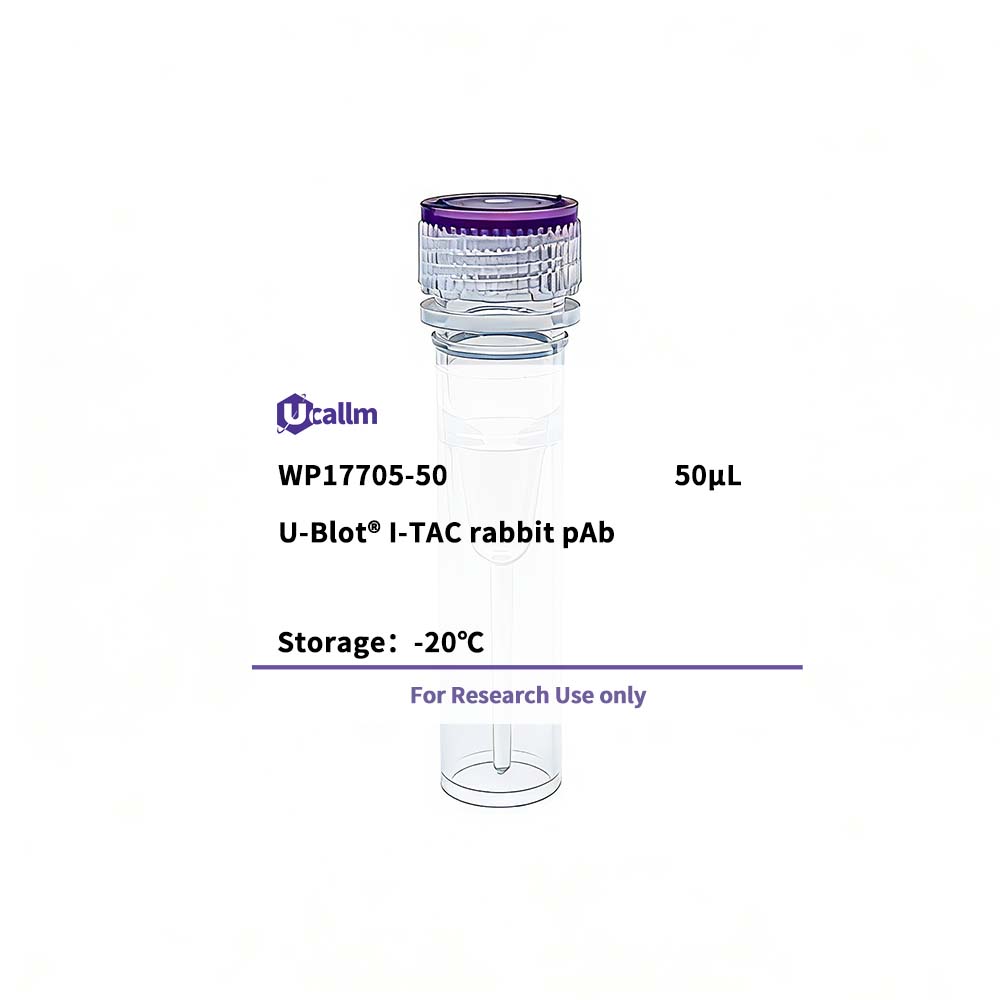
Ucallm_WP17705-50
Price range: $268.00 through $328.00
Product details
Background:
disease:Expressed in a variety of skin disorders, including allergic contact dermatitis, lichen planus and mycosis fungoides., function:Chemotactic for interleukin-activated T-cells but not unstimulated T-cells, neutrophils or monocytes. Induces calcium release in activated T-cells. Binds to CXCR3. May play an important role in CNS diseases which involve T-cell recruitment. May play a role in skin immune responses., induction:By interferon gamma and interferon beta. Induction by IFN-gamma is enhanced by TNF-alpha in monocytes, dermal fibroblasts and endothelial cells, and by IL-1 in astrocytes., mass spectrometry: PubMed:10233762, online information:CXCL11 entry, similarity:Belongs to the intercrine alpha (chemokine CxC) family., tissue specificity:High levels in peripheral blood leukocytes, pancreas and liver astrocytes. Moderate levels in thymus, spleen and lung. Low levels in placenta, prostate and small intestine. Also found in epidermal basal layer keratinocytes in skin disorders.,
Specifications
| Size | 50μL/100μL |
| Target | I-TAC |
| Reactivity | Human, Mouse |
| Applications | WB, IHC |
| MW(Calculated) | 10kD |
| MW(Observed) | |
| Host Species | Rabbit |
| Isotype | IgG |
| Conjugate/Modification | Unmodified |
| Recommended Dilution Ratio | WB 1:500-2000; IHC 1:50-300 / Note: For IHC, we suggest antigen retrieval with TE buffer pH 9.0 (Cat#WT1004) |
| Formulation | Liquid in PBS containing 50% glycerol, 0.5% BSA and 0.02% sodium azide. |
| Purification | The antibody was affinity-purified from rabbit antiserum by affinity-chromatography using epitope-specific immunogen. |
| Storage | -15°C to -25°C/1 year(Do not lower than -25°C) |
| Concentration | 1 mg/ml |
| Clonality | Polyclonal |
| Clone Number | |
| Immunogen | Synthesized peptide derived from human I-TAC AA range: 45-94 |
| Specificity | This antibody detects endogenous levels of Human I-TAC |
| Gene Name | CXCL11 ITAC SCYB11 SCYB9B |
| Protein Name | C-X-C motif chemokine 11 |
| Other Name | CXCL11; / ITAC; / SCYB11; / SCYB9B; / C-X-C motif chemokine 11; / Beta-R1; / H174; / Interferon gamma-inducible protein 9; / IP-9; / Interferon-inducible T-cell alpha chemoattractant; / I-TAC; / Small-inducible cytokine B11 |
| Species | Human |
| Gene ID | 6373 |
| Uniprot | O14625, |
| Species.1 | Mouse |
| Gene ID.1 | 56066 |
| Uniprot.1 | Q9JHH5 |
| Species.2 | |
| Gene ID.2 | |
| Uniprot.2 | |
| Cellular Localization | Secreted. |
| Tissue Expression | High levels in peripheral blood leukocytes, pancreas and liver astrocytes. Moderate levels in thymus, spleen and lung. Low levels in placenta, prostate and small intestine. Also found in epidermal basal layer keratinocytes in skin disorders. |
| Signaling_pathway | Organismal Systems >> Immune system >> Toll-like receptor signaling pathway;Organismal Systems >> Immune system >> Chemokine signaling pathway;Environmental Information Processing >> Signaling molecules and interaction >> Cytokine-cytokine receptor interaction;Environmental Information Processing >> Signaling molecules and interaction >> Viral protein interaction with cytokine and cytokine receptor |
| Research Areas | >>Cytokine-cytokine receptor interaction; / >>Viral protein interaction with cytokine and cytokine receptor; / >>Chemokine signaling pathway; / >>Toll-like receptor signaling pathway |
| Function | chemotaxis, defense response, inflammatory response, immune response, cell surface receptor linked signal transduction, G-protein coupled receptor protein signaling pathway, cell-cell signaling, behavior, locomotory behavior,response to wounding, taxis, |
Please login to post questions
Related products





