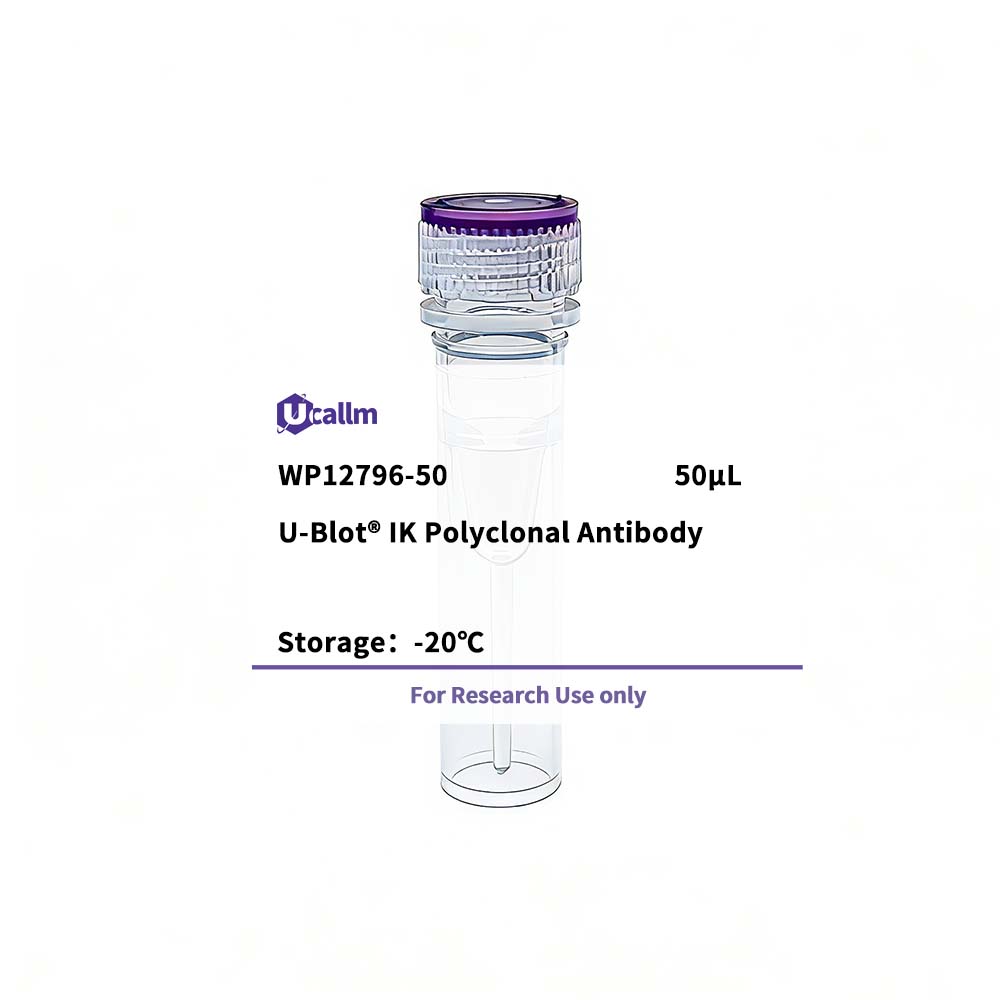
SKU: WP12796 Categories: ,

IK Polyclonal Antibody

Price range: $268.00 through $328.00

SKU: WP12796-100
Enter the quantity you would like, or drag the panel to find the quantity and price that best for you
Bulk QuoteAuthorize OEM & ODM

Product details

Background:

The protein encoded by this gene was identified by its RED repeat, a stretch of repeated arginine, glutamic acid and aspartic acid residues. The protein localizes to discrete dots within the nucleus, excluding the nucleolus. Its function is unknown. This gene maps to chromosome 5; however, a pseudogene may exist on chromosome 2. [provided by RefSeq, Jul 2008],

Specifications

TargetIK
ReactivityHuman, Mouse, Rat
ApplicationsWB, IHC, IF, ELISA
MW(Calculated)
MW(Observed)66kD
Host SpeciesRabbit
IsotypeIgG
Conjugate/ModificationUnmodified
Modification
Recommended Dilution RatioWB 1:500-1:2000; IHC 1:100-1:300; ELISA 1:20000; IF 1:50-200 / Note: For IHC, we suggest antigen retrieval with TE buffer pH 9.0 (Cat#YS0004)
FormulationLiquid in PBS containing 50% glycerol, 0.5% BSA and 0.02% sodium azide.
Source
PurificationThe antibody was affinity-purified from rabbit antiserum by affinity-chromatography using epitope-specific immunogen.
Purity
Storage-15°C to -25°C/1 year(Do not lower than -25°C)
Concentration1 mg/ml
ClonalityPolyclonal
Clone Number
ImmunogenThe antiserum was produced against synthesized peptide derived from human RED. AA range:508-557
Sequence
SpecificityIK Polyclonal Antibody detects endogenous levels of IK protein.
Gene NameIK
Protein NameProtein Red
Other NameIK; / RED; / RER; / Protein Red; / Cytokine IK; / IK factor; / Protein RER
SpeciesHuman
Gene ID-13550
UniprotQ13123,
Species.1Mouse
Gene ID-224010
Uniprot.1Q9Z1M8,
Species.2Rat
Gene ID-3291659
Uniprot.2Q66HG8
Organism-4
Gene ID-4
SwissProt-4
BackgroundThe protein encoded by this gene was identified by its RED repeat, a stretch of repeated arginine, glutamic acid and aspartic acid residues. The protein localizes to discrete dots within the nucleus, excluding the nucleolus. Its function is unknown. This gene maps to chromosome 5; however, a pseudogene may exist on chromosome 2. [provided by RefSeq, Jul 2008],
Cellular LocalizationNucleus . Nucleus, nucleoplasm . Chromosome . Cytoplasm, cytoskeleton, spindle pole . Predominantly present throughout the nucleoplasm during prometaphase, metaphase and anaphase. Is also detected in nuclear foci that are not identical with Cajal bodies. Starts to accumulate at chromosomes during telophase, and is nearly exclusively associated with chromosomes in newly divided cells (PubMed:24252166). Colocalizes with MAD1L1 at mitotic spindle poles during metaphase and anaphase (PubMed:22351768). .
Tissue ExpressionUbiquitous.
Signaling_pathway
Research Areas
FunctionCaution:Was originally (PubMed:7970704) thought to be the IK factor, a cytokine involved in the negative regulatory pathway of constitutive MHC class II antigens expression.,developmental stage:Expressed at similar levels in fetal and adult tissues.,Function:Not known. May bind to chromatin.,PTM:Phosphorylated upon DNA damage, probably by ATM or ATR.,similarity:Belongs to the RED family.,tissue specificity:Ubiquitous.,
RRID
Please login to post questions
Back to Top
Product has been added to your cart