


U-Blot® LC3B Rabbit mAb

WR4126 Various whole cell lysates were separated by 4-20% SDS-PAGE, and the primary antibody was used at 4°C, over night with a 1:5000 dilution . The Dylight 800-conjugated Goat anti-Rabbit antibody(Cat:WS0446) was used to detect the antibody.
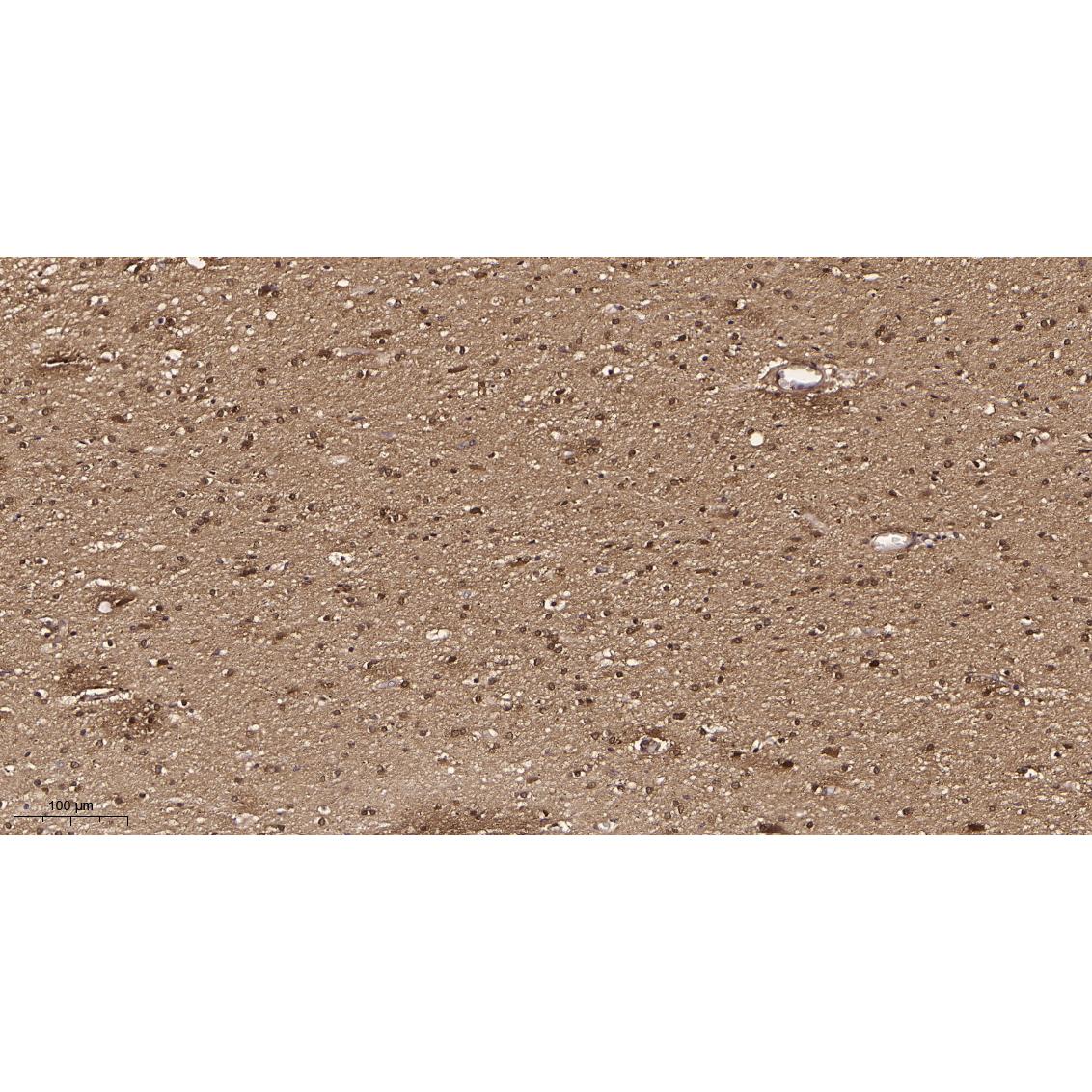
WR4126 Immunohistochemical analysis of paraffin-embedded human brain tissue. 1, primary Antibody was diluted at 1:200(4~C,overnight). 2, EDTA pH 9.0 was used for antibody retrieval(>98~C,20min). 3,Secondary antibody was diluted at 1:200(room tempeRature, 30min).
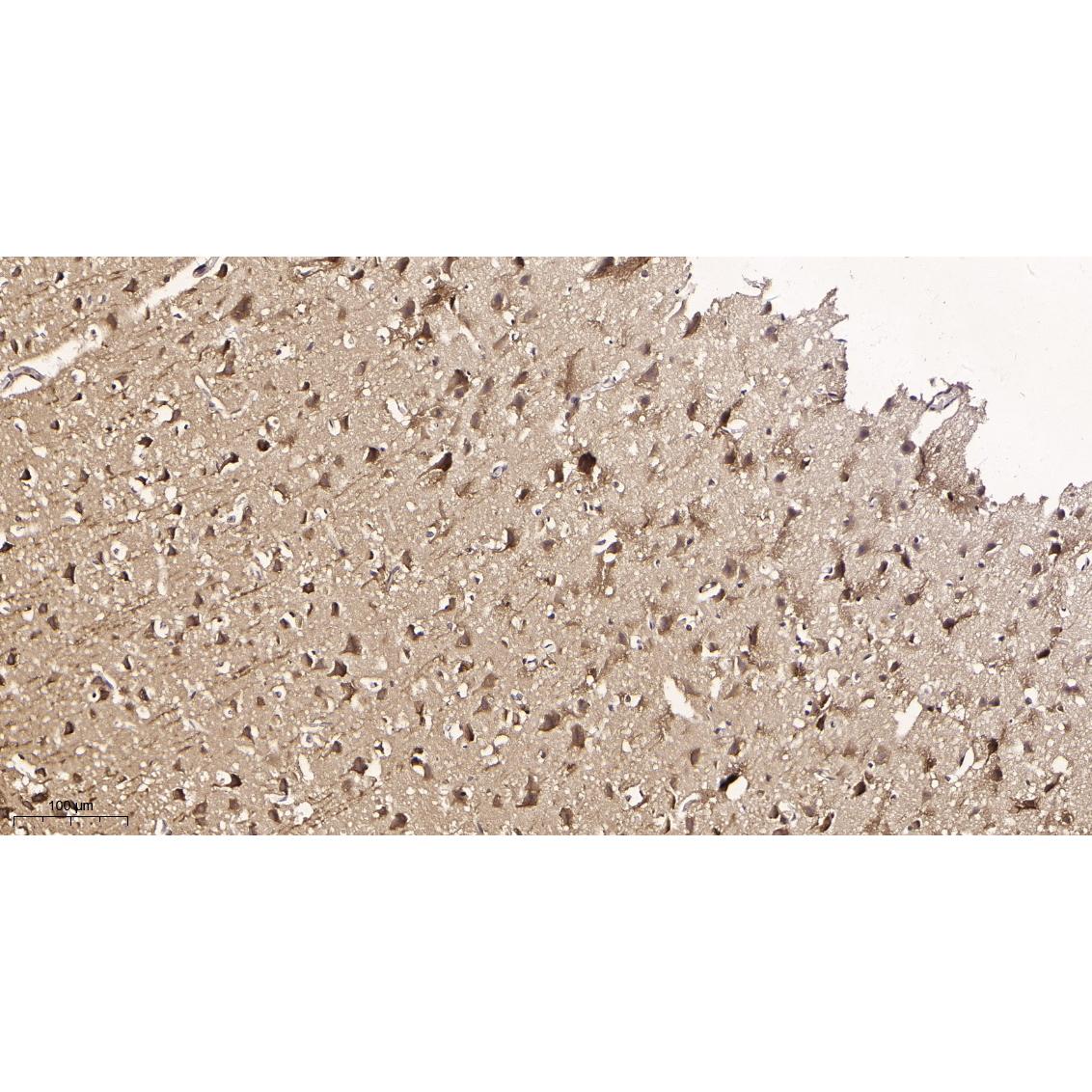
WR4126 Immunohistochemical analysis of paraffin-embedded rat brain tissue. 1, primary Antibody was diluted at 1:200(4~C,overnight). 2, EDTA pH 9.0 was used for antibody retrieval(>98~C,20min). 3,Secondary antibody was diluted at 1:200(room tempeRature, 30min).
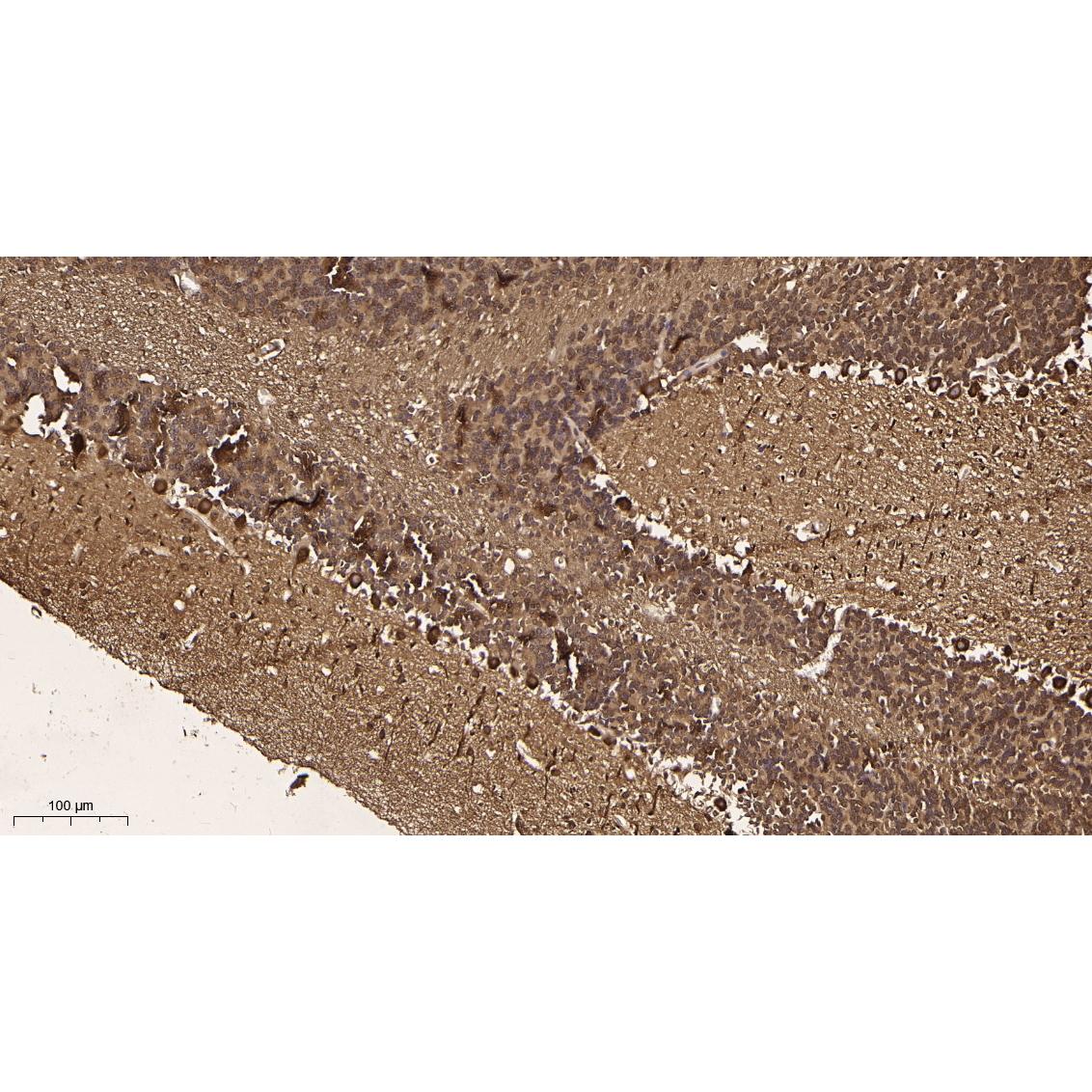
WR4126 Immunohistochemical analysis of paraffin-embedded mouse brain tissue. 1, primary Antibody was diluted at 1:200(4~C,overnight). 2, EDTA pH 9.0 was used for antibody retrieval(>98~C,20min). 3,Secondary antibody was diluted at 1:200(room tempeRature, 30min).
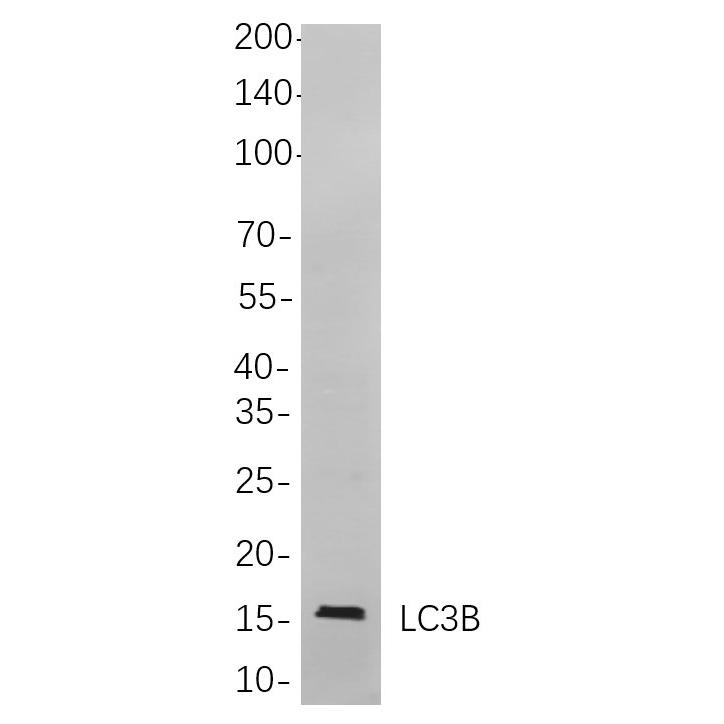
WR4126 Western blot analysis of lysates from Hela cells, using LC3B Rabbit mAb. The HRP-conjugated Goat anti-Rabbit IgG antibody (WS0002) was used to detect the antibody.
Price range: $268.00 through $328.00
Product details
Background:The product of this gene is a subunit of neuronal microtubule-associated MAP1A and MAP1B proteins, which are involved in microtubule assembly and important for neurogenesis. Studies on the rat homolog implicate a role for this gene in autophagy, a process that involves the bulk degradation of cytoplasmic component. [provided by RefSeq, Jul 2008],
Specifications
| Size | 50μL/100μL |
| Target | LC3B |
| Reactivity | Human, Mouse, Rat, Pig |
| Applications | WB, IHC, IF, ELISA |
| MW(Calculated) | 14kD,16kD |
| MW(Observed) | 14kD,16kD |
| Host Species | Rabbit |
| Isotype | IgG,Kappa |
| Conjugate/Modification | Unmodified |
| Recommended Dilution Ratio | IHC 1:200-1:1000; WB 1:1000-1:5000; IF 1:200-1:1000; ELISA 1:5000-1:20000; / Note: For IHC, we suggest antigen retrieval with TE buffer pH 9.0 (Cat#WT1004) |
| Formulation | PBS, 50% glycerol, 0.05% Proclin 300, 0.05%BSA |
| Purification | Recombinant Antibody expressed in animal component-free (ACF) media, purified via Protein A affinity chromatography. |
| Storage | -15°C to -25°C/1 year(Do not lower than -25°C) |
| Concentration | |
| Clonality | Monoclonal |
| Clone Number | RM0235R |
| Immunogen | The specific immunogen used to produce this antibody is proprietary information. |
| Specificity | Endogenous |
| Gene Name | MAP1LC3B |
| Protein Name | MAP1LC3B |
| Other Name | MAP1LC3B |
| Species | Human |
| Gene ID | 81631 |
| Uniprot | Q9GZQ8, |
| Species.1 | Mouse |
| Gene ID.1 | |
| Uniprot.1 | Q9CQV6 |
| Species.2 | |
| Gene ID.2 | |
| Uniprot.2 | |
| Cellular Localization | Cytoplasm |
| Tissue Expression | Most abundant in heart, brain, skeletal muscle and testis. Little expression observed in liver. |
| Signaling_pathway | Cellular Processes >> Transport and catabolism >> Autophagy - animal;Cellular Processes >> Transport and catabolism >> Mitophagy - animal;Cellular Processes >> Cell growth and death >> Ferroptosis;Organismal Systems >> Immune system >> NOD-like receptor signaling pathway;Human Diseases >> Neurodegenerative disease >> Amyotrophic lateral sclerosis;Human Diseases >> Neurodegenerative disease >> Pathways of neurodegeneration - multiple diseases;Environmental Information Processing >> Signal transduction >> Apelin signaling pathway |
| Research Areas | >>Mitophagy - animal; / >>Autophagy - animal; / >>Ferroptosis; / >>Apelin signaling pathway; / >>NOD-like receptor signaling pathway; / >>Amyotrophic lateral sclerosis; / >>Pathways of neurodegeneration - multiple diseases; / >>Shigellosis; / >>Kaposi sarcoma-associated herpesvirus infection |
| Function | Caution:PubMed:12740394 has shown that the protein is cleaved at Lys-122 but PubMed:15355958 has shown that the cleavage site is at Gly-120 as in other mammalian orthologs.,Function:Probably involved in formation of autophagosomal vacuoles (autophagosomes).,PTM:The precursor molecule is cleaved by APG4B/ATG4B to form LC3-I. This is activated by APG7L/ATG7, transferred to ATG3 and conjugated to phospholipid to form LC3-II.,similarity:Belongs to the MAP1 LC3 family.,subcellular location:LC3-II binds to the autophagic membranes.,subunit:3 different light chains, LC1, LC2 and LC3, can associate with MAP1A and MAP1B proteins.,tissue specificity:Most abundant in heart, brain, skeletal muscle and testis. Little expression observed in liver., |
Please login to post questions
Related products




