SKU: WP13015 Categories: ,

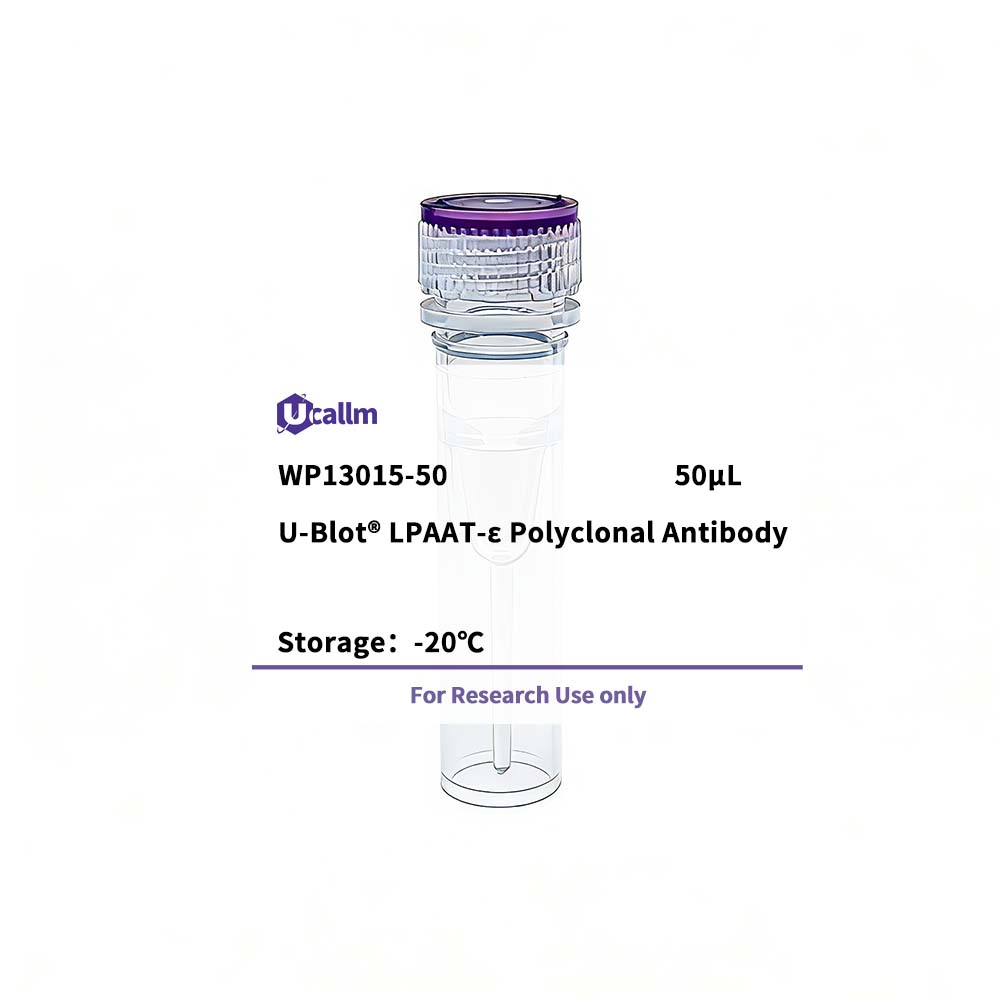
LPAAT-ε Polyclonal Antibody

Price range: $268.00 through $328.00

SKU: WP13015-100
Enter the quantity you would like, or drag the panel to find the quantity and price that best for you
Bulk QuoteAuthorize OEM & ODM

Product details

Background:

This gene encodes a member of the 1-acylglycerol-3-phosphate O-acyltransferase family. This integral membrane protein converts lysophosphatidic acid to phosphatidic acid, the second step in de novo phospholipid biosynthesis. A pseudogene of this gene is present on the Y chromosome. [provided by RefSeq, Aug 2014],

Specifications

Size50μL/100μL
TargetLPAAT-ε
ReactivityHuman, Mouse
ApplicationsWB, IHC
MW(Calculated)
MW(Observed)45kD
Host SpeciesRabbit
IsotypeIgG
Conjugate/ModificationUnmodified
Recommended Dilution RatioWB 1:500-2000; IHC 1:50-300 / Note: For IHC, we suggest antigen retrieval with TE buffer pH 9.0 (Cat#WT1004)
FormulationLiquid in PBS containing 50% glycerol, 0.5% BSA and 0.02% sodium azide.
PurificationThe antibody was affinity-purified from rabbit antiserum by affinity-chromatography using epitope-specific immunogen.
Storage-15°C to -25°C/1 year(Do not lower than -25°C)
Concentration1 mg/ml
ClonalityPolyclonal
Clone Number
ImmunogenThe antiserum was produced against synthesized peptide derived from human AGPAT5. AA range:241-290
SpecificityLPAAT-ε Polyclonal Antibody detects endogenous levels of LPAAT-ε protein.
Gene NameAGPAT5
Protein Name1-acyl-sn-glycerol-3-phosphate acyltransferase epsilon
Other NameAGPAT5; / 1-acyl-sn-glycerol-3-phosphate acyltransferase epsilon; / 1-acylglycerol-3-phosphate O-acyltransferase 5; / 1-AGP acyltransferase 5; / 1-AGPAT 5; / Lysophosphatidic acid acyltransferase epsilon; / LPAAT-epsilon
SpeciesHuman
Gene ID55326
UniprotQ9NUQ2,
Species.1Mouse
Gene ID.1
Uniprot.1Q9D1E8
Species.2
Gene ID.2
Uniprot.2
Cellular LocalizationEndoplasmic reticulum membrane; Multi-pass membrane protein . Nucleus envelope . Mitochondrion .
Tissue ExpressionWidely expressed.
Signaling_pathwayEnvironmental Information Processing >> Signal transduction >> Phospholipase D signaling pathway
Research Areas>>Glycerolipid metabolism; / >>Glycerophospholipid metabolism; / >>Metabolic pathways; / >>Phospholipase D signaling pathway
FunctionCatalytic activity:Acyl-CoA + 1-acyl-sn-glycerol 3-phosphate = CoA + 1,2-diacyl-sn-glycerol 3-phosphate.,Caution:It is uncertain whether Met-1 or Met-12 is the initiator.,Domain:The HXXXXD motif is essential for acyltransferase activity and may constitute the binding site for the phosphate moiety of the glycerol-3-phosphate.,Function:Converts lysophosphatidic acid (LPA) into phosphatidic acid by incorporating an acyl moiety at the sn-2 position of the glycerol backbone.,pathway:Phospholipid metabolism; CDP-diacylglycerol biosynthesis; CDP-diacylglycerol from sn-glycerol 3-phosphate: step 2/3.,similarity:Belongs to the 1-acyl-sn-glycerol-3-phosphate acyltransferase family.,
Please login to post questions
Back to Top
Product has been added to your cart
