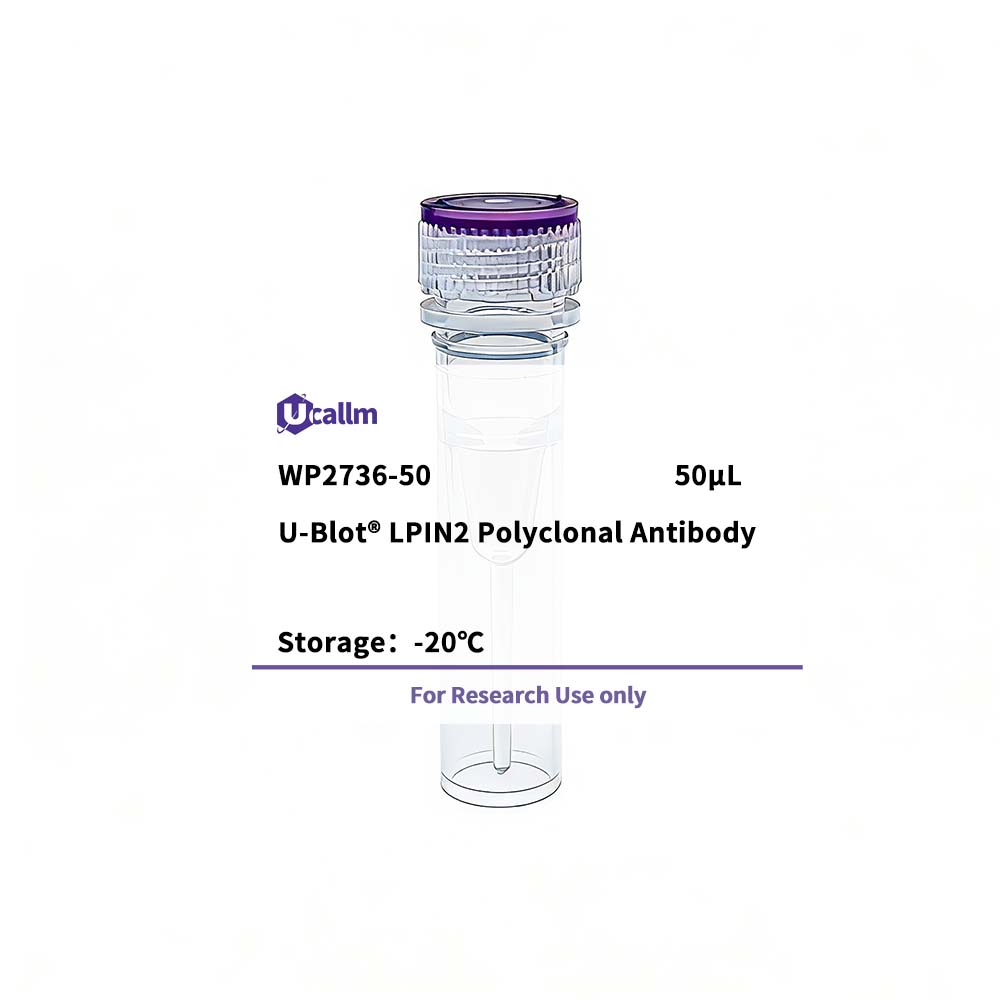
SKU: WP2736 Categories: ,

LPIN2 Polyclonal Antibody

Price range: $268.00 through $328.00

SKU: WP2736-100
Enter the quantity you would like, or drag the panel to find the quantity and price that best for you
Bulk QuoteAuthorize OEM & ODM

Product details

Background:

Mouse studies suggest that this gene functions during normal adipose tissue development and may play a role in human triglyceride metabolism. This gene represents a candidate gene for human lipodystrophy, characterized by loss of body fat, fatty liver, hypertriglyceridemia, and insulin resistance. [provided by RefSeq, Jul 2008],


Specifications

Size50μL/100μL
TargetLPIN2
ReactivityHuman, Mouse
ApplicationsWB, ELISA
MW(Calculated)
MW(Observed)98kD
Host SpeciesRabbit
IsotypeIgG
Conjugate/ModificationUnmodified
Recommended Dilution RatioWB 1:500-2000; ELISA 1:5000-20000
FormulationLiquid in PBS containing 50% glycerol,0.5% BSA and 0.02% sodium azide.
PurificationThe antibody was affinity-purified from rabbit antiserum by affinity-chromatography using epitope-specific immunogen.
Storage-15°C to -25°C/1 year(Do not lower than -25°C)
Concentration1 mg/ml
ClonalityPolyclonal
Clone Number
ImmunogenSynthesized peptide derived from human protein . at AA range: 220-300
SpecificityLPIN2 Polyclonal Antibody detects endogenous levels of protein.
Gene NameLPIN2 KIAA0249
Protein NamePhosphatidate phosphatase LPIN2 (Lipin-2)
Other Name
SpeciesHuman
Gene ID9663
UniprotQ92539,
Species.1Mouse
Gene ID.1
Uniprot.1Q99PI5
Species.2
Gene ID.2
Uniprot.2
Cellular LocalizationNucleus . Cytoplasm, cytosol . Endoplasmic reticulum membrane . Translocates to endoplasmic reticulum membrane with increasing levels of oleate. .
Tissue ExpressionExpressed in liver, lung, kidney, placenta, spleen, thymus, lymph node, prostate, testes, small intestine, and colon.
Signaling_pathwayEnvironmental Information Processing >> Signal transduction >> mTOR signaling pathway
Research Areas>>Glycerolipid metabolism; / >>Glycerophospholipid metabolism; / >>Metabolic pathways; / >>mTOR signaling pathway; / >>Alcoholic liver disease
FunctionDisease:Defects in LPIN2 are the cause of Majeed syndrome [MIM:609628]. Majeed syndrome is an autosomal recessive disorder combining features of chronic recurrent multifocal osteomyelitis [MIM:259680], congenital dyserythropoietic anemia and inflammatory dermatosis.,online information:Repertory of FMF and hereditary autoinflammatory disorders mutations,similarity:Belongs to the lipin family.,tissue specificity:Expressed in liver, lung, kidney, placenta, spleen, thymus, lymph node, prostate, testes, small intestine, and colon.,
Please login to post questions
Back to Top
Product has been added to your cart

