SKU: WP2429 Categories: ,

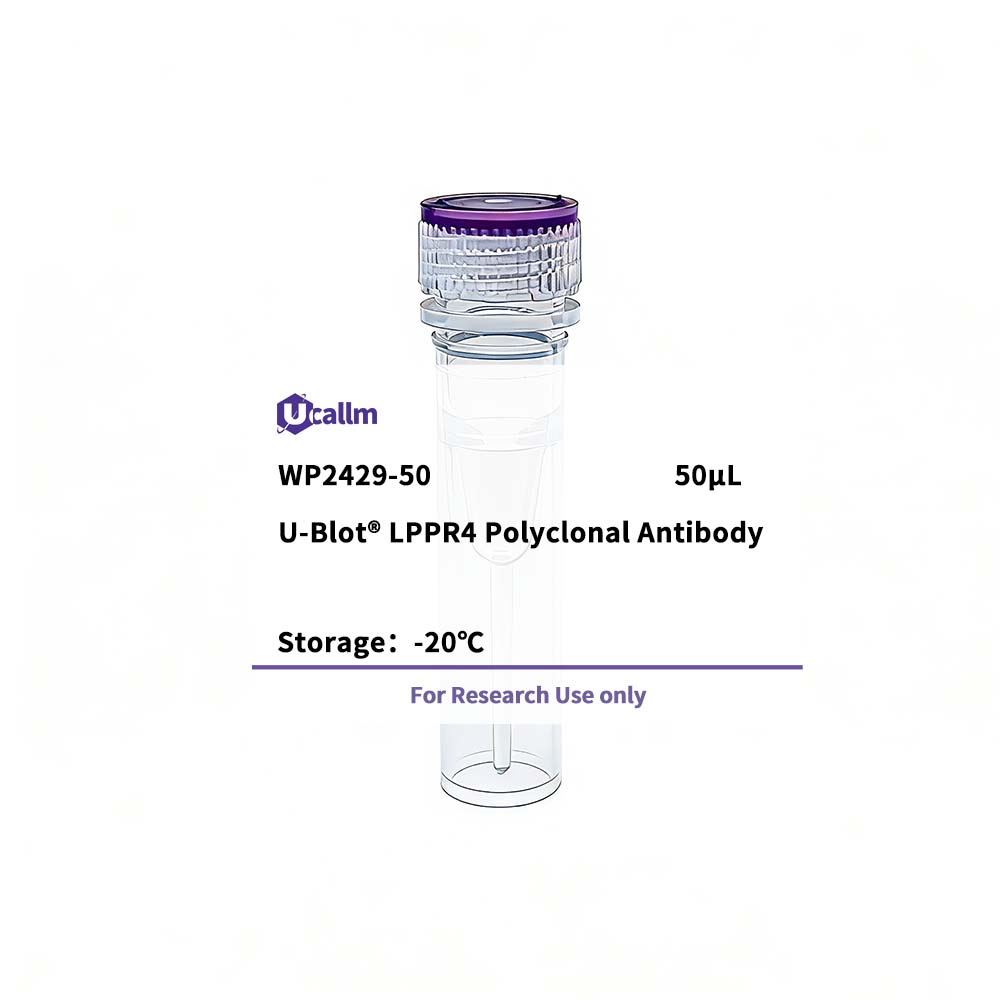
LPPR4 Polyclonal Antibody

Price range: $268.00 through $328.00

SKU: WP2429-100
Enter the quantity you would like, or drag the panel to find the quantity and price that best for you
Bulk QuoteAuthorize OEM & ODM

Product details

Background:

The protein encoded by this gene belongs to the lipid phosphate phosphatase (LPP) family. LPPs catalyze the dephosphorylation of a number of bioactive lipid mediators that regulate a variety of cell functions. This protein is specifically expressed in neurons. It is located in the membranes of outgrowing axons and has been shown to be important for axonal outgrowth during development and regenerative sprouting. Alternatively spliced transcript variants encoding different isoforms have been found for this gene.[provided by RefSeq, Oct 2009],

Specifications

Size50μL/100μL
TargetLPPR4
ReactivityHuman, Mouse, Rat
ApplicationsWB, ELISA
MW(Calculated)
MW(Observed)83kD
Host SpeciesRabbit
IsotypeIgG
Conjugate/ModificationUnmodified
Recommended Dilution RatioWB 1:500-2000; ELISA 1:5000-20000
FormulationLiquid in PBS containing 50% glycerol,0.5% BSA and 0.02% sodium azide.
PurificationThe antibody was affinity-purified from rabbit antiserum by affinity-chromatography using epitope-specific immunogen.
Storage-15°C to -25°C/1 year(Do not lower than -25°C)
Concentration1 mg/ml
ClonalityPolyclonal
Clone Number
ImmunogenSynthesized peptide derived from part region of human protein.AA55-80
SpecificityLPPR4 Polyclonal Antibody detects endogenous levels of protein.
Gene NameLPPR4 KIAA0455 PRG1
Protein NameLipid phosphate phosphatase-related protein type 4 (Brain-specific phosphatidic acid phosphatase-like protein 1) (Plasticity-related gene 1 protein) (PRG-1)
Other Name
SpeciesHuman
Gene ID9890
UniprotQ7Z2D5,
Species.1Mouse
Gene ID.1
Uniprot.1Q7TME0,
Species.2Rat
Gene ID.2
Uniprot.2Q7TMB7
Cellular LocalizationCell junction, synapse, postsynaptic density membrane; Multi-pass membrane protein .
Tissue ExpressionExpressed by glutamatergic neurons (at protein level).
Signaling_pathway
Research Areas
FunctionCatalytic activity:A 3-sn-phosphatidate + H(2)O = a 1,2-diacyl-sn-glycerol + phosphate.,Function:Hydrolyzes lysophosphatidic acid (LPA). Facilitates axonal outgrowth during development and regenerative sprouting. In the outgrowing axons acts as an ecto-enzyme and attenuates phospholipid-induced axon collapse in neurons and facilitates outgrowth in the hippocampus.,similarity:Belongs to the PA-phosphatase related phosphoesterase family.,tissue specificity:Specifically expressed in neurons.,
Please login to post questions
Back to Top
Product has been added to your cart

