

Product details
Background:
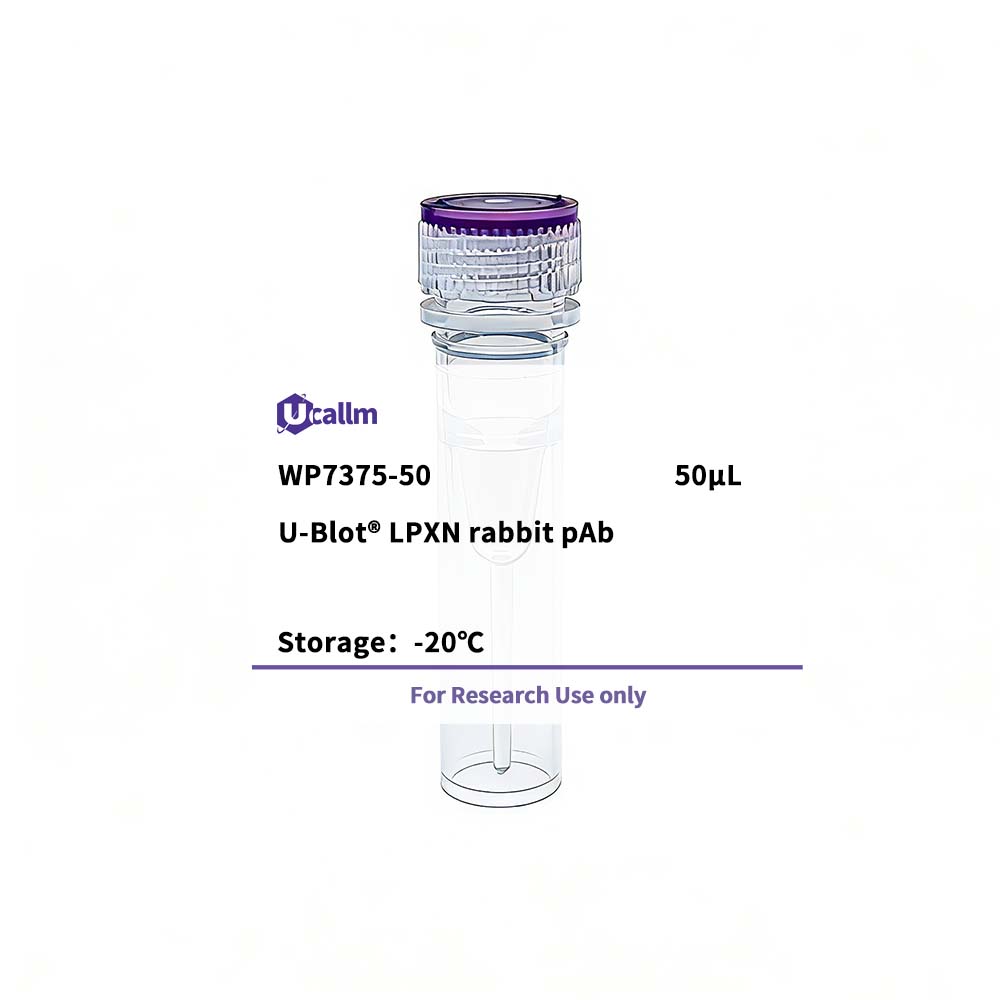
Price range: $268.00 through $328.00
Background:
| Size | 50μL/100μL |
| Target | LPXN |
| Reactivity | Human, Mouse |
| Applications | WB |
| MW(Calculated) | 42kD |
| MW(Observed) | |
| Host Species | Rabbit |
| Isotype | IgG |
| Conjugate/Modification | Unmodified |
| Recommended Dilution Ratio | WB 1:500-2000 |
| Formulation | Liquid in PBS containing 50% glycerol, 0.5% BSA and 0.02% sodium azide. |
| Purification | The antibody was affinity-purified from rabbit antiserum by affinity-chromatography using epitope-specific immunogen. |
| Storage | -15°C to -25°C/1 year(Do not lower than -25°C) |
| Concentration | 1 mg/ml |
| Clonality | Polyclonal |
| Clone Number | |
| Immunogen | Synthesized peptide derived from human LPXN |
| Specificity | This antibody detects endogenous levels of LPXN at Human, Mouse |
| Gene Name | LPXN LDLP |
| Protein Name | Leupaxin |
| Other Name | |
| Species | Human |
| Gene ID | 9404 |
| Uniprot | O60711, |
| Species.1 | Mouse |
| Gene ID.1 | 107321 |
| Uniprot.1 | Q99N69 |
| Species.2 | |
| Gene ID.2 | |
| Uniprot.2 | |
| Cellular Localization | Cytoplasm. Cell junction, focal adhesion. Nucleus. Cytoplasm, perinuclear region . Cell projection, podosome. Cell membrane. Shuttles between the cytoplasm and nucleus. Recruited to the cell membrane following B-cell antigen receptor (BCR) cross-linking in B-cells. Enhanced focal adhesion kinase activity (PTK2/FAK) attenuates its nuclear accumulation and limits its ability to enhance serum response factor (SRF)-dependent gene transcription. Targeting to focal adhesions is essential for its tyrosine phosphorylation in response to bombesin. |
| Tissue Expression | Macrophages, monocytes and osteoclasts (at protein level). Strongly expressed in cells and tissues of hematopoietic origin. Highest expression in lymphoid tissues such as spleen, lymph node, thymus and appendix and in the vascular smooth muscle. Lower levels in bone marrow and fetal liver. Also expressed in peripheral blood lymphocytes and a number of hematopoietic cell lines. Very low levels found in epithelial cell lines. Expressed in prostate cancer (PCa) cells and its expression intensity is directly linked to PCa progression. |
| Signaling_pathway | |
| Research Areas | |
| Function | Transcriptional coactivator for androgen receptor (AR) and serum response factor (SRF). Contributes to the regulation of cell adhesion, spreading and cell migration and acts as a negative regulator in integrin-mediated cell adhesion events. Suppresses the integrin-induced tyrosine phosphorylation of paxillin (PXN). May play a critical role as an adapter protein in the formation of the adhesion zone in osteoclasts. Negatively regulates B-cell antigen receptor (BCR) signaling. |



