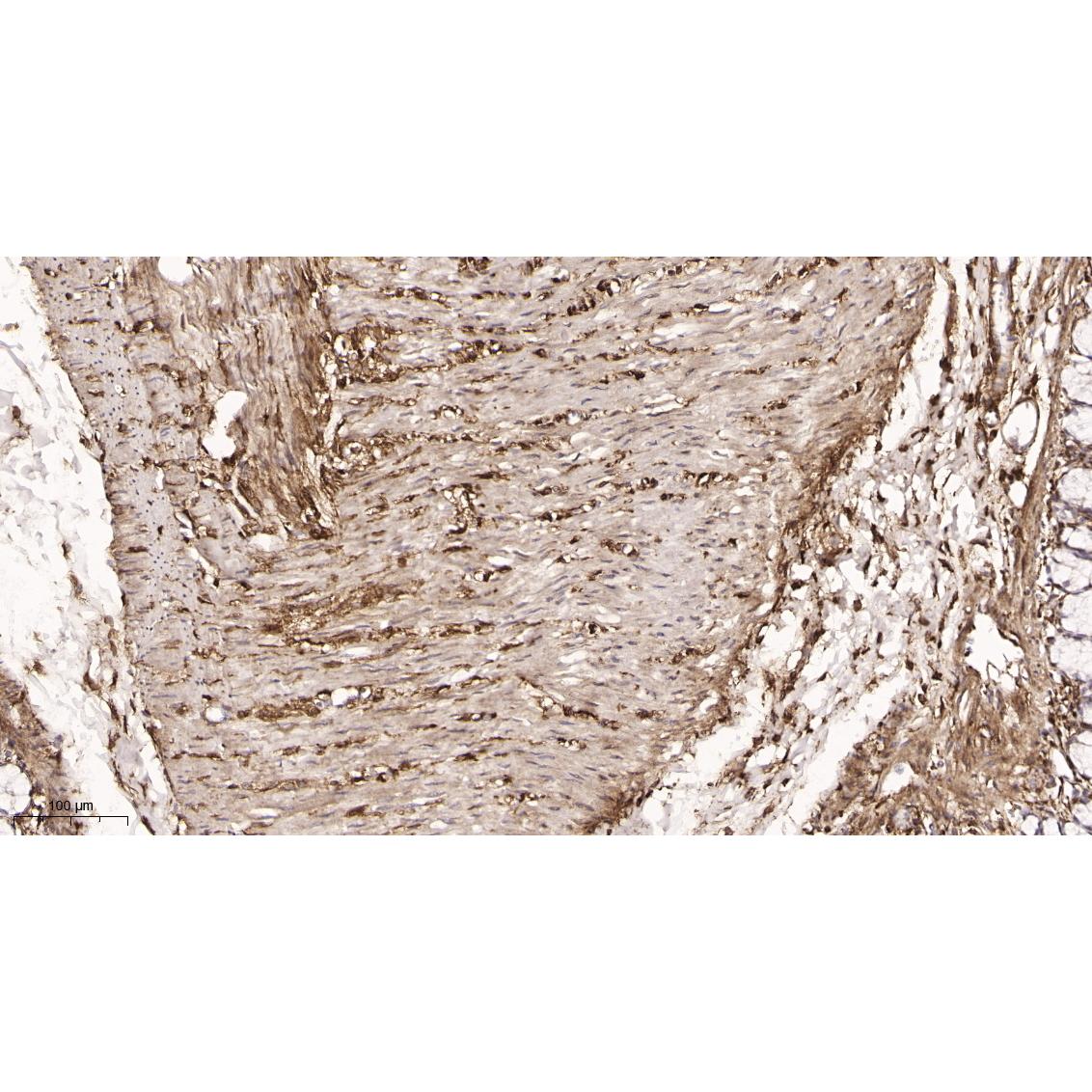
SKU: WR4124 Categories: ,

U-Blot® LRP1 Rabbit mAb

Price range: $268.00 through $328.00

SKU: WR4124-50
Enter the quantity you would like, or drag the panel to find the quantity and price that best for you
Bulk QuoteAuthorize OEM & ODM

Product details

Background:This gene encodes a member of the low-density lipoprotein receptor family of proteins. The encoded preproprotein is proteolytically processed by furin to generate 515 kDa and 85 kDa subunits that form the mature receptor (PMID: 8546712). This receptor is involved in several cellular processes, including intracellular signaling, lipid homeostasis, and clearance of apoptotic cells. In addition, the encoded protein is necessary for the alpha 2-macroglobulin-mediated clearance of secreted amyloid precursor protein and beta-amyloid, the main component of amyloid plaques found in Alzheimer patients. Expression of this gene decreases with age and has been found to be lower than controls in brain tissue from Alzheimer's disease patients. [provided by RefSeq, Oct 2015],
Specifications

Size50μL/100μL
TargetLRP1
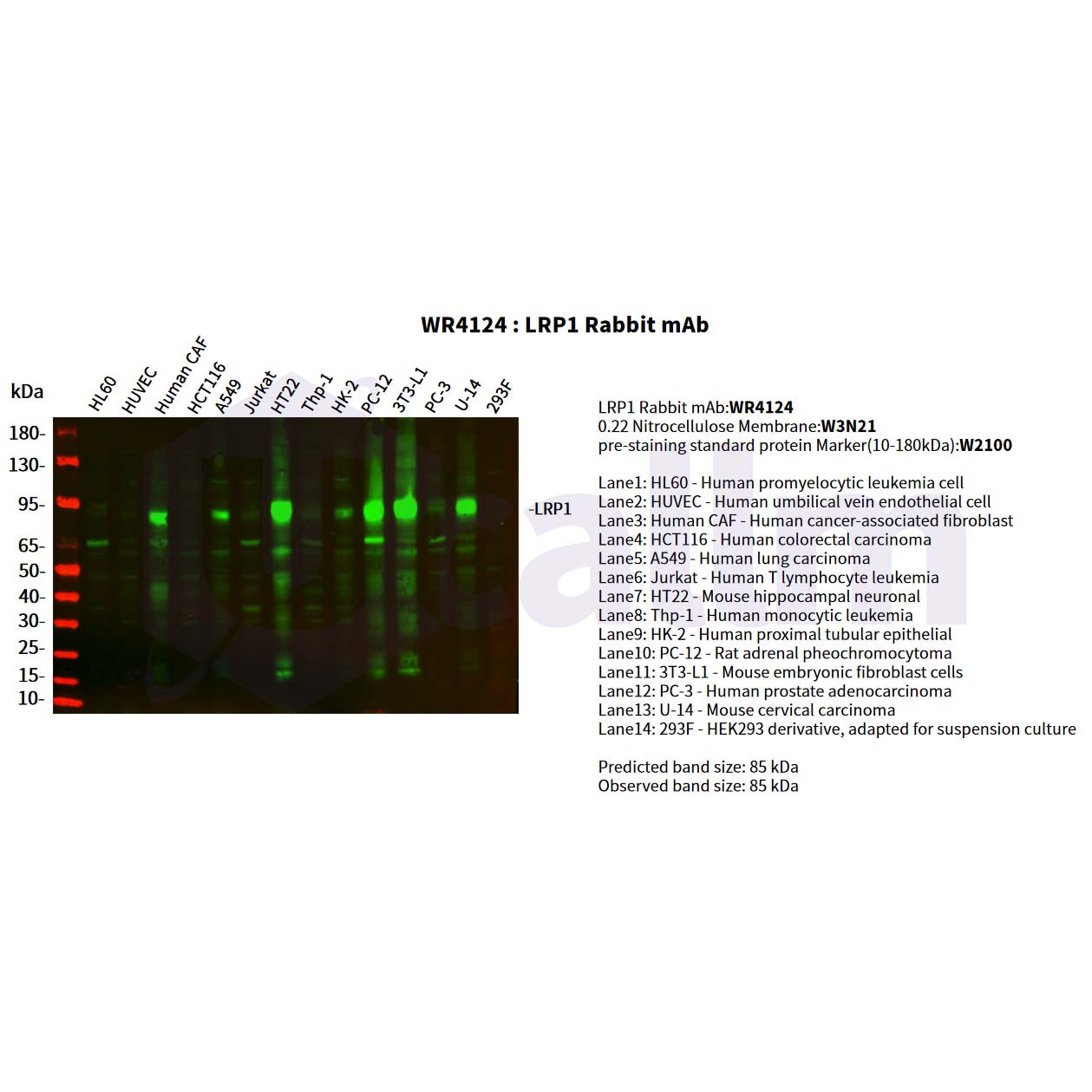
ReactivityHuman, Mouse, Rat
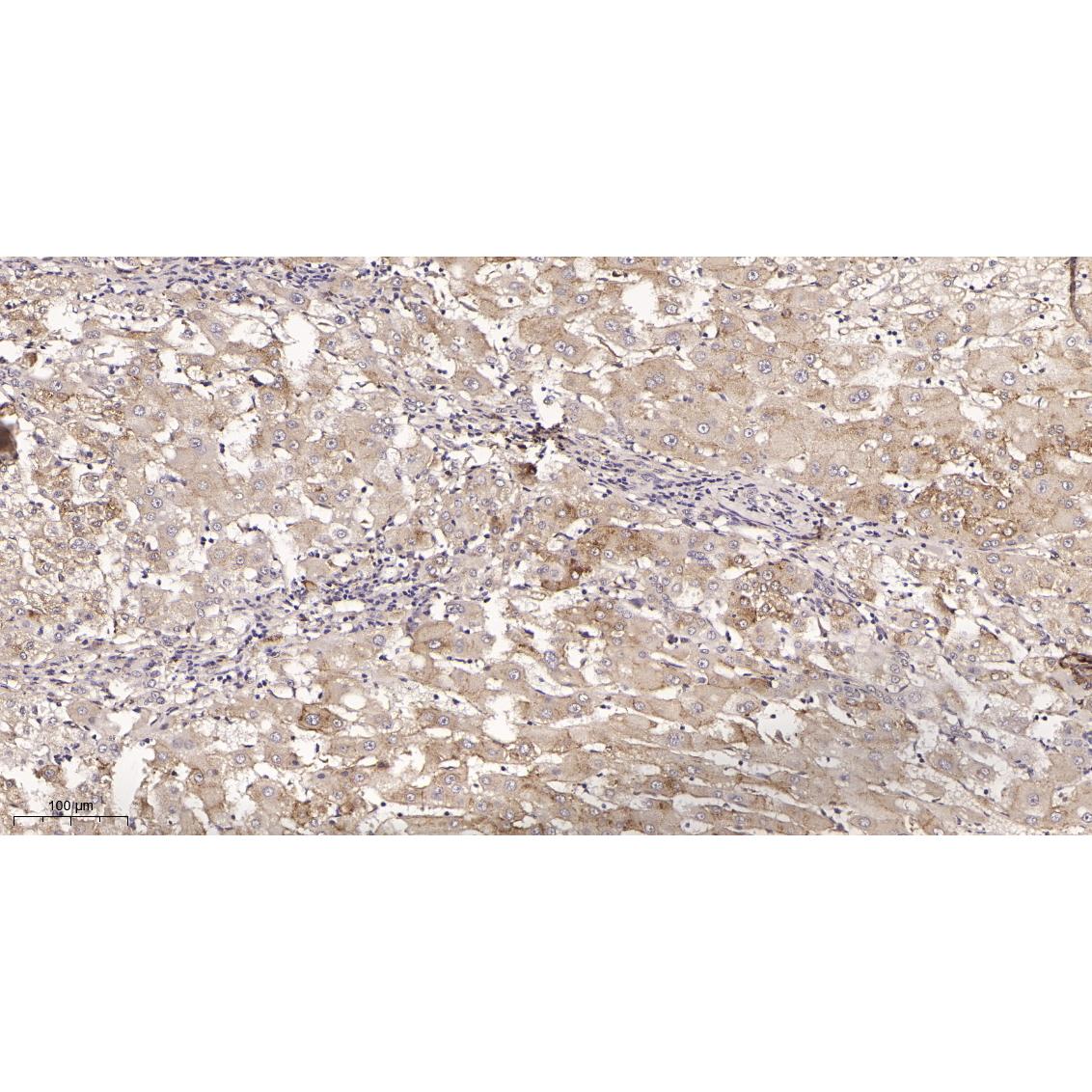
ApplicationsWB, IHC, IF, IP, ELISA
MW(Calculated)85kD
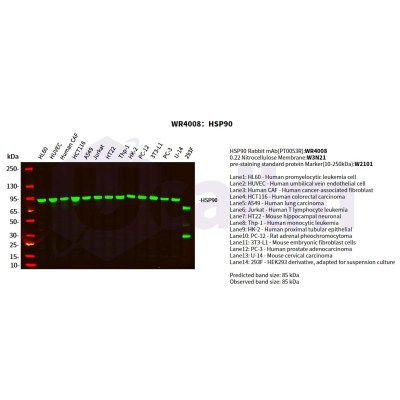
MW(Observed)85kD
Host SpeciesRabbit
IsotypeIgG,Kappa
Conjugate/ModificationUnmodified
Recommended Dilution RatioIHC 1:200-1:1000; WB 1:1000-1:5000; IF 1:200-1:1000; ELISA 1:5000-1:20000; IP 1:50-1:200, / Note: For IHC, we suggest antigen retrieval with TE buffer pH 9.0 (Cat#WT1004)
FormulationPBS, 50% glycerol, 0.05% Proclin 300, 0.05%BSA
PurificationRecombinant Antibody expressed in animal component-free (ACF) media, purified via Protein A affinity chromatography.
Storage-15°C to -25°C/1 year(Do not lower than -25°C)
Concentration
ClonalityMonoclonal
Clone NumberRM0231R
ImmunogenC-ternal
SpecificityEndogenous
Gene NameLRP1
Protein NameProlow-density lipoprotein receptor-related protein 1
Other NameLRP1; / A2MR; / APR; / Prolow-density lipoprotein receptor-related protein 1; / LRP-1; / Alpha-2-macroglobulin receptor; / A2MR; / Apolipoprotein E receptor; / APOER; / CD antigen CD91
SpeciesHuman
Gene ID4035
UniprotQ07954,
Species.1Mouse
Gene ID.116971
Uniprot.1Q91ZX7
Species.2
Gene ID.2
Uniprot.2
Cellular LocalizationMembranous
Tissue ExpressionMost abundant in liver, brain and lung.
Signaling_pathwayHuman Diseases >> Neurodegenerative disease >> Alzheimer disease
Research Areas>>Cholesterol metabolism; / >>Alzheimer disease; / >>Malaria
FunctionFunction:Endocytic receptor involved in endocytosis and in phagocytosis of apoptotic cells. Required for early embryonic development. Involved in cellular lipid homeostasis. Involved in the plasma clearance of chylomicron remnants and activated LRPAP1 (alpha 2-macroglobulin), as well as the local metabolism of complexes between plasminogen activators and their endogenous inhibitors. May modulate cellular events, such as APP metabolism, kinase-dependent intracellular signaling, neuronal calcium signaling as well as neurotransmission.,PTM:Cleaved into a 85 kDa membrane-spanning subunit (LRP-85) and a 515 kDa large extracellular domain (LRP-515) that remains non-covalently associated. Gamma-secretase-dependent cleavage of LRP-85 releases the intracellular domain from the membrane.,PTM:Phosphorylated on serine and threonine residues.,PTM:Phosphorylated on tyrosine residues upon stimulation with PDGF. Tyrosine phosphorylation promotes interaction with SHC1.,PTM:The N-terminus is blocked.,similarity:Belongs to the LDLR family.,similarity:Contains 22 EGF-like domains.,similarity:Contains 31 LDL-receptor class A domains.,similarity:Contains 34 LDL-receptor class B repeats.,subcellular location:After cleavage, the intracellular domain (LRPICD) is detected both in the cytoplasm and in the nucleus.,subunit:Heterodimer of an 85-kDa membrane-bound carboxyl subunit and a non-covalently attached 515-kDa amino-terminal subunit. Intracellular domain interacts with MAFB (By similarity). Found in a complex with PID1/PCLI1, LRP1 and CUBNI. Interacts with SNX17, PID1/PCLI1, PDGF and CUBN. The intracellular domain interacts with SHC1, GULP1 and DAB1. Interacts with LRPAP1.,tissue specificity:Most abundant in liver, brain and lung.,
Please login to post questions

Back to Top
Product has been added to your cart