SKU: WR5129 Categories: ,

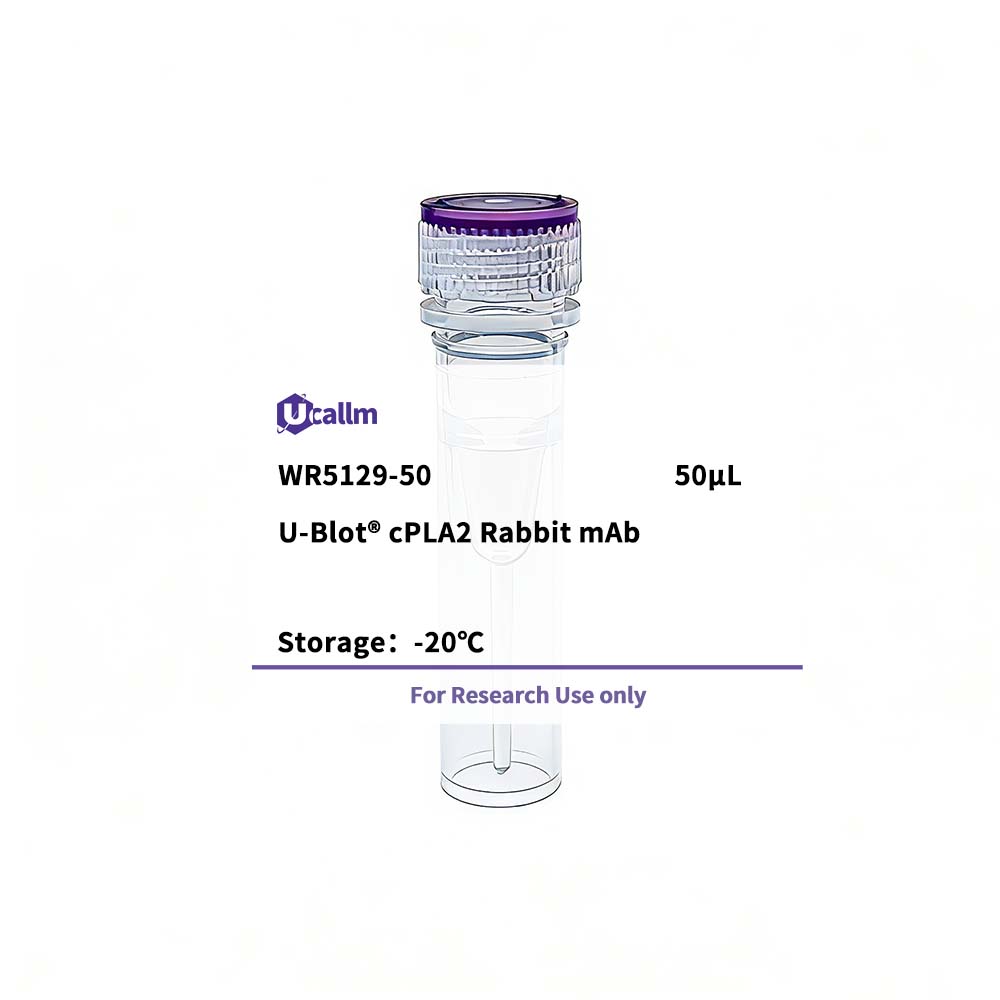
U-Blot® cPLA2 Rabbit mAb

Price range: $268.00 through $328.00

SKU: WR5129-50
Enter the quantity you would like, or drag the panel to find the quantity and price that best for you
Bulk QuoteAuthorize OEM & ODM

Product details

Background:This gene encodes a member of the cytosolic phospholipase A2 group IV family. The enzyme catalyzes the hydrolysis of membrane phospholipids to release arachidonic acid which is subsequently metabolized into eicosanoids. Eicosanoids, including prostaglandins and leukotrienes, are lipid-based cellular hormones that regulate hemodynamics, inflammatory responses, and other intracellular pathways. The hydrolysis reaction also produces lysophospholipids that are converted into platelet-activating factor. The enzyme is activated by increased intracellular Ca(2+) levels and phosphorylation, resulting in its translocation from the cytosol and nucleus to perinuclear membrane vesicles. Alternative splicing results in multiple transcript variants. [provided by RefSeq, Jul 2015],

Specifications

Size50μL/100μL
TargetcPLA2
ReactivityHuman, Mouse
ApplicationsWB, IF, IP, ELISA
MW(Calculated)85kD
MW(Observed)95kD
Host SpeciesRabbit
IsotypeIgG,Kappa
Conjugate/ModificationUnmodified
Recommended Dilution RatioWB 1:2000-1:10000; IF 1:200-1:1000; ELISA 1:5000-1:20000; IP 1:50-1:200;
FormulationPBS, 50% glycerol, 0.05% Proclin 300, 0.05%BSA
PurificationRecombinant Antibody expressed in animal component-free (ACF) media, purified via Protein A affinity chromatography.
Storage-15°C to -25°C/1 year(Do not lower than -25°C)
Concentration
ClonalityMonoclonal
Clone NumberRM1350R
ImmunogenThe specific immunogen used to produce this antibody is proprietary information.
SpecificityEndogenous
Gene NamePLA2G4A
Protein NameCytosolic phospholipase A2
Other NamePLA2G4A; / CPLA2; / PLA2G4; / Cytosolic phospholipase A2; / cPLA2; / Phospholipase A2 group IVA
SpeciesHuman
Gene ID5321
UniprotP47712,
Species.1Mouse
Gene ID.118783
Uniprot.1P47713,
Species.2Rat
Gene ID.2
Uniprot.2P50393
Cellular LocalizationCytoplasm . Golgi apparatus membrane . Nucleus envelope. Translocates to intracellular membranes in a calcium-dependent way. .
Tissue ExpressionExpressed in various cells and tissues such as macrophages, neutrophils, fibroblasts and lung endothelium. Expressed in platelets (at protein level) (PubMed:25102815).
Signaling_pathwayCellular Processes >> Cell growth and death >> Necroptosis;Organismal Systems >> Immune system >> Platelet activation;Organismal Systems >> Immune system >> Fc epsilon RI signaling pathway;Organismal Systems >> Immune system >> Fc gamma R-mediated phagocytosis;Organismal Systems >> Endocrine system >> GnRH signaling pathway;Organismal Systems >> Endocrine system >> Oxytocin signaling pathway;Organismal Systems >> Circulatory system >> Vascular smooth muscle contraction;Organismal Systems >> Nervous system >> Glutamatergic synapse;Organismal Systems >> Sensory system >> Inflammatory mediator regulation of TRP channels;Environmental Information Processing >> Signal transduction >> MAPK signaling pathway;Environmental Information Processing >> Signal transduction >> Ras signaling pathway;Environmental Information Processing >> Signal transduction >> VEGF signaling pathway;Environmental Information Processing >> Signal transduction >> Phospholipase D signaling pathway
Research Areas>>Glycerophospholipid metabolism; / >>Ether lipid metabolism; / >>Arachidonic acid metabolism; / >>Linoleic acid metabolism; / >>alpha-Linolenic acid metabolism; / >>Metabolic pathways; / >>MAPK signaling pathway; / >>Ras signaling pathway; / >>Phospholipase D signaling pathway; / >>Necroptosis; / >>Vascular smooth muscle contraction; / >>VEGF signaling pathway; / >>Platelet activation; / >>Fc epsilon RI signaling pathway; / >>Fc gamma R-mediated phagocytosis; / >>Glutamatergic synapse; / >>Serotonergic synapse; / >>Long-term depression; / >>Inflammatory mediator regulation of TRP channels; / >>GnRH signaling pathway; / >>Ovarian steroidogenesis; / >>Oxytocin signaling pathway; / >>Choline metabolism in cancer
FunctionCatalytic activity:2-lysophosphatidylcholine + H(2)O = glycerophosphocholine + a carboxylate.,Catalytic activity:Phosphatidylcholine + H(2)O = 1-acylglycerophosphocholine + a carboxylate.,Domain:The N-terminal C2 domain, by its association with lipid membranes, mediates the regulation of CPLA2 by presenting the active site to its substrate in response to elevations of cytosolic Ca(2+).,enzyme regulation:Stimulated by agonists such as ATP, EGF, thrombin and bradykinin as well as by cytosolic Ca(2+).,Function:Selectively hydrolyzes arachidonyl phospholipids in the sn-2 position releasing arachidonic acid. Together with its lysophospholipid activity, it is implicated in the initiation of the inflammatory response.,PTM:Activated by phosphorylation at both Ser-505 and Ser-727.,similarity:Contains 1 C2 domain.,similarity:Contains 1 PLA2c domain.,subcellular location:Translocates to membrane vesicles in a calcium-dependent fashion.,subunit:Interacts with HTATIP.,tissue specificity:Expressed in various tissues such as macrophages, platelets, neutrophils, fibroblasts and lung endothelium.,
Please login to post questions
Back to Top
Product has been added to your cart


