

U-Blot® p27 KIP 1 Rabbit mAb
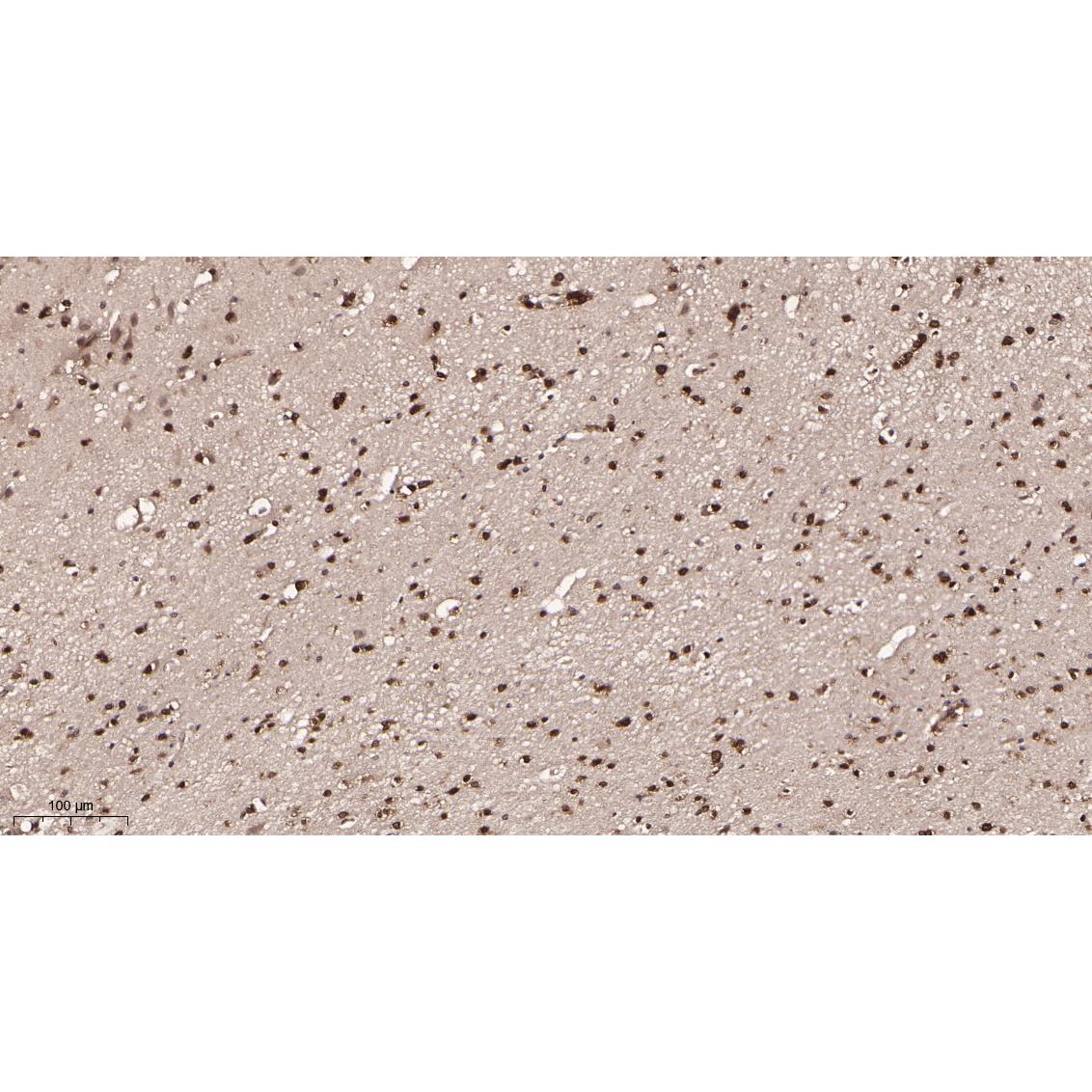
WR4170 Immunohistochemical analysis of paraffin-embedded human brain tissue. 1, primary Antibody was diluted at 1:200(4~C,overnight). 2, EDTA pH 9.0 was used for antibody retrieval(>98~C,20min). 3,Secondary antibody was diluted at 1:200(room tempeRature, 30min).
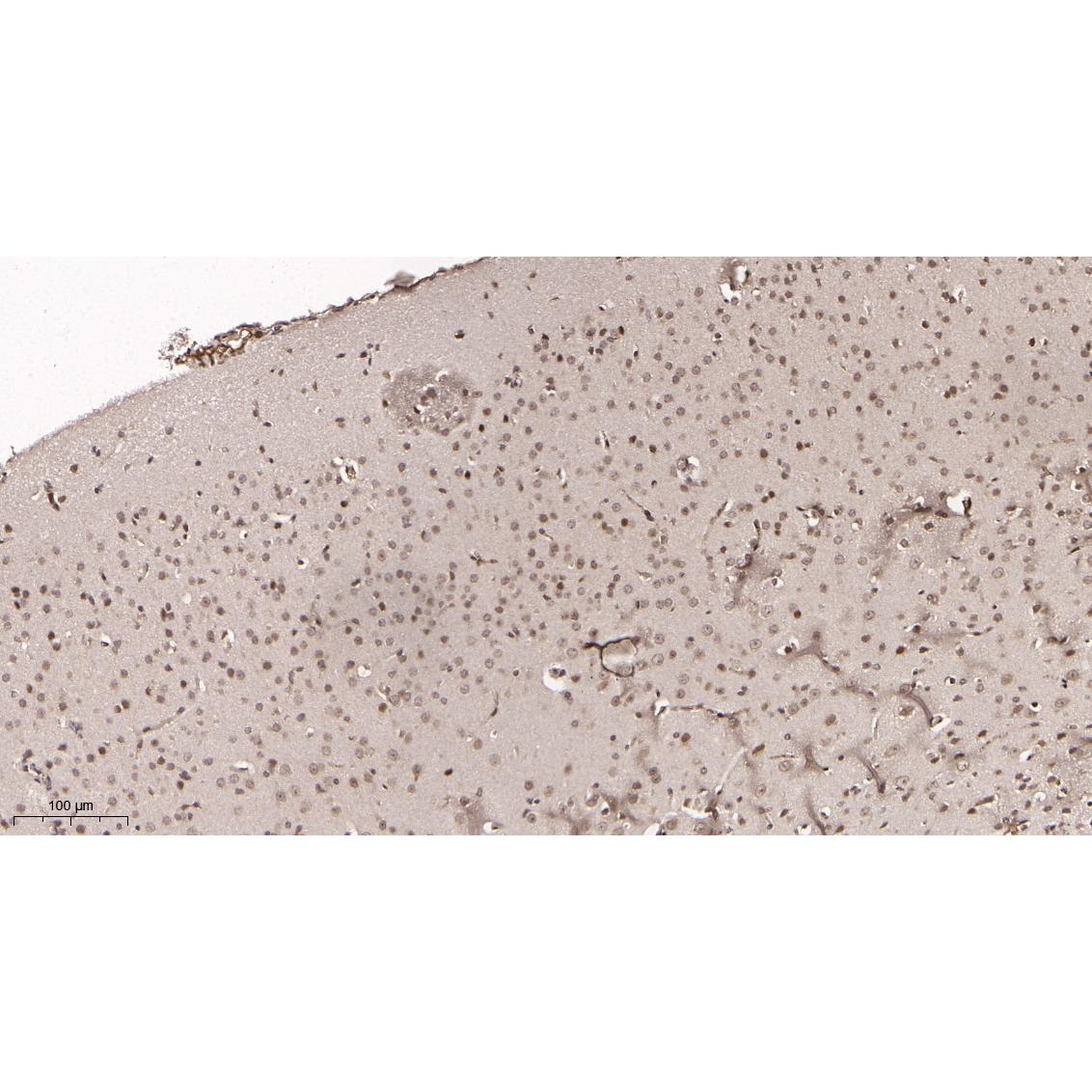
WR4170 Immunohistochemical analysis of paraffin-embedded mouse brain tissue. 1, primary Antibody was diluted at 1:200(4~C,overnight). 2, EDTA pH 9.0 was used for antibody retrieval(>98~C,20min). 3,Secondary antibody was diluted at 1:200(room tempeRature, 30min).

WR4170 Western blot analysis of lysates from Hela cells, using p27 KIP 1 Rabbit mAb. The HRP-conjugated Goat anti-Rabbit IgG antibody (WS0002) was used to detect the antibody.
Price range: $268.00 through $328.00
Product details
Background:This gene encodes a cyclin-dependent kinase inhibitor, which shares a limited similarity with CDK inhibitor CDKN1A/p21. The encoded protein binds to and prevents the activation of cyclin E-CDK2 or cyclin D-CDK4 complexes, and thus controls the cell cycle progression at G1. The degradation of this protein, which is triggered by its CDK dependent phosphorylation and subsequent ubiquitination by SCF complexes, is required for the cellular transition from quiescence to the proliferative state. Mutations in this gene are associated with multiple endocrine neoplasia type IV (MEN4). [provided by RefSeq, Apr 2014],
Specifications
| Size | 50μL/100μL |
| Target | p27 |
| Reactivity | Human, Mouse, Rat, Bovine |
| Applications | WB, IHC, IF, IP, ELISA |
| MW(Calculated) | 27kD |
| MW(Observed) | 27kD |
| Host Species | Rabbit |
| Isotype | IgG,Kappa |
| Conjugate/Modification | Unmodified |
| Recommended Dilution Ratio | IHC 1:200-1:1000; WB 1:1000-1:5000; IF 1:200-1:1000; ELISA 1:5000-1:20000; IP 1:50-1:200, / Note: For IHC, we suggest antigen retrieval with TE buffer pH 9.0 (Cat#WT1004) |
| Formulation | PBS, 50% glycerol, 0.05% Proclin 300, 0.05%BSA |
| Purification | Recombinant Antibody expressed in animal component-free (ACF) media, purified via Protein A affinity chromatography. |
| Storage | -15°C to -25°C/1 year(Do not lower than -25°C) |
| Concentration | |
| Clonality | Monoclonal |
| Clone Number | RM0324R |
| Immunogen | The specific immunogen used to produce this antibody is proprietary information. |
| Specificity | Endogenous |
| Gene Name | CDKN1B KIP1 |
| Protein Name | Cyclin-dependent kinase inhibitor 1B |
| Other Name | CDKN1B; / KIP1; / Cyclin-dependent kinase inhibitor 1B; / Cyclin-dependent kinase inhibitor p27; / p27Kip1 |
| Species | Human |
| Gene ID | 1027 |
| Uniprot | P46527, |
| Species.1 | Mouse |
| Gene ID.1 | 12576 |
| Uniprot.1 | P46414 |
| Species.2 | |
| Gene ID.2 | |
| Uniprot.2 | |
| Cellular Localization | Nucleus |
| Tissue Expression | Expressed in kidney (at protein level) (PubMed:15509543). Expressed in all tissues tested (PubMed:8033212). Highest levels in skeletal muscle, lowest in liver and kidney (PubMed:8033212). |
| Signaling_pathway | Cellular Processes >> Cell growth and death >> Cell cycle;Human Diseases >> Cancer: overview >> Pathways in cancer;Human Diseases >> Cancer: overview >> Transcriptional misregulation in cancer;Human Diseases >> Cancer: overview >> MicroRNAs in cancer;Human Diseases >> Cancer: specific types >> Gastric cancer;Human Diseases >> Cancer: specific types >> Chronic myeloid leukemia;Human Diseases >> Cancer: specific types >> Prostate cancer;Human Diseases >> Cancer: specific types >> Small cell lung cancer;Environmental Information Processing >> Signal transduction >> ErbB signaling pathway;Environmental Information Processing >> Signal transduction >> HIF-1 signaling pathway;Environmental Information Processing >> Signal transduction >> FoxO signaling pathway;Environmental Information Processing >> Signal transduction >> PI3K-Akt signaling pathway |
| Research Areas | >>Endocrine resistance; / >>ErbB signaling pathway; / >>HIF-1 signaling pathway; / >>FoxO signaling pathway; / >>Cell cycle; / >>PI3K-Akt signaling pathway; / >>AGE-RAGE signaling pathway in diabetic complications; / >>Cushing syndrome; / >>Measles; / >>Human papillomavirus infection; / >>Epstein-Barr virus infection; / >>Pathways in cancer; / >>Transcriptional misregulation in cancer; / >>Viral carcinogenesis; / >>MicroRNAs in cancer; / >>Prostate cancer; / >>Chronic myeloid leukemia; / >>Small cell lung cancer; / >>Gastric cancer |
| Function | Disease:Defects in CDKN1B are the cause of multiple endocrine neoplasia type 4 (MEN4) [MIM:610755]. Multiple endocrine neoplasia (MEN) syndromes are inherited cancer syndromes of the thyroid. MEN4 is a MEN-like syndrome with a phenotypic overlap of both MEN1 and MEN2.,Domain:A peptide sequence containing only AA 28-79 retains substantial Kip1 cyclin A/CDK2 inhibitory activity.,Function:Important regulator of cell cycle progrssion. Involved in G1 arrest. Potent inhibitor of cyclin E- and cyclin A-CDK2 complexes. Positive regulator of cyclin D-dependent kinases such as CDK4. Regulated by phosphorylation and degradation events.,induction:Maximal levels in quiescence cells and early G(1). Levels decrease after mitogen stimulation as cells progress toward S-phase.,miscellaneous:Decreased levels of p27Kip1, mainly due to proteosomal degradation, are found in various epithelial tumors originating from lung, breast, colon, ovary, esophagus, thyroid and prostate.,PTM:Phosphorylated; phosphorylation occurs on serine, threonine and tyrosine residues. Phosphorylation on Ser-10 is the major site of phosphorylation in resting cells, takes place at the G(0)-G(1) phase and leads to protein stability. Phosphorylation on other sites is greatly enhanced by mitogens, growth factors, cMYC and in certain cancer cell lines. The phosphorylated form found in the cytoplasm is inactivate. Phosphorylation on Thr-198 is required for interaction with 14-3-3 proteins. Phosphorylation on Thr-187, by CDK2 leads to protein ubiquitination and proteasomal degradation. Tyrosine phosphorylation promotes this process. Phosphorylation by PKB/AKT1 can be suppressed by LY294002, an inhibitor of the catalytic subunit of PI3K. Phosphorylation on Tyr-88 and Tyr-89 has no effect on binding CDK2, but is required for binding CDK4. Dephosphorylated on tyrosine residues by G-CSF.,PTM:Ubiquitinated; in the cytoplasm by the KPC1/KPC2 complex and, in the nucleus, by SCF/SKP2. The latter requires prior phosphorylation on Thr-187.,similarity:Belongs to the CDI family.,subcellular location:Nuclear and cytoplasmic in quiescent cells. AKT- or RSK-mediated phosphorylation on Thr-198, binds 14-3-3, translocates to the cytoplasm and promotes cell cycle progression. Mitogen-activated UHMK1 phosphorylation on Ser-10 also results in translocation to the cytoplasm and cell cycle progression. Phosphorylation on Ser-10 facilitates nuclear export. Translocates to the nucleus on phosphorylation of Tyr-88 and Tyr-89.,subunit:Interacts with NUP50; the interaction leads to nuclear import and degradation of phosphorylated p27kip1. Interacts with COPS5, subunit of the COP9 signalosome complex; the interaction leads to p27KIP degradation. Interacts with SPDYA in the SPDYA/CDK2/p27kip1 complex. Interacts (Thr-198 phosphorylated-form) with 14-3-3 proteins, binds strongly YWHAQ, weakly YWHAE and YWHAH, but not YWHAB nor YWHAZ; the interaction with YWHAQ results in translocation to the cytoplasm. Interacts with AKT1, LYN and UHMK1; the interactions lead to cytoplasmic mislocation, phosphorylation of p27kip1 and inhibition of cell cycle arrest. Interacts (unphosphorylated form) with CDK2. Interacts (phosphorylated on Tyr-88 and Tyr-89) with CDK4; the interaction induces nuclear translocation. Interacts with GRB2.,tissue specificity:Expressed in all tissues tested. Highest levels in skeletal muscle, lowest in liver and kidney., |
Please login to post questions
Related products




