SKU: WR4055 Categories: ,

U-Blot® Rad21 Rabbit mAb

Price range: $268.00 through $328.00

SKU: WR4055-50
Enter the quantity you would like, or drag the panel to find the quantity and price that best for you
Bulk QuoteAuthorize OEM & ODM

Product details

Background:The protein encoded by this gene is highly similar to the gene product of Schizosaccharomyces pombe rad21, a gene involved in the repair of DNA double-strand breaks, as well as in chromatid cohesion during mitosis. This protein is a nuclear phospho-protein, which becomes hyperphosphorylated in cell cycle M phase. The highly regulated association of this protein with mitotic chromatin specifically at the centromere region suggests its role in sister chromatid cohesion in mitotic cells. [provided by RefSeq, Jul 2008],

Specifications

Size50μL/100μL
TargetRad21
ReactivityHuman, Mouse, Rat
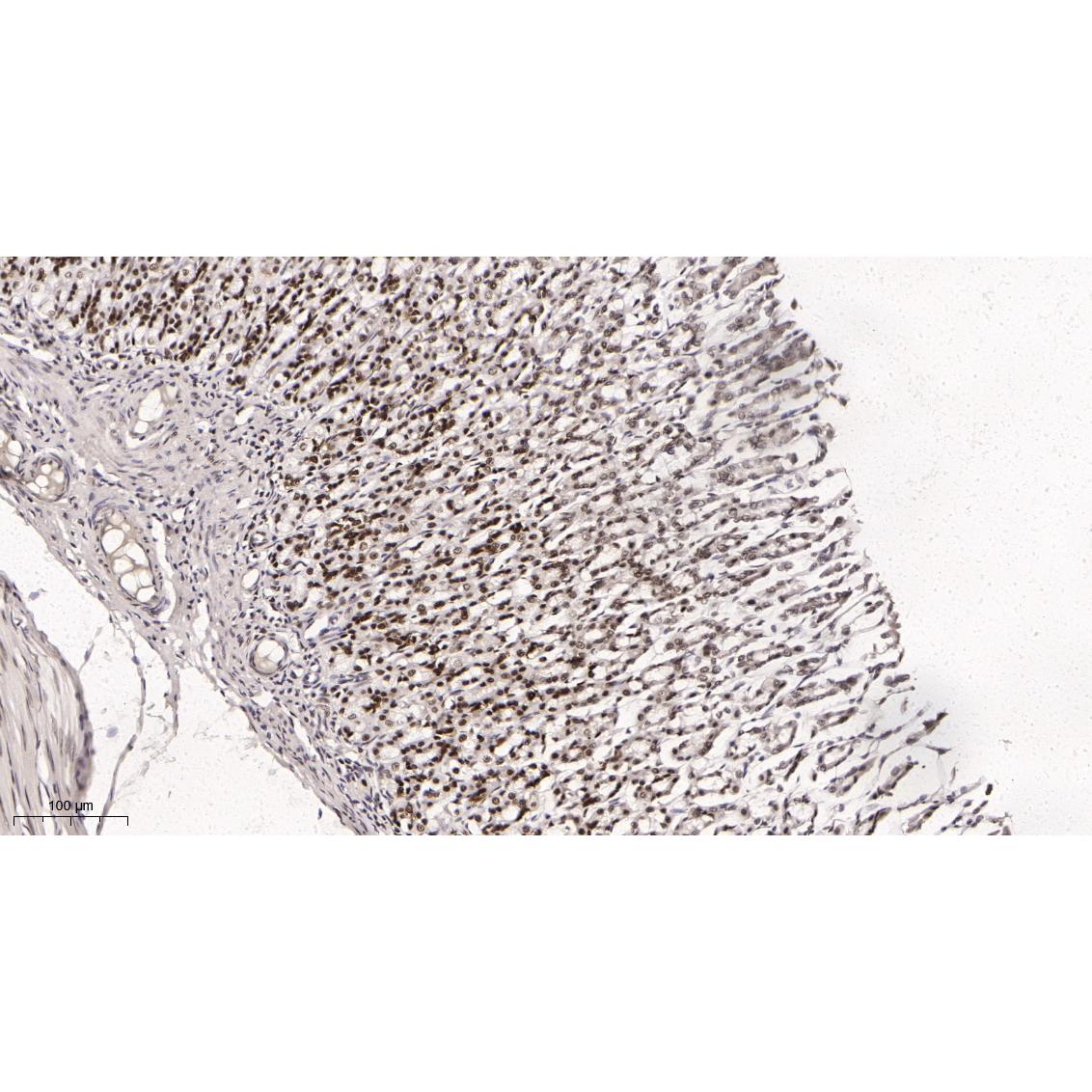
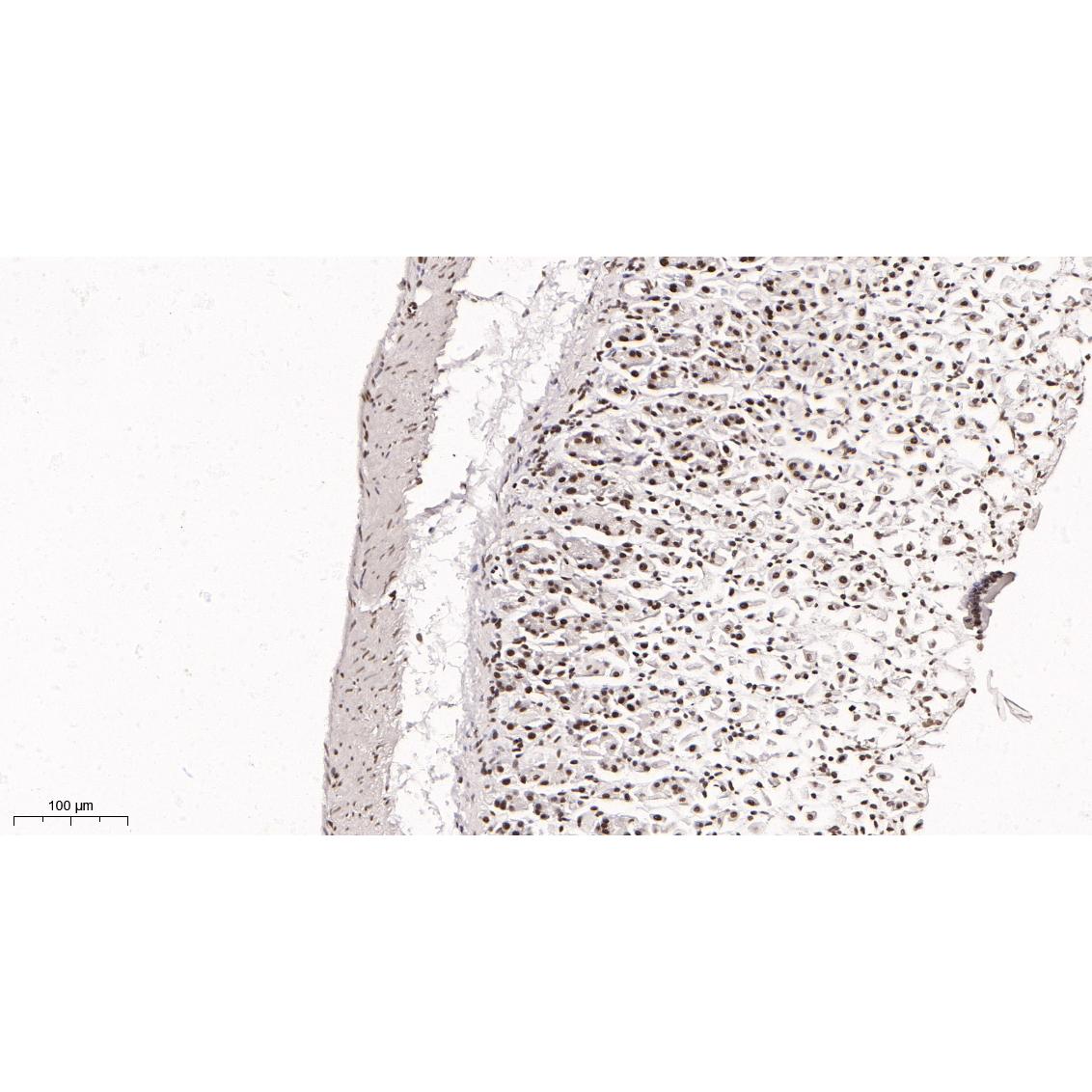
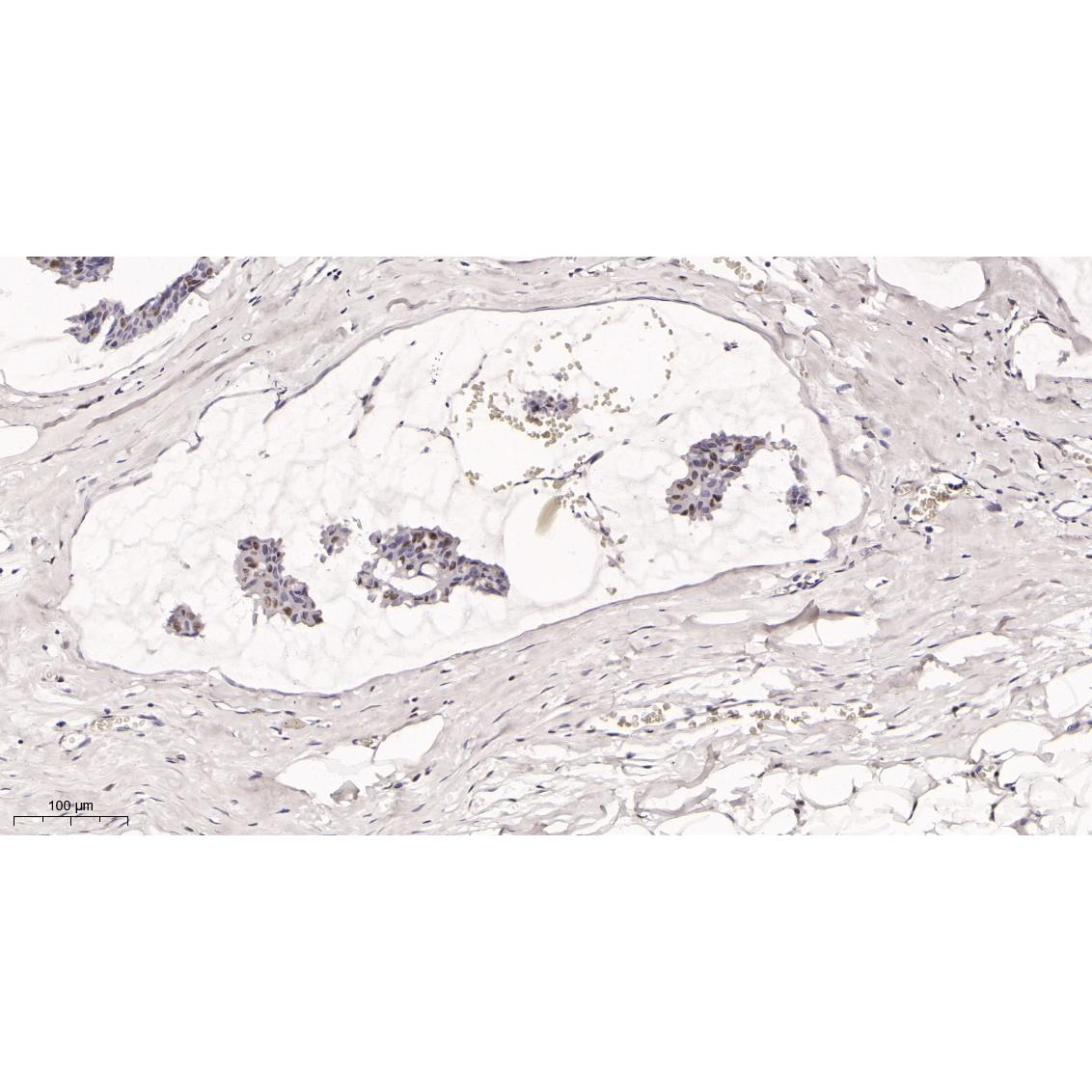
ApplicationsWB, IHC, IF, IP, ELISA
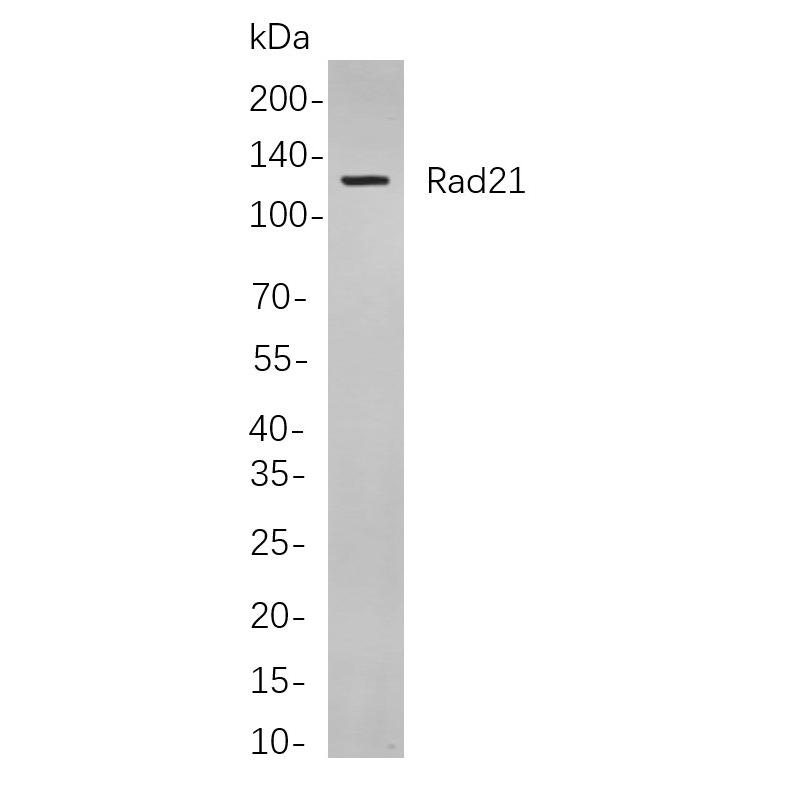
MW(Calculated)72kD
MW(Observed)130kD
Host SpeciesRabbit
IsotypeIgG,Kappa
Conjugate/ModificationUnmodified
Recommended Dilution RatioIHC 1:200-1000; WB 1:1000-5000; IF 1:200-1000; ELISA 1:5000-20000; IP 1:50-200 / Note: For IHC, we suggest antigen retrieval with TE buffer pH 9.0 (Cat#WT1004)
FormulationPBS, 50% glycerol, 0.05% Proclin 300, 0.05%BSA
PurificationRecombinant Antibody expressed in animal component-free (ACF) media, purified via Protein A affinity chromatography.
Storage-15°C to -25°C/1 year(Do not lower than -25°C)
Concentration
ClonalityMonoclonal
Clone NumberRM0134R
ImmunogenThe specific immunogen used to produce this antibody is proprietary information.
SpecificityEndogenous
Gene NameRAD21
Protein NameDouble-strand-break repair protein rad21 homolog
Other NameRAD21; / HR21; / KIAA0078; / NXP1; / Double-strand-break repair protein rad21 homolog; / hHR21; / Nuclear matrix protein 1; / NXP-1; / SCC1 homolog
SpeciesHuman
Gene ID5885
UniprotO60216,
Species.1Mouse
Gene ID.119357
Uniprot.1Q61550
Species.2
Gene ID.2
Uniprot.2
Cellular LocalizationNuclear
Tissue ExpressionExpressed in the gut (at protein level).
Signaling_pathwayCellular Processes >> Cell growth and death >> Cell cycle
Research Areas>>Cell cycle
FunctionDomain:The C-terminal part associates with the head of SMC1A, while the N-terminal part binds to the head of SMC3.,Function:Cleavable component of the cohesin complex, involved in chromosome cohesion during cell cycle, in DNA repair, and in apoptosis. The cohesin complex is required for the cohesion of sister chromatids after DNA replication. The cohesin complex apparently forms a large proteinaceous ring within which sister chromatids can be trapped. At metaphase-anaphase transition, this protein is cleaved by separase/ESPL1 and dissociates from chromatin, allowing sister chromatids to segregate. The cohesin complex may also play a role in spindle pole assembly during mitosis. Also plays a role in apoptosis, via its cleavage by caspase-3/CASP3 or caspase-7/CASP7 during early steps of apoptosis: the C-terminal 64 kDa cleavage product may act as a nuclear signal to initiate cytoplasmic events involved in the apoptotic pathway.,polymorphism:Some radiosensitive cancer patients seem to have Arg-481 instead of the conserved Gly-481. It may be that this mutation could contribute to radiosensitivity.,PTM:Cleaved by separase/ESPL1 at the onset of anaphase. Cleaved by caspase-3 and caspase-7 at the beginning of apoptosis. The cleavage by ESPL1 and caspase-3 take place at different sites.,PTM:Phosphorylated; becomes hyperphosphorylated in M phase of cell cycle. The large dissociation of cohesin from chromosome arms during prophase may be partly due to its phosphorylation by PLK.,similarity:Belongs to the rad21 family.,subcellular location:Associates with chromatin. Before prophase it is scattered along chromosome arms. During prophase, most of cohesin complexes dissociate from chromatin probably because of phosphorylation by PLK, except at centromeres, where cohesin complexes remain. At anaphase, it is cleaved by separase/ESPL1, leading to the dissociation of the complex from chromosomes, allowing chromosome separation. Once cleaved by caspase-3, the C-terminal 64 kDa cleavage product translocates to the cytoplasm, where it may trigger apoptosis.,subunit:Cohesin complexes are composed of the SMC1 (SMC1A or SMC1B) and SMC3 heterodimer attached via their hinge domain, RAD21 which link them, and one STAG protein (STAG1, STAG2 or STAG3), which interacts with RAD21. Found in a complex with SMC1A, SMC3, CDCA5, PDS5A/APRIN and PDS5B/SCC-112.,
Please login to post questions

Back to Top
Product has been added to your cart

