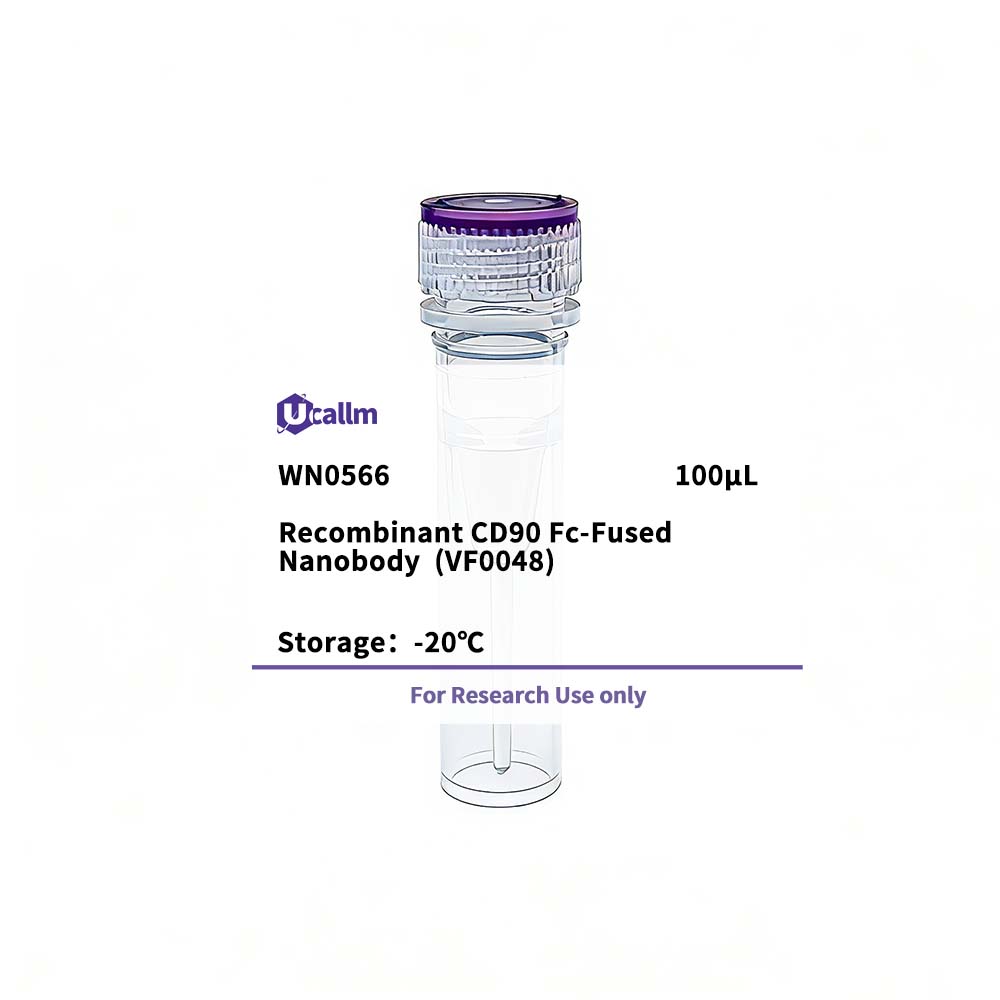
SKU: WN0566 Categories: ,

Recombinant CD90 Fc-Fused Nanobody (VF0048)

$365.00

SKU: WN0566
Enter the quantity you would like, or drag the panel to find the quantity and price that best for you
Bulk QuoteAuthorize OEM & ODM

Product details

Background:This gene encodes a cell surface glycoprotein and member of the immunoglobulin superfamily of proteins. The encoded protein is involved in cell adhesion and cell communication in numerous cell types, but particularly in cells of the immune and nervous systems. The encoded protein is widely used as a marker for hematopoietic stem cells.This gene may function as a tumor suppressor in nasopharyngeal carcinoma. Alternative splicing results in multiple transcript variants. [provided by RefSeq, Jul 2015]


Specifications

Size100μL
TargetCD90
ReactivityHuman
ApplicationsELISA
MW(Calculated)
MW(Observed)
Host Species
IsotypeIgG2a,Kappa
Conjugate/ModificationUnmodified
Recommended Dilution RatioELISA 1:5000-100000; Flow Cyt 1-2μg/Test
FormulationPhosphate-buffered solution
PurificationRecombinant Expression and Affinity purified
Storage-15°C to -25°C/1 year(Avoid freeze / thaw cycles)
ConcentrationPlease check the information on the tube
Clonality
Clone NumberVF0412
ImmunogenPurified recombinant Human CD90
SpecificityThis recombinant monoclonal antibody can detects endogenous levels of CD90 protein.
Gene NameTHY1
Protein NameThy-1 membrane glycoprotein (CDw90) (Thy-1 antigen) (CD antigen CD90)
Other NameTHY1; / Thy-1 membrane glycoprotein; / CDw90; / Thy-1 antigen; / CD antigen CD90; / CD90 nanobody
SpeciesHuman
Gene ID7070
UniprotP04216
Species.1
Gene ID.1
Uniprot.1
Species.2
Gene ID.2
Uniprot.2
Cellular LocalizationCell membrane; Lipid-anchor, GPI-anchor .
Tissue ExpressionExpressed in natural killer cells (at protein level) (PubMed:2526846). Expressed in a subset of circulating monocytes (at protein level) (PubMed:2767158).
Signaling_pathwayOrganismal Systems >> Immune system >> Leukocyte transendothelial migration
Research Areas
FunctionMay play a role in cell-cell or cell-ligand interactions during synaptogenesis and other events in the brain.,similarity:Contains 1 Ig-like V-type (immunoglobulin-like) domain.,
Please login to post questions
Back to Top
Product has been added to your cart
