SKU: WP1653 Categories: ,

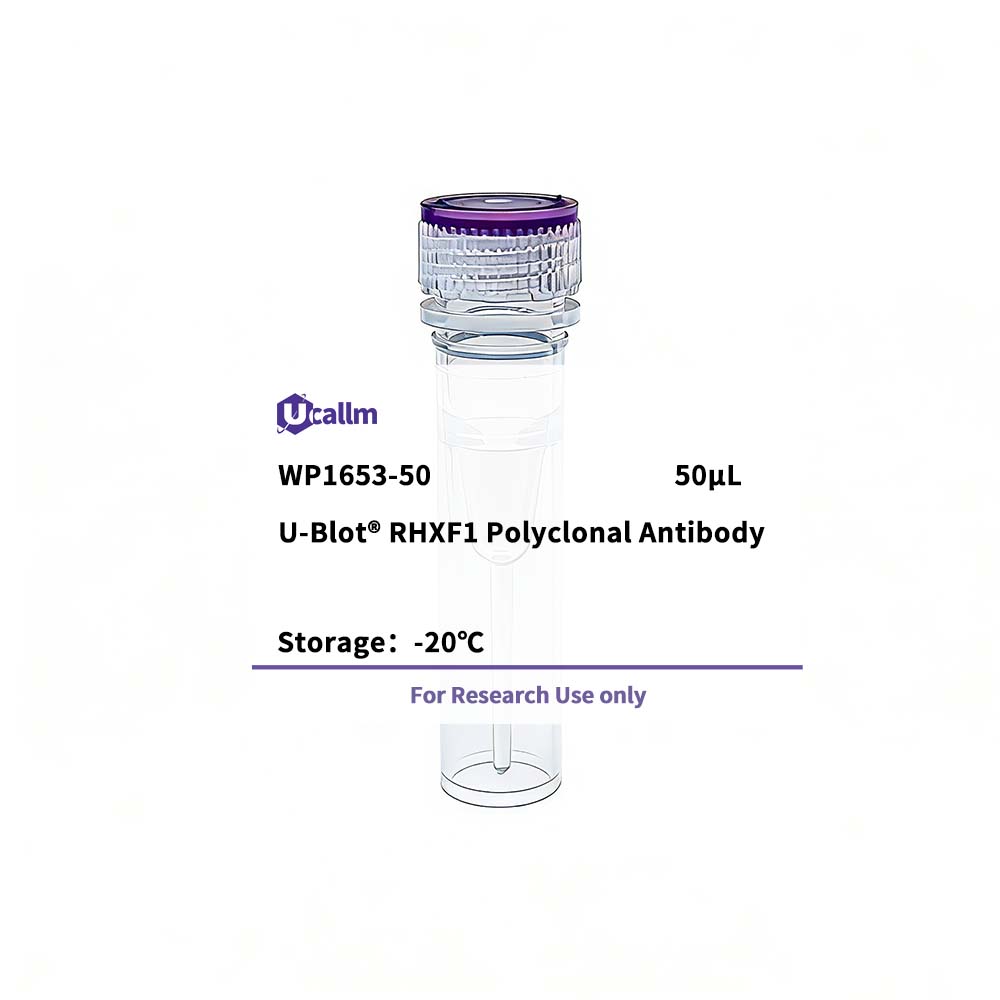
RHXF1 Polyclonal Antibody

Price range: $268.00 through $328.00

SKU: WP1653-100
Enter the quantity you would like, or drag the panel to find the quantity and price that best for you
Bulk QuoteAuthorize OEM & ODM

Product details

Background:

This gene is a member of the PEPP subfamily of paired-like homoebox genes. The gene may be regulated by androgens and epigenetic mechanisms. The encoded nuclear protein is likely a transcription factor that may play a role in human reproduction. [provided by RefSeq, Dec 2012],


Specifications

Size50μL/100μL
TargetRHXF1
ReactivityHuman
ApplicationsWB, ELISA
MW(Calculated)
MW(Observed)20kD
Host SpeciesRabbit
IsotypeIgG
Conjugate/ModificationUnmodified
Recommended Dilution RatioWB 1:500-2000; ELISA 1:5000-20000
FormulationLiquid in PBS containing 50% glycerol,0.5% BSA and 0.02% sodium azide.
PurificationThe antibody was affinity-purified from rabbit antiserum by affinity-chromatography using epitope-specific immunogen.
Storage-15°C to -25°C/1 year(Do not lower than -25°C)
Concentration1 mg/ml
ClonalityPolyclonal
Clone Number
ImmunogenSynthesized peptide derived from human protein . at AA range: 110-190
SpecificityRHXF1 Polyclonal Antibody detects endogenous levels of protein.
Gene NameRHOXF1 OTEX PEPP1
Protein NameRhox homeobox family member 1 (Ovary-, testis- and epididymis-expressed gene protein) (Paired-like homeobox protein PEPP-1)
Other Name
SpeciesHuman
Gene ID158800
UniprotQ8NHV9
Species.1
Gene ID.1
Uniprot.1
Species.2
Gene ID.2
Uniprot.2
Cellular LocalizationNucleus .
Tissue ExpressionOvary, testis and epididymis. Also detected in the prostate and the mammary gland. Expressed in many tumor cell lines derived from acute lymphocytic leukemia, prostate, endometrial adenocarcinoma, melanoma, bladder carcinoma, colon carcinoma, erythroleukemia and breast carcinoma. Not expressed in placenta. In testis, mainly expressed in germ cells, but also detected in somatic cells such as Sertoli cells, Leydig cells and peritubular cells (PubMed:28171660).
Signaling_pathway
Research Areas
FunctionDomain:Mutagenesis of amino acids 147 to 164 and 155 to 164 lead to a major cytoplasmic localization, with only minor localization in the nucleus.,Function:May be a transcription factor involved in reproductive processes.,induction:By androgen.,similarity:Belongs to the paired-like homeobox family. PEPP subfamily.,similarity:Contains 1 homeobox DNA-binding domain.,subunit:Does not interact with itself.,tissue specificity:Ovary, testis and epididymis. Also detected in the prostate and the mammary gland. Expressed in many tumor cell lines derived from acute lymphocytic leukemia, prostate, endometrial adenocarcinoma, melanoma, bladder carcinoma, colon carcinoma, erythroleukemia and breast carcinoma. Not expressed in placenta.,
Please login to post questions
Back to Top
Product has been added to your cart

