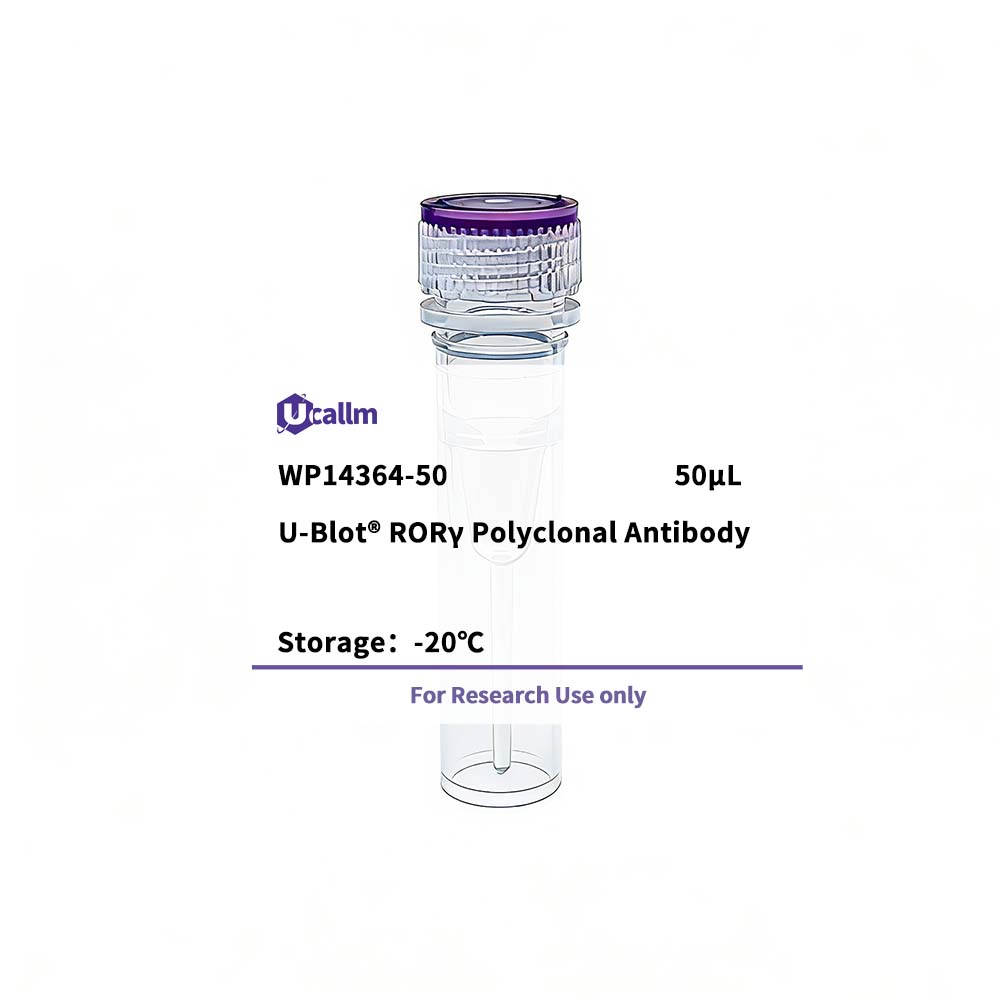
SKU: WP14364 Categories: ,

RORγ Polyclonal Antibody

Price range: $268.00 through $328.00

SKU: WP14364-100
Enter the quantity you would like, or drag the panel to find the quantity and price that best for you
Bulk QuoteAuthorize OEM & ODM

Product details

Background:

The protein encoded by this gene is a DNA-binding transcription factor and is a member of the NR1 subfamily of nuclear hormone receptors. The specific functions of this protein are not known; however, studies of a similar gene in mice have shown that this gene may be essential for lymphoid organogenesis and may play an important regulatory role in thymopoiesis. In addition, studies in mice suggest that the protein encoded by this gene may inhibit the expression of Fas ligand and IL2. Two transcript variants encoding different isoforms have been found for this gene. [provided by RefSeq, Jul 2008],


Specifications

Size50μL/100μL
TargetRORγ
ReactivityHuman, Mouse
ApplicationsWB, IHC
MW(Calculated)
MW(Observed)58kD
Host SpeciesRabbit
IsotypeIgG
Conjugate/ModificationUnmodified
Recommended Dilution RatioWB 1:500-2000; IHC 1:50-300 / Note: For IHC, we suggest antigen retrieval with TE buffer pH 9.0 (Cat#WT1004)
FormulationLiquid in PBS containing 50% glycerol, 0.5% BSA and 0.02% sodium azide.
PurificationThe antibody was affinity-purified from rabbit antiserum by affinity-chromatography using epitope-specific immunogen.
Storage-15°C to -25°C/1 year(Do not lower than -25°C)
Concentration1 mg/ml
ClonalityPolyclonal
Clone Number
ImmunogenThe antiserum was produced against synthesized peptide derived from human RORG. AA range:71-120
SpecificityRORγ Polyclonal Antibody detects endogenous levels of RORγ protein.
Gene NameRORC
Protein NameNuclear receptor ROR-gamma
Other NameRORC; / NR1F3; / RORG; / RZRG; / Nuclear receptor ROR-gamma; / Nuclear receptor RZR-gamma; / Nuclear receptor subfamily 1 group F member 3; / Retinoid-related orphan receptor-gamma
SpeciesHuman
Gene ID6097
UniprotP51449,
Species.1Mouse
Gene ID.119885
Uniprot.1P51450
Species.2
Gene ID.2
Uniprot.2
Cellular LocalizationNucleus .
Tissue ExpressionIsoform 1 is widely expressed in many tissues, including liver and adipose, and highly expressed in skeletal muscle. Isoform 2 is primarily expressed in immature thymocytes.
Signaling_pathwayOrganismal Systems >> Immune system >> Th17 cell differentiation;Organismal Systems >> Environmental adaptation >> Circadian rhythm;Human Diseases >> Immune disease >> Inflammatory bowel disease
Research Areas>>Th17 cell differentiation; / >>Circadian rhythm; / >>Inflammatory bowel disease
FunctionFunction:Orphan nuclear receptor.,similarity:Belongs to the nuclear hormone receptor family.,similarity:Belongs to the nuclear hormone receptor family. NR1 subfamily.,similarity:Contains 1 nuclear receptor DNA-binding domain.,tissue specificity:Highly expressed in skeletal muscle.,
Please login to post questions
Back to Top
Product has been added to your cart

