SKU: WP1613 Categories: ,

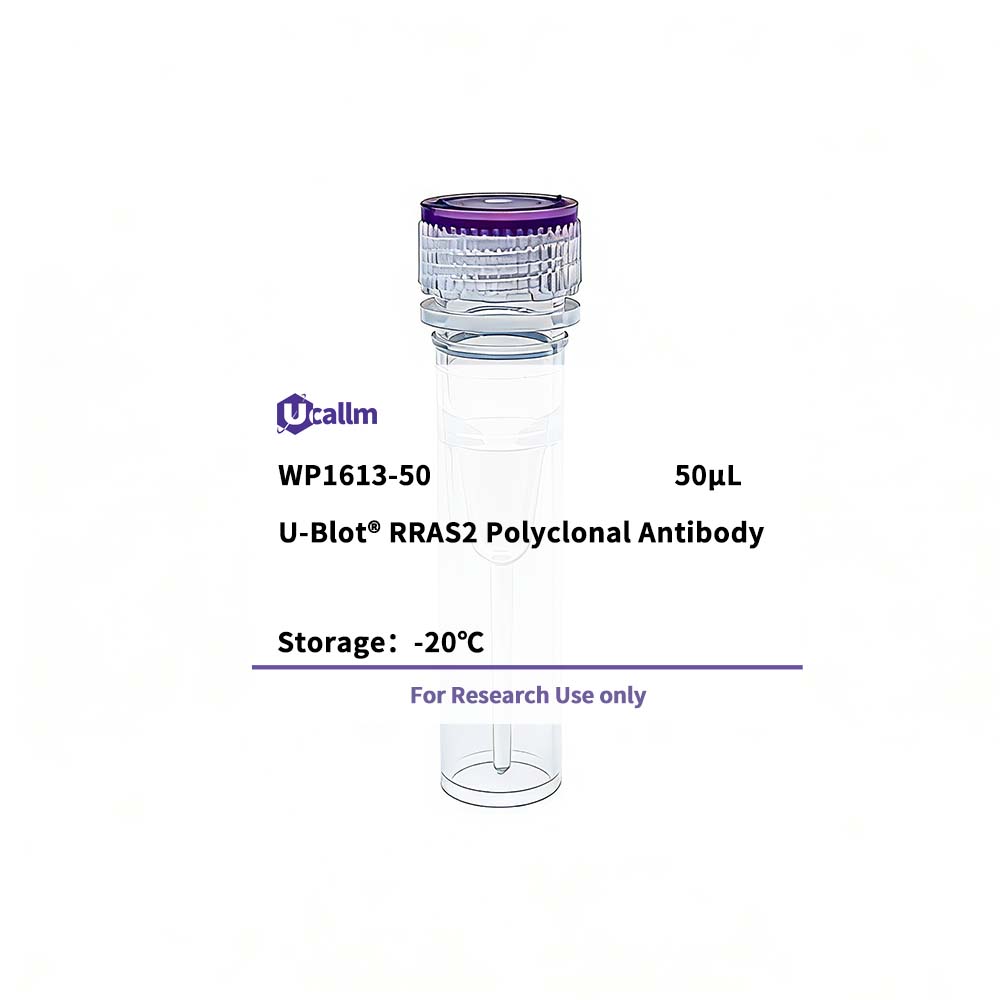
RRAS2 Polyclonal Antibody

Price range: $268.00 through $328.00

SKU: WP1613-100
Enter the quantity you would like, or drag the panel to find the quantity and price that best for you
Bulk QuoteAuthorize OEM & ODM

Product details

Background:

This gene encodes a member of the R-Ras subfamily of Ras-like small GTPases. The encoded protein associates with the plasma membrane and may function as a signal transducer. This protein may play an important role in activating signal transduction pathways that control cell proliferation. Mutations in this gene are associated with the growth of certain tumors. Pseudogenes of this gene are found on chromosomes 1 and 2. Alternate splicing results in multiple transcript variants. [provided by RefSeq, Apr 2010],


Specifications

Size50μL/100μL
TargetRRAS2
ReactivityHuman, Mouse
ApplicationsWB, ELISA
MW(Calculated)
MW(Observed)22kD
Host SpeciesRabbit
IsotypeIgG
Conjugate/ModificationUnmodified
Recommended Dilution RatioWB 1:500-2000; ELISA 1:5000-20000
FormulationLiquid in PBS containing 50% glycerol,0.5% BSA and 0.02% sodium azide.
PurificationThe antibody was affinity-purified from rabbit antiserum by affinity-chromatography using epitope-specific immunogen.
Storage-15°C to -25°C/1 year(Do not lower than -25°C)
Concentration1 mg/ml
ClonalityPolyclonal
Clone Number
ImmunogenSynthesized peptide derived from human protein . at AA range: 90-170
SpecificityRRAS2 Polyclonal Antibody detects endogenous levels of protein.
Gene NameRRAS2 TC21
Protein NameRas-related protein R-Ras2 (Ras-like protein TC21) (Teratocarcinoma oncogene)
Other Name
SpeciesHuman
Gene ID22800
UniprotP62070,
Species.1Mouse
Gene ID.1
Uniprot.1P62071
Species.2
Gene ID.2
Uniprot.2
Cellular LocalizationCell membrane; Lipid-anchor; Cytoplasmic side. Golgi apparatus membrane; Lipid-anchor .
Tissue ExpressionUbiquitously present in all tissues examined, with the highest levels in heart, placenta, and skeletal muscle. Moderate levels in lung and liver; low levels in brain, kidney, and pancreas.
Signaling_pathwayCellular Processes >> Transport and catabolism >> Autophagy - animal;Cellular Processes >> Transport and catabolism >> Mitophagy - animal;Cellular Processes >> Cell growth and death >> Cellular senescence;Cellular Processes >> Cell motility >> Regulation of actin cytoskeleton;Environmental Information Processing >> Signal transduction >> MAPK signaling pathway;Environmental Information Processing >> Signal transduction >> Ras signaling pathway;Environmental Information Processing >> Signal transduction >> Apelin signaling pathway;Environmental Information Processing >> Signal transduction >> Phospholipase D signaling pathway;Environmental Information Processing >> Signal transduction >> cAMP signaling pathway
Research Areas>>MAPK signaling pathway; / >>Ras signaling pathway; / >>cAMP signaling pathway; / >>Phospholipase D signaling pathway; / >>Mitophagy - animal; / >>Autophagy - animal; / >>Cellular senescence; / >>Apelin signaling pathway; / >>C-type lectin receptor signaling pathway; / >>Regulation of actin cytoskeleton; / >>Proteoglycans in cancer
FunctionDisease:Defects in RRAS2 are associated with ovarian cancer [MIM:167000]. Ovarian cancer is the leading cause of death from gynecologic malignancy. It is characterized by advanced presentation with loco-regional dissemination in the peritoneal cavity and the rare incidence of visceral metastases. These typical features relate to the biology of the disease, which is a principal determinant of outcome.,Function:It is a plasma membrane-associated GTP-binding protein with GTPase activity. Might transduce growth inhibitory signals across the cell membrane, exerting its effect through an effector shared with the Ras proteins but in an antagonistic fashion.,PTM:May be post-translationally modified by both palmitoylation and polyisoprenylation.,similarity:Belongs to the small GTPase superfamily. Ras family.,subcellular location:Inner surface of plasma membrane possibly with attachment requiring acylation of the C-terminal cysteine (By similarity with RAS).,tissue specificity:Ubiquitously present in all tissues examined, with the highest levels in heart, placenta, and skeletal muscle. Moderate levels in lung and liver; low levels in brain, kidney, and pancreas.,
Please login to post questions
Back to Top
Product has been added to your cart

