SKU: WP4515 Categories: ,

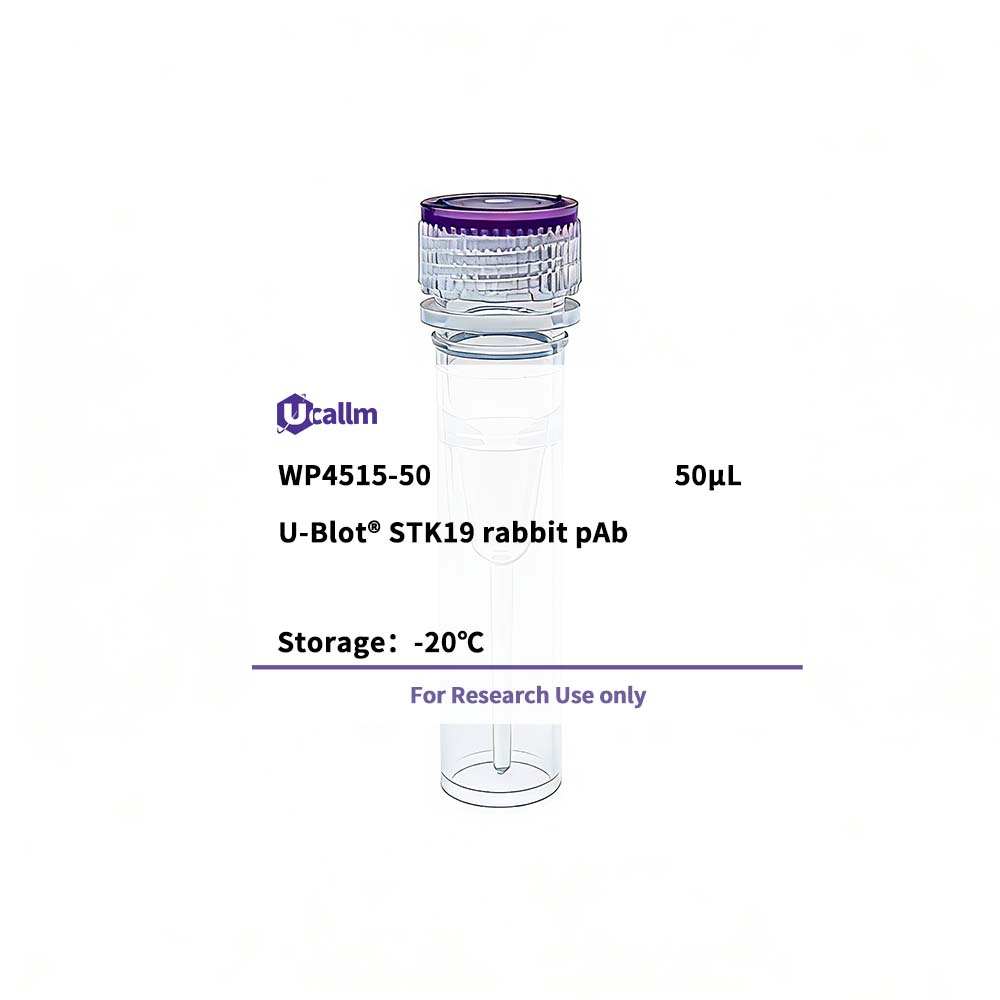
STK19 rabbit pAb

Price range: $268.00 through $328.00

SKU: WP4515-100
Enter the quantity you would like, or drag the panel to find the quantity and price that best for you
Bulk QuoteAuthorize OEM & ODM

Product details

Background:

This gene encodes a serine/threonine kinase which localizes predominantly to the nucleus. Its specific function is unknown; it is possible that phosphorylation of this protein is involved in transcriptional regulation. This gene localizes to the major histocompatibility complex (MHC) class III region on chromosome 6 and expresses two transcript variants. [provided by RefSeq, Jul 2008],


Specifications

Size50μL/100μL
TargetSTK19
ReactivityHuman, Mouse
ApplicationsWB
MW(Calculated)40kD
MW(Observed)
Host SpeciesRabbit
IsotypeIgG
Conjugate/ModificationUnmodified
Recommended Dilution RatioWB 1:500-2000
FormulationLiquid in PBS containing 50% glycerol, 0.5% BSA and 0.02% sodium azide.
PurificationThe antibody was affinity-purified from rabbit antiserum by affinity-chromatography using epitope-specific immunogen.
Storage-15°C to -25°C/1 year(Do not lower than -25°C)
Concentration1 mg/ml
ClonalityPolyclonal
Clone Number
ImmunogenSynthesized peptide derived from human STK19 AA range: 89-139
SpecificityThis antibody detects endogenous levels of STK19 at Human/Mouse
Gene NameSTK19 G11 RP1
Protein NameSTK19
Other Name
SpeciesHuman
Gene ID8859
UniprotP49842,
Species.1Mouse
Gene ID.154402
Uniprot.1Q9JHN8
Species.2
Gene ID.2
Uniprot.2
Cellular LocalizationNucleus .
Tissue ExpressionMonocytes, hepatocytes, epithelial cells, T- and B-lymphocytes.
Signaling_pathway
Research Areas
FunctionCatalytic activity:ATP + a protein = ADP + a phosphoprotein.,cofactor:Divalent cations. Has a preference for manganese.,Function:Seems to be a protein kinase. In vitro it can phosphorylate casein-alpha on serine and threonine residues and histones on serine residues.,similarity:Belongs to the STK19 family.,subunit:The N-terminus interacts with BAG1.,tissue specificity:Monocytes, hepatocytes, epithelial cells, T-and B-lymphocytes.,
Please login to post questions
Back to Top
Product has been added to your cart

