SKU: WP2827 Categories: ,

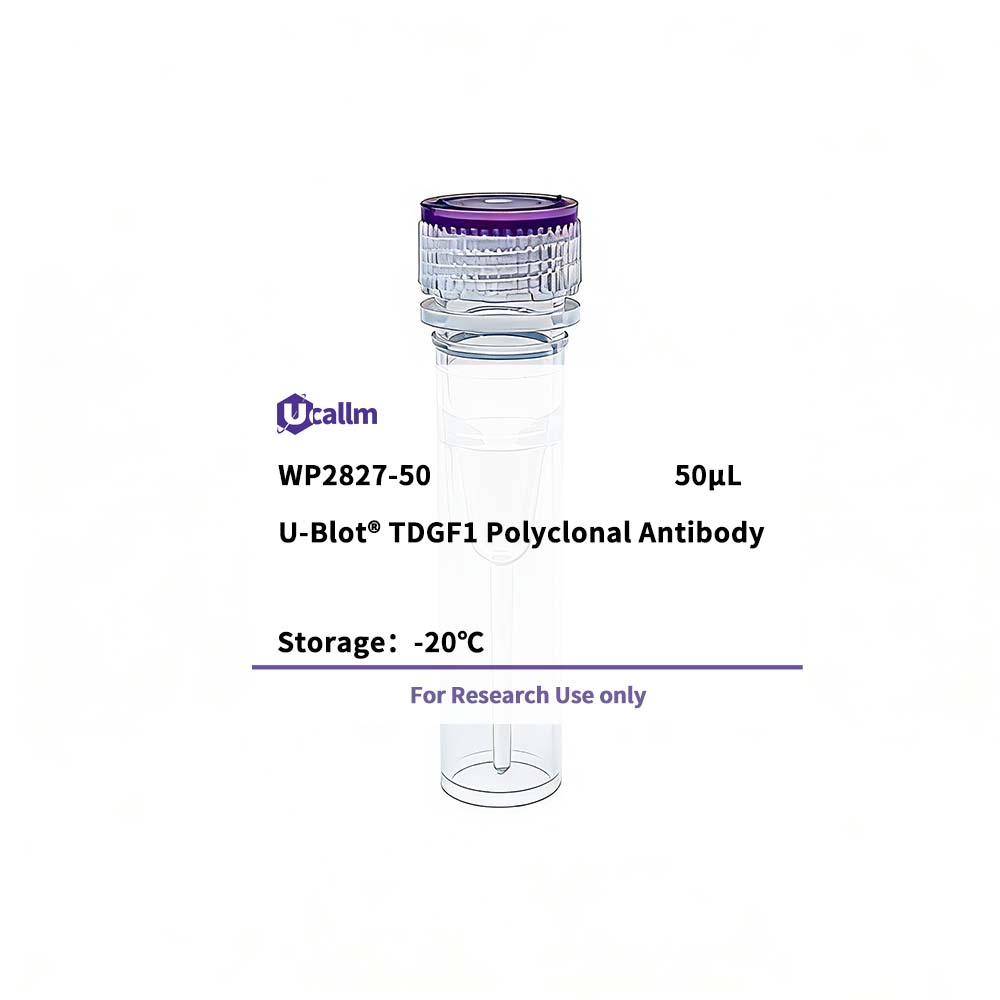
TDGF1 Polyclonal Antibody

Price range: $268.00 through $328.00

SKU: WP2827-100
Enter the quantity you would like, or drag the panel to find the quantity and price that best for you
Bulk QuoteAuthorize OEM & ODM

Product details

Background:

This gene encodes an epidermal growth factor-related protein that contains a cripto, FRL-1, and cryptic domain. The encoded protein is an extracellular, membrane-bound signaling protein that plays an essential role in embryonic development and tumor growth. Mutations in this gene are associated with forebrain defects. Pseudogenes of this gene are found on chromosomes 2, 3, 6, 8, 19 and X. Alternate splicing results in multiple transcript variants. [provided by RefSeq, Mar 2010],


Specifications

Size50μL/100μL
TargetCripto
ReactivityHuman, Mouse
ApplicationsWB, ELISA
MW(Calculated)
MW(Observed)20kD
Host SpeciesRabbit
IsotypeIgG
Conjugate/ModificationUnmodified
Recommended Dilution RatioWB 1:500-2000; ELISA 1:5000-20000
FormulationLiquid in PBS containing 50% glycerol,0.5% BSA and 0.02% sodium azide.
PurificationThe antibody was affinity-purified from rabbit antiserum by affinity-chromatography using epitope-specific immunogen.
Storage-15°C to -25°C/1 year(Do not lower than -25°C)
Concentration1 mg/ml
ClonalityPolyclonal
Clone Number
ImmunogenSynthesized peptide derived from human protein . at AA range: 21-70
SpecificityTDGF1 Polyclonal Antibody detects endogenous levels of protein.
Gene NameTDGF1 CRIPTO
Protein NameTeratocarcinoma-derived growth factor 1 (Cripto-1 growth factor) (CRGF) (Epidermal growth factor-like cripto protein CR1)
Other Name
SpeciesHuman
Gene ID6997
UniprotP13385,
Species.1Mouse
Gene ID.1
Uniprot.1P51865
Species.2
Gene ID.2
Uniprot.2
Cellular LocalizationCell membrane; Lipid-anchor, GPI-anchor . Secreted . Released from the cell membrane by GPI cleavage. .
Tissue ExpressionPreferentially expressed in gastric and colorectal carcinomas than in their normal counterparts. Expressed in breast and lung.
Signaling_pathway
Research Areas
FunctionFunction:Could play a role in the determination of the epiblastic cells that subsequently give rise to the mesoderm.,similarity:Contains 1 EGF-like domain.,tissue specificity:Preferentially expressed in gastric and colorectal carcinomas than in their normal counterparts.,
Please login to post questions
Back to Top
Product has been added to your cart

