

Product details
Background:
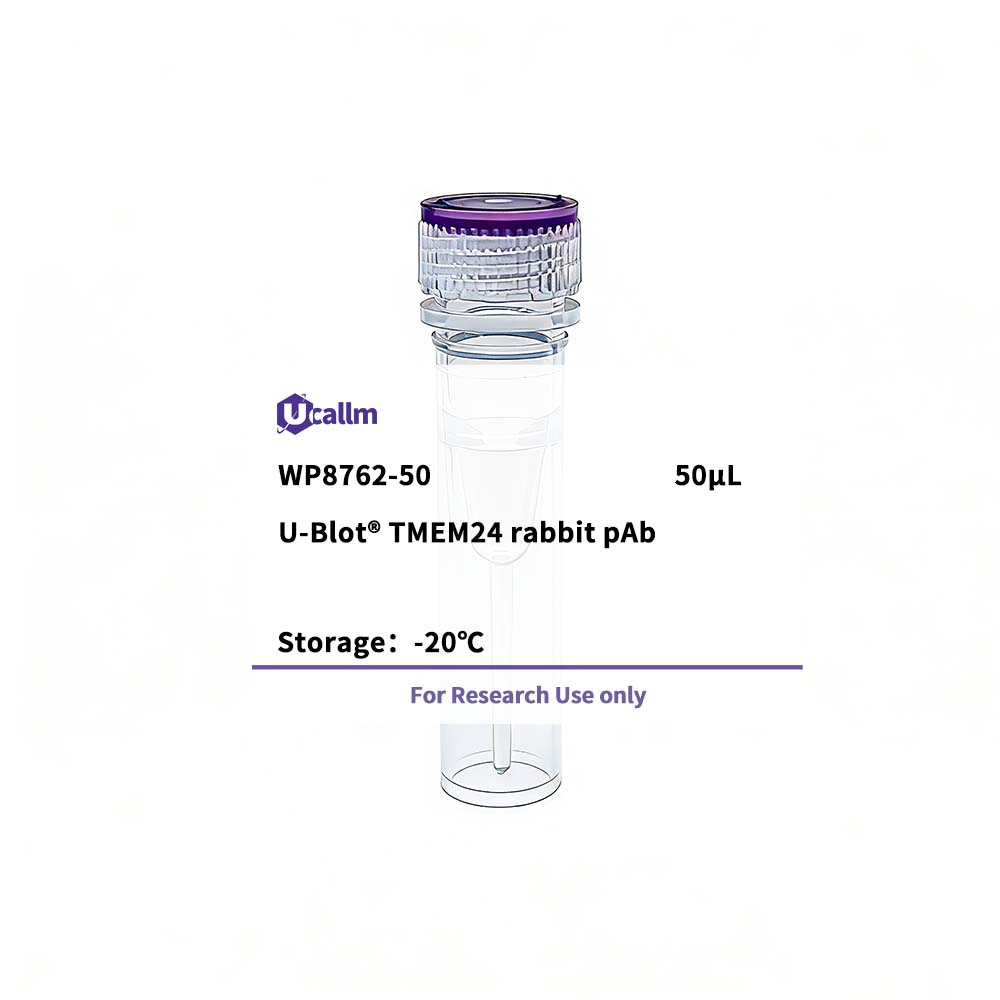
Price range: $268.00 through $328.00
Background:
| Size | 50μL/100μL |
| Target | C2CD2L |
| Reactivity | Human, Mouse |
| Applications | WB |
| MW(Calculated) | 78kD |
| MW(Observed) | |
| Host Species | Rabbit |
| Isotype | IgG |
| Conjugate/Modification | Unmodified |
| Recommended Dilution Ratio | WB 1:500-2000 |
| Formulation | Liquid in PBS containing 50% glycerol, 0.5% BSA and 0.02% sodium azide. |
| Purification | The antibody was affinity-purified from rabbit antiserum by affinity-chromatography using epitope-specific immunogen. |
| Storage | -15°C to -25°C/1 year(Do not lower than -25°C) |
| Concentration | 1 mg/ml |
| Clonality | Polyclonal |
| Clone Number | |
| Immunogen | Synthesized peptide derived from human TMEM24 |
| Specificity | This antibody detects endogenous levels of TMEM24 at Human, Mouse |
| Gene Name | C2CD2L KIAA0285 TMEM24 DLNB23 |
| Protein Name | C2 domain-containing protein 2-like (Transmembrane protein 24) |
| Other Name | |
| Species | Human |
| Gene ID | 9854 |
| Uniprot | O14523, |
| Species.1 | Mouse |
| Gene ID.1 | 71764 |
| Uniprot.1 | Q80X80 |
| Species.2 | |
| Gene ID.2 | |
| Uniprot.2 | |
| Cellular Localization | Endoplasmic reticulum membrane; Single-pass membrane protein . Cell membrane; Peripheral membrane protein . Localizes to sites of contact between the endoplasmic reticulum and the cell membrane (PubMed:28209843). Embedded into the endoplasmic reticulum membrane via its N-terminal transmembrane domain and associates with cell membrane via its C-terminus (PubMed:28209843). In response to elevation of cytosolic Ca(2+), it is phosphorylated at its C-terminus and dissociates from the cell membrane and localizes to the reticular endoplasmic reticulum (PubMed:28209843). Reassociates with cell membrane upon dephosphorylation (PubMed:28209843). . |
| Tissue Expression | |
| Signaling_pathway | |
| Research Areas | |
| Function | Lipid-binding protein that transports phosphatidylinositol, the precursor of phosphatidylinositol 4,5-bisphosphate (PI(4,5)P2), from its site of synthesis in the endoplasmic reticulum to the cell membrane . It thereby maintains the pool of cell membrane phosphoinositides, which are degraded during phospholipase C (PLC) signaling . Plays a key role in the coordination of Ca(2+) and phosphoinositide signaling: localizes to sites of contact between the endoplasmic reticulum and the cell membrane, where it tethers the two bilayers . In response to elevation of cytosolic Ca(2+), it is phosphorylated at its C-terminus and dissociates from the cell membrane, abolishing phosphatidylinositol transport to the cell membrane . Positively regulates insulin secretion in response to glucose: phosphatidylinositol transfer to the cell membrane allows replenishment of PI(4,5)P2 pools and calcium channel opening, priming a new population of insulin granules . |





