SKU: WP14904 Categories: ,

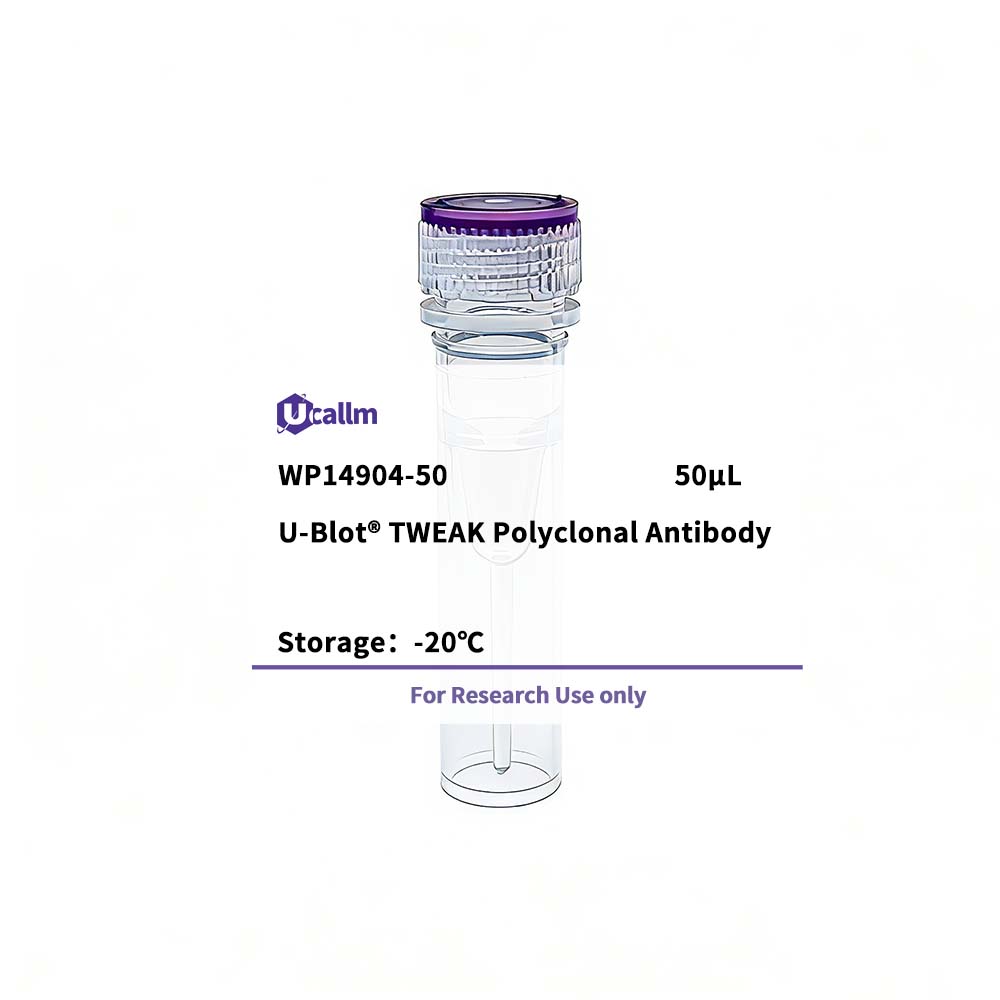
TWEAK Polyclonal Antibody

Price range: $268.00 through $328.00

SKU: WP14904-100
Enter the quantity you would like, or drag the panel to find the quantity and price that best for you
Bulk QuoteAuthorize OEM & ODM

Product details

Background:

The protein encoded by this gene is a cytokine that belongs to the tumor necrosis factor (TNF) ligand family. This protein is a ligand for the FN14/TWEAKR receptor. This cytokine has overlapping signaling functions with TNF, but displays a much wider tissue distribution. This cytokine, which exists in both membrane-bound and secreted forms, can induce apoptosis via multiple pathways of cell death in a cell type-specific manner. This cytokine is also found to promote proliferation and migration of endothelial cells, and thus acts as a regulator of angiogenesis. Alternative splicing results in multiple transcript variants. Some transcripts skip the last exon of this gene and continue into the second exon of the neighboring TNFSF13 gene; such read-through transcripts are contained in GeneID 407977, TNFSF12-TNFSF13. [provided by RefSeq, Oct 2010],


Specifications

Size50μL/100μL
TargetTWEAK
ReactivityHuman, Mouse
ApplicationsWB, IHC, IF, ELISA
MW(Calculated)
MW(Observed)27kD
Host SpeciesRabbit
IsotypeIgG
Conjugate/ModificationUnmodified
Recommended Dilution RatioWB 1:500-1:2000; IHC 1:100-1:300; IF 1:200-1:1000; ELISA 1:20000; Not yet tested in other applications. / Note: For IHC, we suggest antigen retrieval with TE buffer pH 9.0 (Cat#WT1004)
FormulationLiquid in PBS containing 50% glycerol, 0.5% BSA and 0.02% sodium azide.
PurificationThe antibody was affinity-purified from rabbit antiserum by affinity-chromatography using epitope-specific immunogen.
Storage-15°C to -25°C/1 year(Do not lower than -25°C)
Concentration1 mg/ml
ClonalityPolyclonal
Clone Number
ImmunogenThe antiserum was produced against synthesized peptide derived from human TNFSF12. AA range:41-90
SpecificityTWEAK Polyclonal Antibody detects endogenous levels of TWEAK protein.
Gene NameTNFSF12
Protein NameTumor necrosis factor ligand superfamily member 12
Other NameTNFSF12; / APO3L; / DR3LG; / Tumor necrosis factor ligand superfamily member 12; / APO3 ligand; / TNF-related weak inducer of apoptosis; / TWEAK
SpeciesHuman
Gene ID8742
UniprotO43508,
Species.1Mouse
Gene ID.121944
Uniprot.1O54907
Species.2
Gene ID.2
Uniprot.2
Cellular LocalizationCell membrane; Single-pass type II membrane protein .; [Tumor necrosis factor ligand superfamily member 12, secreted form]: Secreted.; [Isoform TWE-PRIL]: Cell membrane; Single-pass membrane protein.
Tissue ExpressionHighly expressed in adult heart, pancreas, skeletal muscle, brain, colon, small intestine, lung, ovary, prostate, spleen, lymph node, appendix and peripheral blood lymphocytes. Low expression in kidney, testis, liver, placenta, thymus and bone marrow. Also detected in fetal kidney, liver, lung and brain.
Signaling_pathwayEnvironmental Information Processing >> Signaling molecules and interaction >> Cytokine-cytokine receptor interaction
Research Areas>>Cytokine-cytokine receptor interaction
FunctionFunction:Binds to FN14 and possibly also to TNRFSF12/APO3. Weak inducer of apoptosis in some cell types. Mediates NF-kappa-B activation. Promotes angiogenesis and the proliferation of endothelial cells. Also involved in induction of inflammatory cytokines.,Function:Cytokine that binds to TNFRSF13B/TACI and to TNFRSF17/BCMA. May be implicated in the regulation of tumor cell growth. May be involved in monocyte/macrophage-mediated immunological processes.,induction:Down-regulated by phorbol myristate acetate/ionomycin treatment.,PTM:The precursor is cleaved by furin.,PTM:The soluble form derives from the membrane form by proteolytic processing.,similarity:Belongs to the tumor necrosis factor family.,subunit:Homotrimer (Potential). Interacts with the angiogenic factor AGGF1/VG5Q.,subunit:Homotrimer .,tissue specificity:Expressed at high levels in transformed cell lines, cancers of colon, thyroid, lymphoid tissues and specifically expressed in monocytes and macrophages.,tissue specificity:Highly expressed in adult heart, pancreas, skeletal muscle, brain, colon, small intestine, lung, ovary, prostate, spleen, lymph node, appendix and peripheral blood lymphocytes. Low expression in kidney, testis, liver, placenta, thymus and bone marrow. Also detected in fetal kidney, liver, lung and brain.,
Please login to post questions
Back to Top
Product has been added to your cart

