SKU: WR4610 Categories: ,

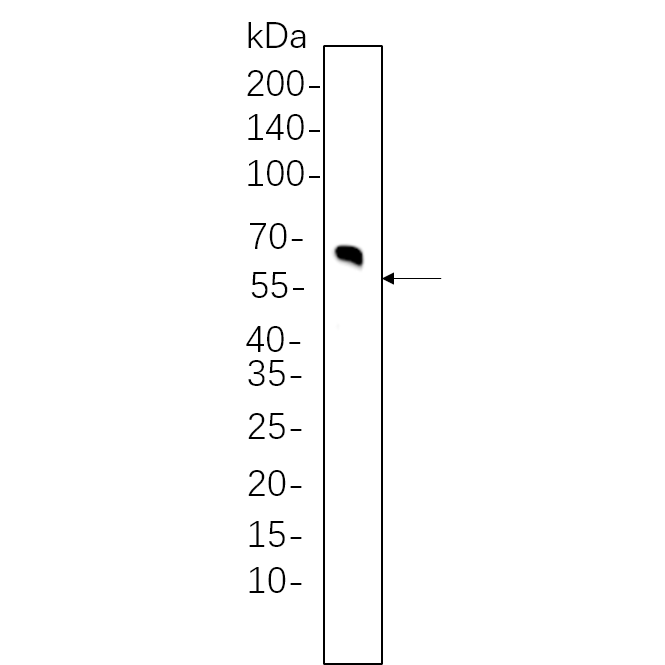
U-Blot® Tyrosine Hydroxylase Rabbit mAb

Price range: $268.00 through $328.00

SKU: WR4610-50
Enter the quantity you would like, or drag the panel to find the quantity and price that best for you
Bulk QuoteAuthorize OEM & ODM

Product details

Background:The protein encoded by this gene is involved in the conversion of tyrosine to dopamine. It is the rate-limiting enzyme in the synthesis of catecholamines, hence plays a key role in the physiology of adrenergic neurons. Mutations in this gene have been associated with autosomal recessive Segawa syndrome. Alternatively spliced transcript variants encoding different isoforms have been noted for this gene. [provided by RefSeq, Jul 2008],

Specifications

Size50μL/100μL
TargetTyrosine Hydroxylase
ReactivityHuman, Mouse, Rat, Monkey
ApplicationsWB, IHC, IF, ELISA
MW(Calculated)59kD
MW(Observed)59kD
Host SpeciesRabbit
IsotypeIgG,Kappa
Conjugate/ModificationUnmodified
Recommended Dilution RatioIHC 1:500-1:2000; WB 1:2000-1:10000; IF 1:200-1:1000; ELISA 1:5000-1:20000; / Note: For IHC, we suggest antigen retrieval with TE buffer pH 9.0 (Cat#WT1004)
FormulationPBS, 50% glycerol, 0.05% Proclin 300, 0.05%BSA
PurificationRecombinant Antibody expressed in animal component-free (ACF) media, purified via Protein A affinity chromatography.
Storage-15°C to -25°C/1 year(Do not lower than -25°C)
Concentration
ClonalityMonoclonal
Clone NumberRM0884R
ImmunogenThe specific immunogen used to produce this antibody is proprietary information.
SpecificityEndogenous
Gene NameTH TYH
Protein NameTyrosine 3-monooxygenase (Tyrosine 3-hydroxylase) (TH),Tyrosine Hydrolase
Other NameTyrosine 3-monooxygenase; / Tyrosine 3-hydroxylase; / TH
SpeciesHuman
Gene ID7054
UniprotP07101,
Species.1Mouse
Gene ID.121823
Uniprot.1P24529,
Species.2Rat
Gene ID.225085
Uniprot.2P04177
Cellular Localization
Tissue ExpressionMainly expressed in the brain and adrenal glands.
Signaling_pathwayOrganismal Systems >> Endocrine system >> Prolactin signaling pathway;Organismal Systems >> Nervous system >> Dopaminergic synapse;Human Diseases >> Neurodegenerative disease >> Parkinson disease
Research Areas>>Tyrosine metabolism; / >>Folate biosynthesis; / >>Metabolic pathways; / >>Dopaminergic synapse; / >>Prolactin signaling pathway; / >>Parkinson disease; / >>Cocaine addiction; / >>Amphetamine addiction; / >>Alcoholism
FunctionCatalytic activity:L-tyrosine + tetrahydrobiopterin + O(2) = 3,4-dihydroxy-L-phenylalanine + 4a-hydroxytetrahydrobiopterin.,cofactor:Fe(2+) ion.,Disease:Defects in TH are the cause of dystonia DOPA-responsive autosomal recessive (ARDRD) [MIM:605407]; also known as autosomal recessive Segawa syndrome. ARDRD is a form of DOPA-responsive dystonia presenting in infancy or early childhood. Dystonia is defined by the presence of sustained involuntary muscle contractions, often leading to abnormal postures. Some cases of ARDRD present with parkinsonian symptoms in infancy. Unlike all other forms of dystonia, it is an eminently treatable condition, due to a favorable response to L-DOPA.,enzyme regulation:Phosphorylation leads to an increase in the catalytic activity.,Function:Plays an important role in the physiology of adrenergic neurons.,online information:Tyrosine hydroxylase entry,pathway:Catecholamine biosynthesis; dopamine biosynthesis; dopamine from L-tyrosine: step 1/2.,similarity:Belongs to the biopterin-dependent aromatic amino acid hydroxylase family.,tissue specificity:Mainly expressed in the brain and adrenal glands.,
Please login to post questions

Back to Top
Product has been added to your cart


