SKU: WR5287 Categories: ,

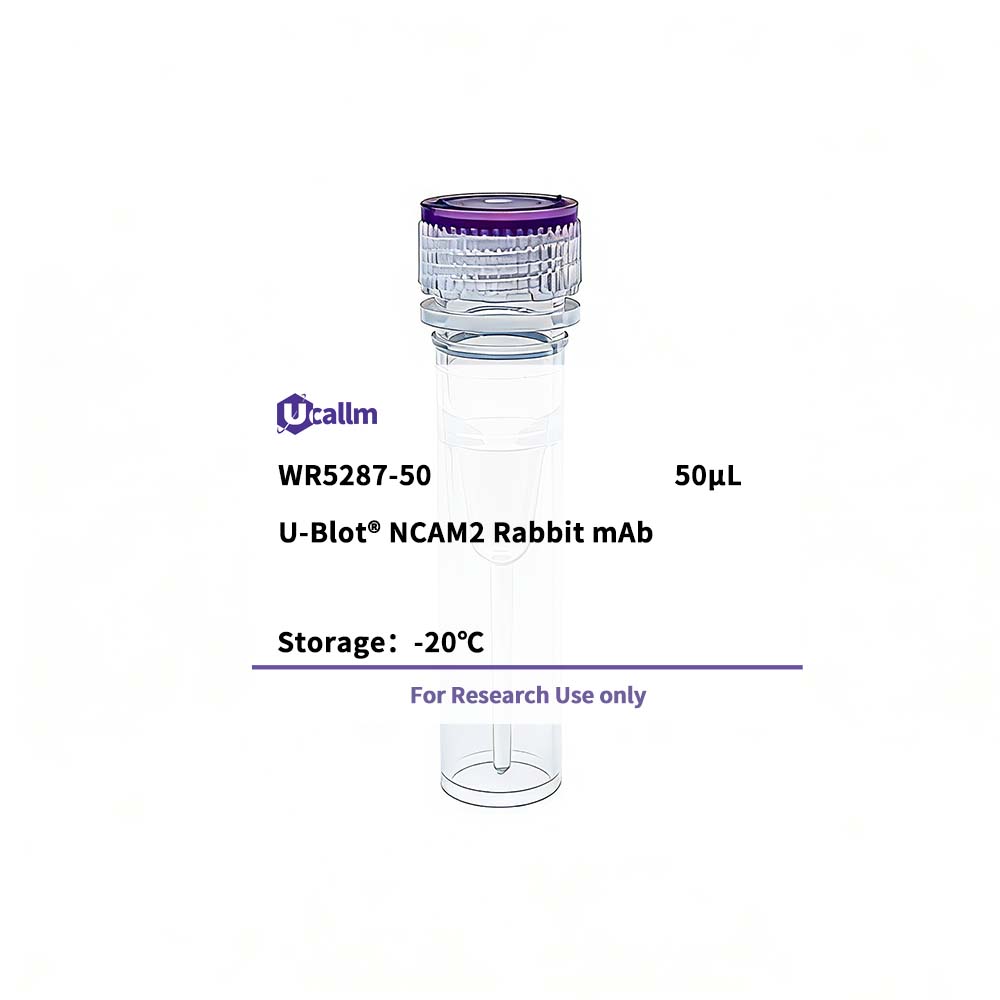
U-Blot® NCAM2 Rabbit mAb

Price range: $268.00 through $328.00

SKU: WR5287-100
Enter the quantity you would like, or drag the panel to find the quantity and price that best for you
Bulk QuoteAuthorize OEM & ODM

Product details

Background:The protein encoded by this gene belongs to the immunoglobulin superfamily. It is a type I membrane protein and may function in selective fasciculation and zone-to-zone projection of the primary olfactory axons. [provided by RefSeq, Jul 2008],


Specifications

Size50μL/100μL
TargetNCAM2
ReactivityHuman
ApplicationsWB, IHC, IF, IP, ELISA
MW(Calculated)93kD
MW(Observed)140kD
Host SpeciesRabbit
IsotypeIgG,Kappa
Conjugate/ModificationUnmodified
Recommended Dilution RatioIHC 1:200-1:1000; WB 1:2000-1:10000; IF 1:200-1:1000; ELISA 1:5000-1:20000; IP 1:50-1:200; / Note: For IHC, we suggest antigen retrieval with TE buffer pH 9.0 (Cat#WT1004)
FormulationPBS, 50% glycerol, 0.05% Proclin 300, 0.05%BSA
PurificationRecombinant Antibody expressed in animal component-free (ACF) media, purified via Protein A affinity chromatography.
Storage-15°C to -25°C/1 year(Do not lower than -25°C)
Concentration
ClonalityMonoclonal
Clone NumberRM1555R
ImmunogenThe specific immunogen used to produce this antibody is proprietary information.
SpecificityEndogenous
Gene NameNCAM2
Protein NameNeural cell adhesion molecule 2
Other NameNCAM2; / NCAM21; / Neural cell adhesion molecule 2; / N-CAM-2; / NCAM-2
SpeciesHuman
Gene ID4685
UniprotO15394,
Species.1Mouse
Gene ID.117968
Uniprot.1O35136
Species.2
Gene ID.2
Uniprot.2
Cellular LocalizationCell membrane; Single-pass type I membrane protein.
Tissue ExpressionExpressed most strongly in adult and fetal brain.
Signaling_pathwayHuman Diseases >> Neurodegenerative disease >> Prion disease;Environmental Information Processing >> Signaling molecules and interaction >> Cell adhesion molecules
Research Areas>>Cell adhesion molecules; / >>Prion disease
FunctionFunction:May play important roles in selective fasciculation and zone-to-zone projection of the primary olfactory axons.,similarity:Contains 2 fibronectin type-III domains.,similarity:Contains 5 Ig-like C2-type (immunoglobulin-like) domains.,tissue specificity:Expressed most strongly in adult and fetal brain.,
Please login to post questions
Back to Top
Product has been added to your cart

