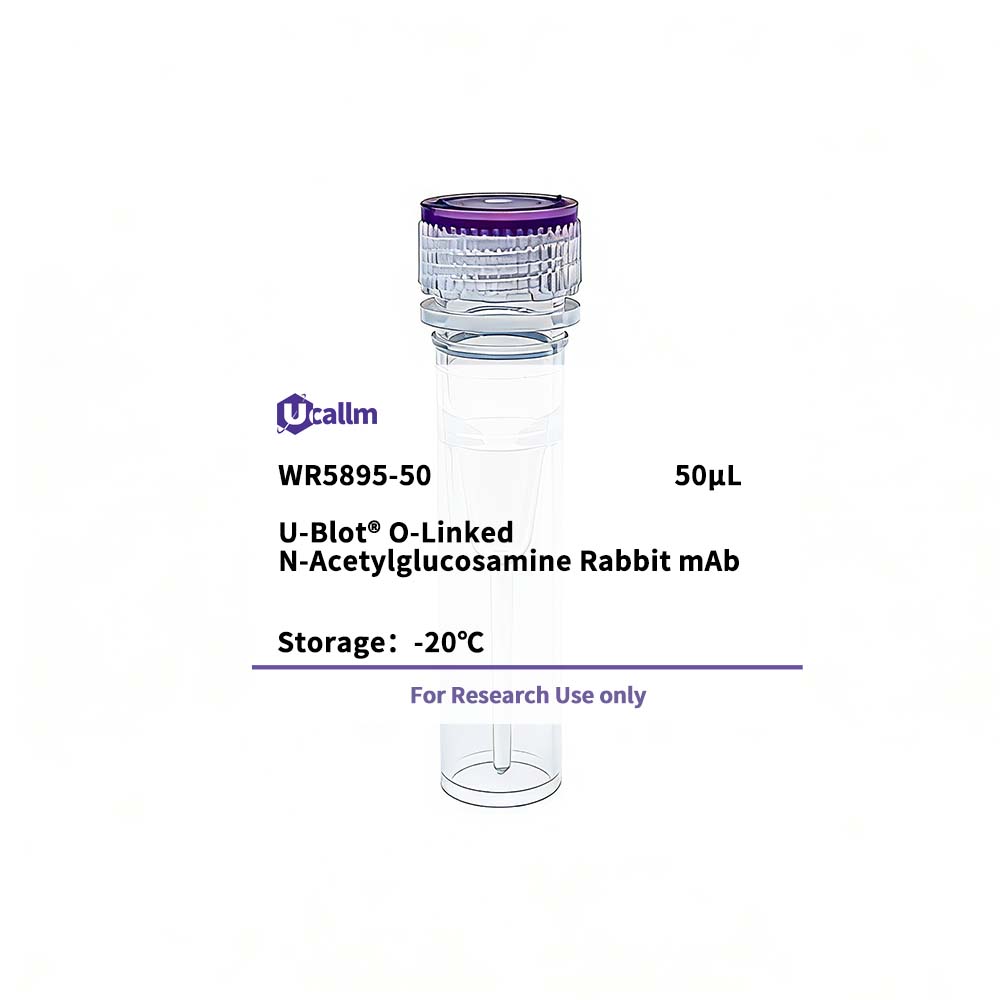
SKU: WR5895 Categories: ,

U-Blot® O-Linked N-Acetylglucosamine Rabbit mAb

Price range: $288.00 through $368.00

SKU: WR5895-50
Enter the quantity you would like, or drag the panel to find the quantity and price that best for you
Bulk QuoteAuthorize OEM & ODM

Product details

Background:
O-Linked N-Acetylglucosamine (O-GlcNAc) is a post-translational modification involving the addition of a single N-acetylglucosamine moiety to the serine or threonine residues of nuclear and cytoplasmic proteins. This dynamic modification is sometimes referred to as O-GlcNAcylation. The molecular mass of the O-GlcNAc group itself is approximately 203 Da. This modification is expressed widely across various tissues notably in the brain and pancreas. O-GlcNAc plays a critical role in regulating protein function stability and interaction.


Specifications

Size50μL/100μL
TargetO-Linked N-Acetylglucosamine
ReactivityHuman, Mouse, Rat
ApplicationsWB, IHC, IF, ELISA
MW(Calculated)All
MW(Observed)
Host SpeciesRabbit
IsotypeIgG,Kappa
Conjugate/ModificationPan-PTM
Recommended Dilution RatioWB 1:200-1:1000; IF 1:200-1:1000; ELISA 1:5000-1:20000;
FormulationPBS, 50% glycerol, 0.05% Proclin 300, 0.05%BSA
PurificationRecombinant Antibody expressed in animal component-free (ACF) media, purified via Protein A affinity chromatography.
Storage-15°C to -25°C/1 year(Do not lower than -25°C)
Concentration
ClonalityMonoclonal
Clone NumberRM1697R
ImmunogenThe specific immunogen used to produce this antibody is proprietary information.
SpecificityEndogenous
Gene Name
Protein Name
Other Name
Species
Gene ID
Uniprot
Species.1
Gene ID.1
Uniprot.1
Species.2
Gene ID.2
Uniprot.2
Cellular LocalizationO-Linked N-Acetylglucosamine (O-GlcNAc) is a post-translational modification involving the addition of a single N-acetylglucosamine moiety to the serine or threonine residues of nuclear and cytoplasmic proteins.
Tissue ExpressionThis modification is expressed widely across various tissues notably in the brain and pancreas.
Signaling_pathway
Research AreasNutrient sensing and insulin signaling; / Cellular signaling and metabolism; / Diabetes (insulin resistance, type 2 diabetes); / Cancer research (tumorigenesis, migration, invasion, ferroptosis); / Transcription, stress response
FunctionO-GlcNAc plays a critical role in regulating protein function stability and interaction.
Please login to post questions
Back to Top
Product has been added to your cart

