


UBE1L Monoclonal Antibody
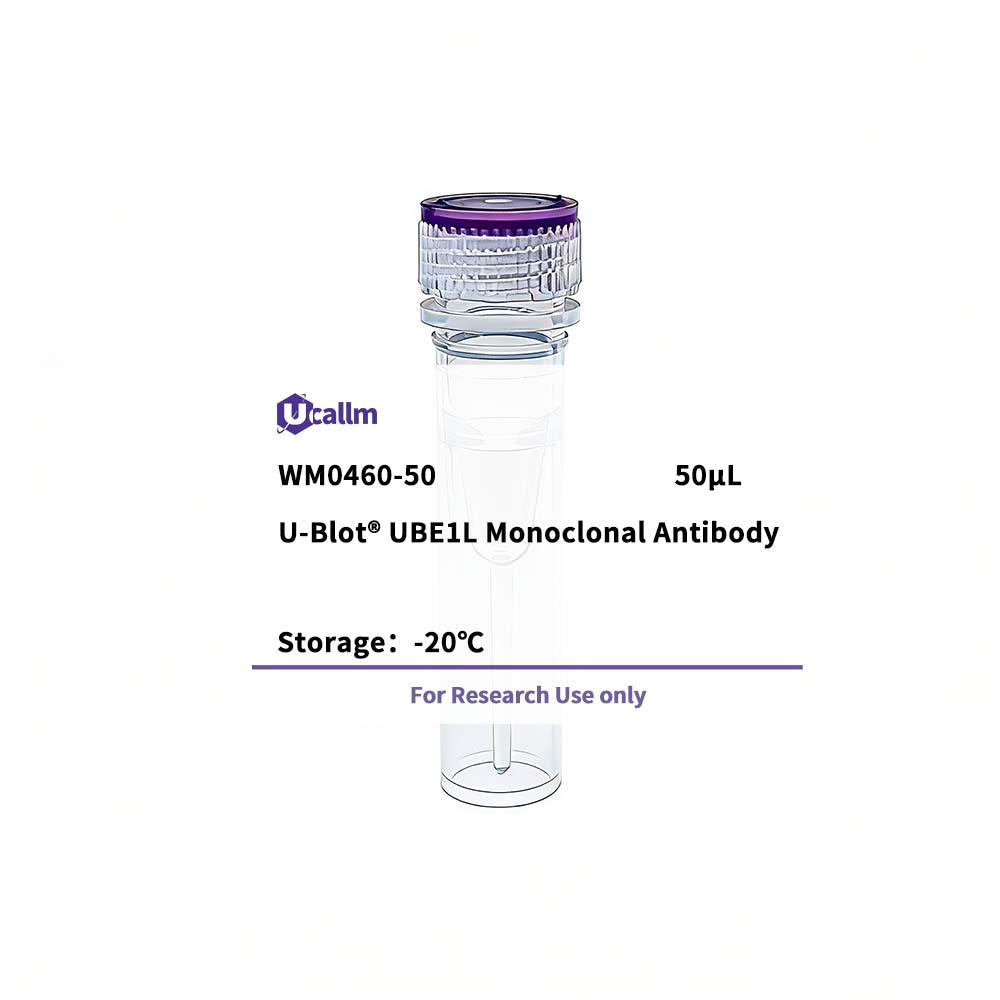
Ucallm_WM0460-50
Price range: $268.00 through $328.00
Product details
Background:
The modification of proteins with ubiquitin is an important cellular mechanism for targeting abnormal or short-lived proteins for degradation. Ubiquitination involves at least three classes of enzymes: ubiquitin-activating enzymes, or E1s, ubiquitin-conjugating enzymes, or E2s, and ubiquitin-protein ligases, or E3s. This gene encodes a member of the E1 ubiquitin-activating enzyme family. The encoded enzyme is a retinoid target that triggers promyelocytic leukemia (PML)/retinoic acid receptor alpha (RARalpha) degradation and apoptosis in acute promyelocytic leukemia, where it is involved in the conjugation of the ubiquitin-like interferon-stimulated gene 15 protein. [provided by RefSeq, Jul 2008],
Specifications
| Size | 50μL/100μL |
| Target | UBE1L |
| Reactivity | Human |
| Applications | WB, ELISA |
| MW(Calculated) | 112kD |
| MW(Observed) | |
| Host Species | Mouse |
| Isotype | |
| Conjugate/Modification | Unmodified |
| Recommended Dilution Ratio | WB 1:500-1:2000; ELISA 1:10000; Not yet tested in other applications. |
| Formulation | Liquid in PBS containing 50% glycerol, 0.5% BSA and 0.02% sodium azide. |
| Purification | Affinity purification |
| Storage | -15°C to -25°C/1 year(Do not lower than -25°C) |
| Concentration | |
| Clonality | Monoclonal |
| Clone Number | 4F8 |
| Immunogen | Purified recombinant fragment of human UBE1L expressed in E. Coli. |
| Specificity | UBE1L Monoclonal Antibody detects endogenous levels of UBE1L protein. |
| Gene Name | UBA7 |
| Protein Name | Ubiquitin-like modifier-activating enzyme 7 |
| Other Name | UBA7; / UBE1L; / UBE2; / Ubiquitin-like modifier-activating enzyme 7; / Ubiquitin-activating enzyme 7; / D8; / Ubiquitin-activating enzyme E1 homolog |
| Species | Human |
| Gene ID | 7318 |
| Uniprot | P41226 |
| Species.1 | |
| Gene ID.1 | |
| Uniprot.1 | |
| Species.2 | |
| Gene ID.2 | |
| Uniprot.2 | |
| Cellular Localization | nucleus,nucleoplasm,cytosol, |
| Tissue Expression | Expressed in a variety of normal and tumor cell types, but is reduced in lung cancer cell lines. |
| Signaling_pathway | Human Diseases >> Neurodegenerative disease >> Parkinson disease;Human Diseases >> Neurodegenerative disease >> Pathways of neurodegeneration - multiple diseases;Genetic Information Processing >> Folding, sorting and degradation >> Ubiquitin mediated proteolysis |
| Research Areas | >>Ubiquitin mediated proteolysis; / >>Parkinson disease; / >>Pathways of neurodegeneration - multiple diseases |
| Function | Function:Activates ubiquitin by first adenylating with ATP its C-terminal glycine residue and thereafter linking this residue to the side chain of a cysteine residue in E1, yielding an ubiquitin-E1 thioester and free AMP.,miscellaneous:There are two active sites within the E1 molecule, allowing it to accommodate two ubiquitin moieties at a time, with a new ubiquitin forming an adenylate intermediate as the previous one is transferred to the thiol site.,pathway:Protein modification; protein ubiquitination.,similarity:Belongs to the ubiquitin-activating E1 family.,subunit:Monomer (By similarity). Binds and is involved in the conjugation of G1P2/ISG15.,tissue specificity:Expressed in a variety of normal and tumor cell types, but is reduced in lung cancer cell lines., |
Please login to post questions
Related products



