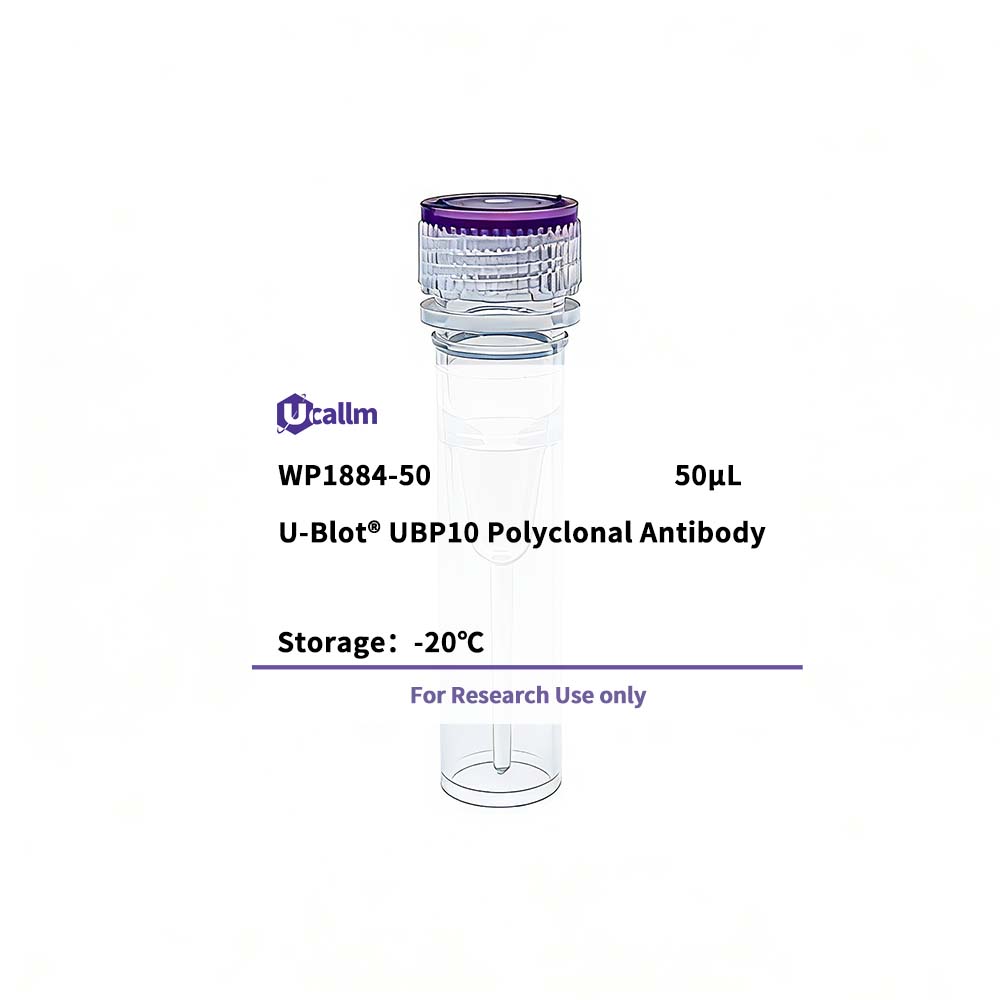
SKU: WP1884 Categories: ,

UBP10 Polyclonal Antibody

Price range: $268.00 through $328.00

SKU: WP1884-100
Enter the quantity you would like, or drag the panel to find the quantity and price that best for you
Bulk QuoteAuthorize OEM & ODM

Product details

Background:

Ubiquitin is a highly conserved protein that is covalently linked to other proteins to regulate their function and degradation. This gene encodes a member of the ubiquitin-specific protease family of cysteine proteases. The enzyme specifically cleaves ubiquitin from ubiquitin-conjugated protein substrates. The protein is found in the nucleus and cytoplasm. It functions as a co-factor of the DNA-bound androgen receptor complex, and is inhibited by a protein in the Ras-GTPase pathway. The human genome contains several pseudogenes similar to this gene. Several transcript variants, some protein-coding and others not protein-coding, have been found for this gene. [provided by RefSeq, Jan 2013],


Specifications

Size50μL/100μL
TargetUBP10
ReactivityHuman, Mouse, Rat
ApplicationsWB, ELISA
MW(Calculated)
MW(Observed)87kD
Host SpeciesRabbit
IsotypeIgG
Conjugate/ModificationUnmodified
Recommended Dilution RatioWB 1:500-2000; ELISA 1:5000-20000
FormulationLiquid in PBS containing 50% glycerol,0.5% BSA and 0.02% sodium azide.
PurificationThe antibody was affinity-purified from rabbit antiserum by affinity-chromatography using epitope-specific immunogen.
Storage-15°C to -25°C/1 year(Do not lower than -25°C)
Concentration1 mg/ml
ClonalityPolyclonal
Clone Number
ImmunogenSynthesized peptide derived from part region of human protein
SpecificityUBP10 Polyclonal Antibody detects endogenous levels of protein.
Gene NameUSP10 KIAA0190
Protein NameUbiquitin carboxyl-terminal hydrolase 10 (Deubiquitinating enzyme 10) (Ubiquitin thioesterase 10) (Ubiquitin-specific-processing protease 10)
Other Name
SpeciesHuman
Gene ID9100
UniprotQ14694,
Species.1Mouse
Gene ID.1
Uniprot.1P52479,
Species.2Rat
Gene ID.2
Uniprot.2Q3KR59
Cellular LocalizationCytoplasm . Nucleus . Early endosome . Cytoplasmic in normal conditions (PubMed:20096447). After DNA damage, translocates to the nucleus following phosphorylation by ATM (PubMed:20096447). .
Tissue ExpressionWidely expressed.
Signaling_pathway
Research Areas
FunctionCatalytic activity:Ubiquitin C-terminal thioester + H(2)O = ubiquitin + a thiol.,Function:Ubiquitin specific protease are required to remove ubiquitin from specific proteins or peptides to which ubiquitin is attached.,similarity:Belongs to the peptidase C19 family.,subunit:Interacts with G3BP, which may regulate its function.,tissue specificity:Widely expressed.,
Please login to post questions
Back to Top
Product has been added to your cart
