


U-Blot® UQCRC2 Rabbit mAb
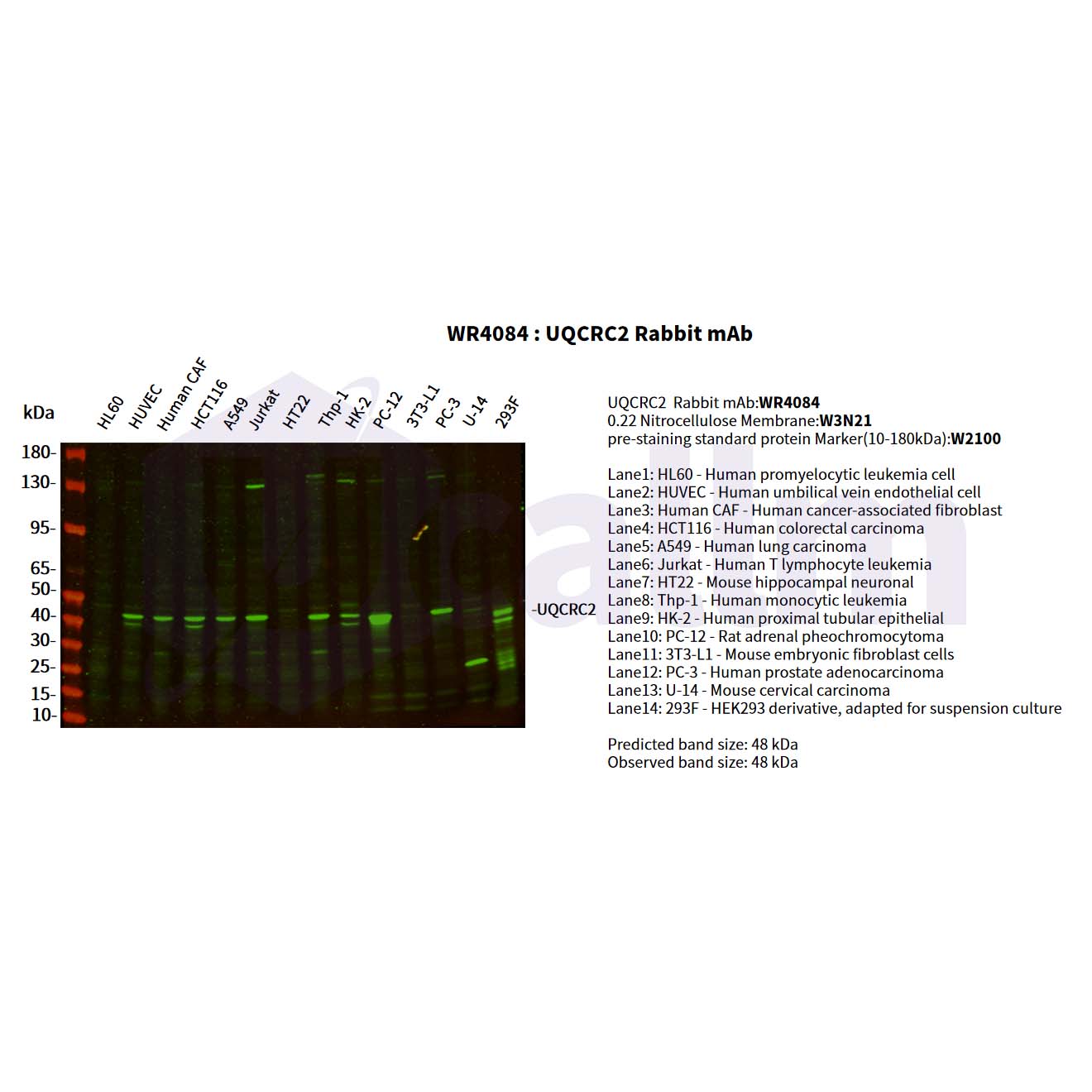
WR4084 Various whole cell lysates were separated by 4-20% SDS-PAGE, and the primary antibody was used at 4°C, over night with a 1:2500 dilution . The Dylight 800-conjugated Goat anti-Rabbit antibody(Cat:WS0446) was used to detect the antibody.
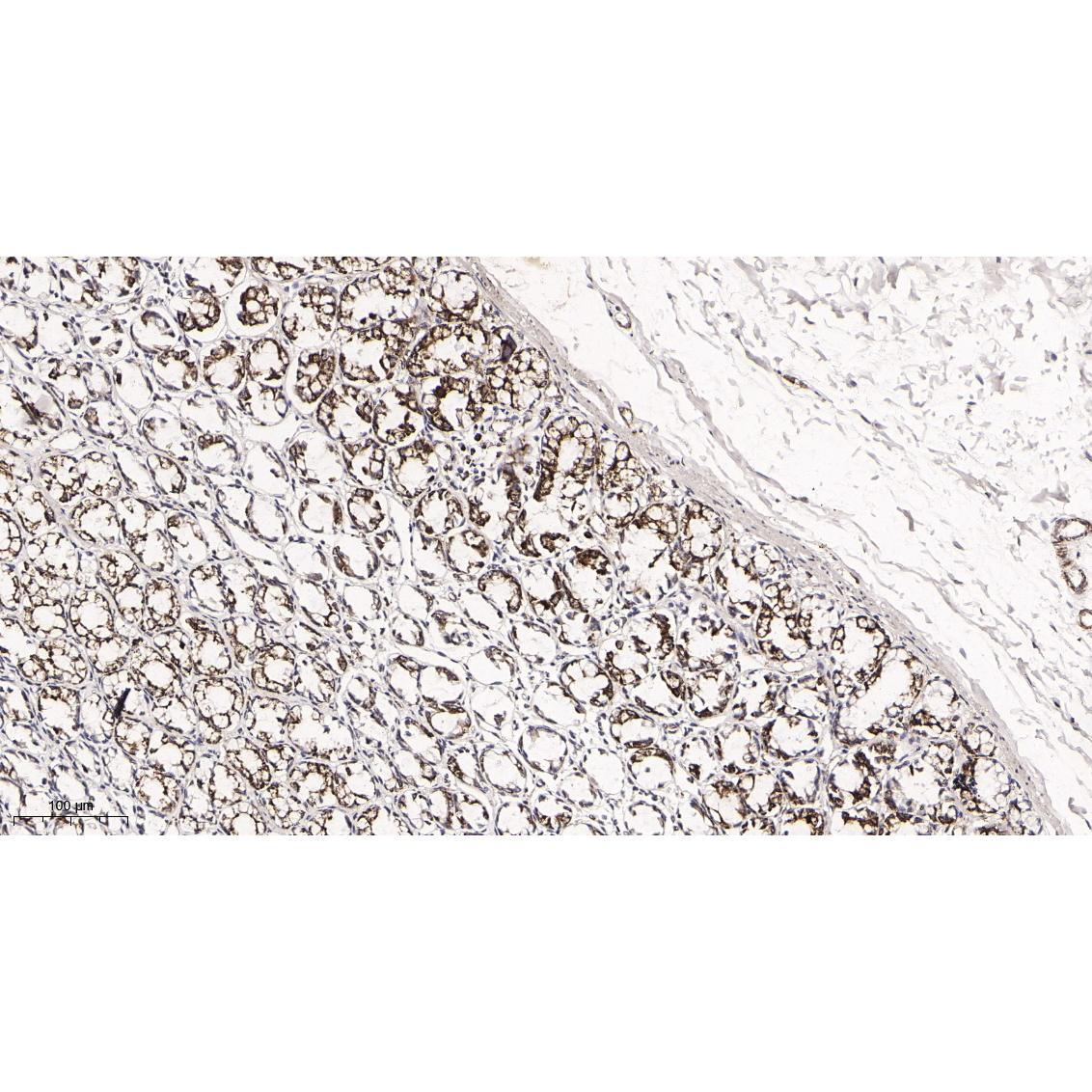
WR4084 Immunohistochemical analysis of paraffin-embedded rat colon tissue. 1, primary Antibody was diluted at 1:200(4~C,overnight). 2, EDTA pH 9.0 was used for antibody retrieval(>98~C,20min). 3,Secondary antibody was diluted at 1:200(room tempeRature, 30min).
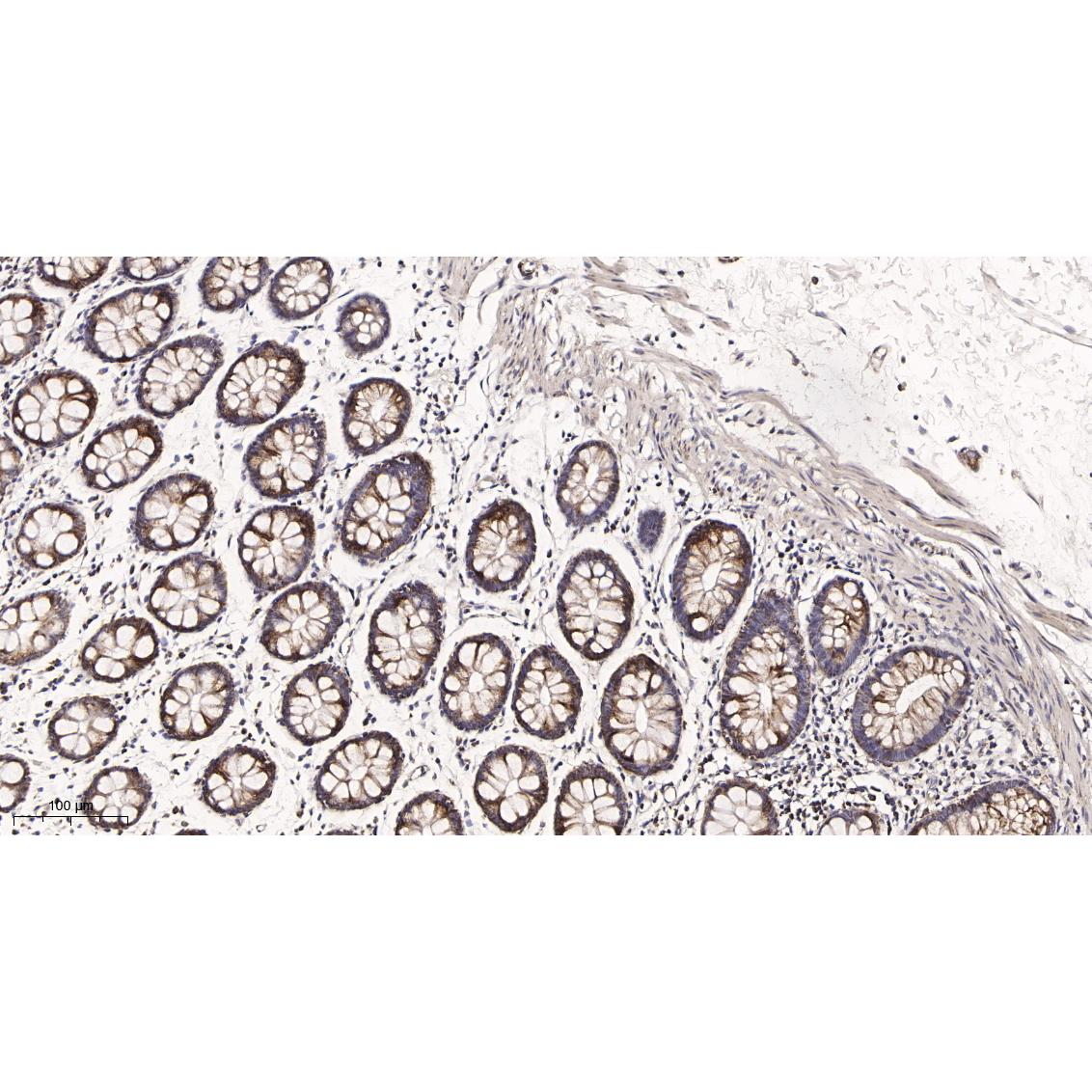
WR4084 Immunohistochemical analysis of paraffin-embedded human colon tissue. 1, primary Antibody was diluted at 1:200(4~C,overnight). 2, EDTA pH 9.0 was used for antibody retrieval(>98~C,20min). 3,Secondary antibody was diluted at 1:200(room tempeRature, 30min).
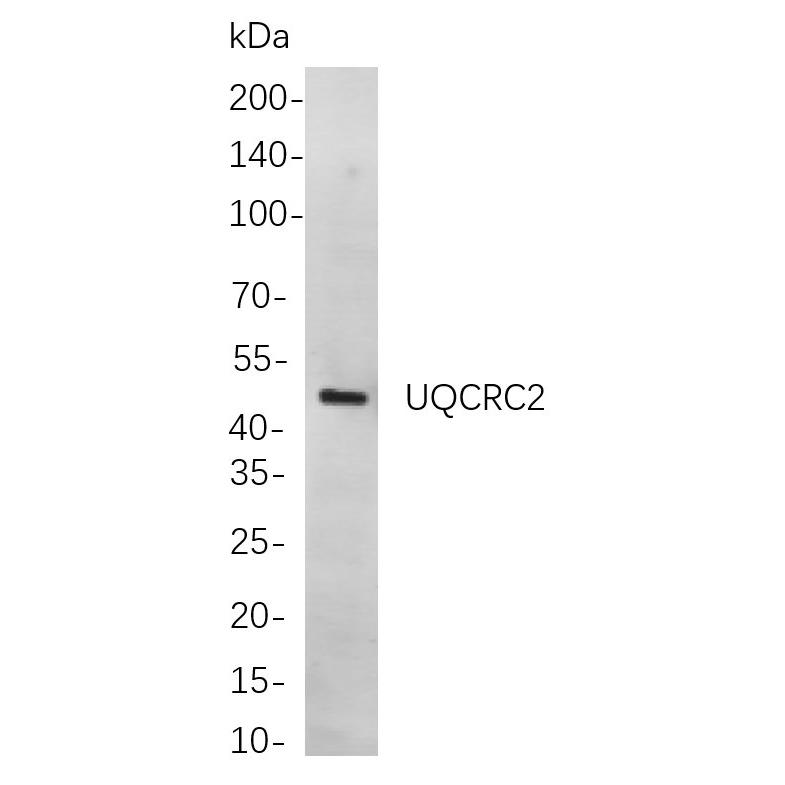
WR4084 Western blot analysis of lysates from A172 cells, using UQCRC2 Rabbit mAb. The HRP-conjugated Goat anti-Rabbit IgG antibody (WS0002) was used to detect the antibody.
Price range: $268.00 through $328.00
Product details
Background:The protein encoded by this gene is located in the mitochondrion, where it is part of the ubiquinol-cytochrome c reductase complex (also known as complex III). This complex constitutes a part of the mitochondrial respiratory chain. Defects in this gene are a cause of mitochondrial complex III deficiency nuclear type 5. [provided by RefSeq, Jul 2015]
Specifications
| Size | 50μL/100μL |
| Target | UQCRC2 |
| Reactivity | Human, Mouse, Rat |
| Applications | WB, IHC, IF, IP, ELISA |
| MW(Calculated) | 48kD |
| MW(Observed) | 48kD |
| Host Species | Rabbit |
| Isotype | IgG,Kappa |
| Conjugate/Modification | Unmodified |
| Recommended Dilution Ratio | IHC 1:200-1000; WB 1:1000-5000; IF 1:200-1000; ELISA 1:5000-20000; IP 1:50-200 / Note: For IHC, we suggest antigen retrieval with TE buffer pH 9.0 (Cat#WT1004) |
| Formulation | PBS, 50% glycerol, 0.05% Proclin 300, 0.05%BSA |
| Purification | Recombinant Antibody expressed in animal component-free (ACF) media, purified via Protein A affinity chromatography. |
| Storage | -15°C to -25°C/1 year(Do not lower than -25°C) |
| Concentration | |
| Clonality | Monoclonal |
| Clone Number | RM0170R |
| Immunogen | The specific immunogen used to produce this antibody is proprietary information. |
| Specificity | Endogenous |
| Gene Name | UQCRC2 |
| Protein Name | Cytochrome b-c1 complex subunit 2, mitochondrial (Complex III subunit 2) (Core protein II) (Ubiquinol-cytochrome-c reductase complex core protein 2) |
| Other Name | |
| Species | Human |
| Gene ID | 7385 |
| Uniprot | P22695, |
| Species.1 | Mouse |
| Gene ID.1 | 67003 |
| Uniprot.1 | Q9DB77, |
| Species.2 | Rat |
| Gene ID.2 | 293448 |
| Uniprot.2 | P32551 |
| Cellular Localization | Mitochondrion inner membrane |
| Tissue Expression | |
| Signaling_pathway | Organismal Systems >> Circulatory system >> Cardiac muscle contraction;Human Diseases >> Neurodegenerative disease >> Alzheimer disease;Human Diseases >> Neurodegenerative disease >> Parkinson disease;Human Diseases >> Neurodegenerative disease >> Amyotrophic lateral sclerosis;Human Diseases >> Neurodegenerative disease >> Huntington disease;Human Diseases >> Neurodegenerative disease >> Prion disease;Human Diseases >> Neurodegenerative disease >> Pathways of neurodegeneration - multiple diseases |
| Research Areas | |
| Function | Component of the ubiquinol-cytochrome c oxidoreductase, a multisubunit transmembrane complex that is part of the mitochondrial electron transport chain which drives oxidative phosphorylation. The respiratory chain contains 3 multisubunit complexes succinate dehydrogenase (complex II, CII), ubiquinol-cytochrome c oxidoreductase (cytochrome b-c1 complex, complex III, CIII) and cytochrome c oxidase (complex IV, CIV), that cooperate to transfer electrons derived from NADH and succinate to molecular oxygen, creating an electrochemical gradient over the inner membrane that drives transmembrane transport and the ATP synthase. The cytochrome b-c1 complex catalyzes electron transfer from ubiquinol to cytochrome c, linking this redox reaction to translocation of protons across the mitochondrial inner membrane, with protons being carried across the membrane as hydrogens on the quinol. In the process called Q cycle, 2 protons are consumed from the matrix, 4 protons are released into the intermembrane space and 2 electrons are passed to cytochrome c (By similarity). The 2 core subunits UQCRC1/QCR1 and UQCRC2/QCR2 are homologous to the 2 mitochondrial-processing peptidase (MPP) subunits beta-MPP and alpha-MPP respectively, and they seem to have preserved their MPP processing properties (By similarity). May be involved in the in situ processing of UQCRFS1 into the mature Rieske protein and its mitochondrial targeting sequence (MTS)/subunit 9 when incorporated into complex III (Probable). |
Please login to post questions
Related products





