


The Western Blot Experiment represents a critical technique in molecular biology for precise protein detection and analysis. Researchers utilize this powerful method to identify specific proteins within complex biological samples through sophisticated gel electrophoresis and membrane transfer processes.
Modern scientific investigation demands robust protein analysis techniques, and the Western Blot Experiment emerges as a gold standard approach. By enabling researchers to separate, transfer, and detect specific proteins with remarkable precision, this technique provides unprecedented insights into cellular mechanisms and molecular interactions.
Our comprehensive guide will explore the intricate world of Western blotting, breaking down its fundamental principles, technical nuances, and practical applications across diverse research domains. From basic laboratory protocols to advanced troubleshooting strategies, we will demystify the Western Blot Experiment for scientists and researchers seeking comprehensive understanding.
Key Takeaways
- Western Blot Experiment allows targeted protein detection in complex biological samples
- Gel electrophoresis serves as a critical initial step in protein separation
- Precise membrane transfer enables accurate protein identification
- Technique applies across multiple scientific research disciplines
- Proper protocol execution ensures reliable experimental results
Key Components of a Western Blot Experiment
Western blotting is a powerful technique for protein analysis that requires careful selection of specific components. Understanding these key elements is crucial for successful immunoblotting and protein expression analysis.
Proteins and Polyacrylamide Gels
Molecular weight determination begins with protein separation using polyacrylamide gels. These specialized gels provide a critical framework for protein analysis by enabling precise separation based on protein size.
- Gel concentration impacts protein migration speed
- Smaller pore sizes separate smaller proteins more effectively
- Gradient gels allow separation of proteins with varying molecular weights
Blotting Membrane Types
Selecting the right membrane is essential for protein expression analysis. Two primary membrane types dominate the field:
- Nitrocellulose membranes: Excellent protein binding capacity
- PVDF membranes: Superior durability and reprobing capabilities
Antibodies and Detection Systems
The heart of immunoblotting lies in antibody selection and detection. Primary antibodies specifically bind target proteins, while secondary antibodies enable visualization and quantification.
Researchers must carefully choose antibodies that provide optimal specificity and sensitivity for their experimental goals. Detection systems range from chemiluminescent to fluorescent methods, each offering unique advantages in protein research.
Step-by-Step Protocol for Western Blotting
Western blotting is a powerful technique for protein analysis that requires meticulous attention to detail. Researchers rely on precise methods to ensure accurate results throughout the experimental process. Understanding each step is crucial for successful protein detection and characterization.
Sample Preparation and Protein Extraction
Sample preparation forms the critical foundation of western blotting. Cell lysates represent the most common sample, requiring careful extraction techniques. Researchers must focus on maintaining protein integrity during the following key steps:
- Use cold temperatures during extraction
- Include protease inhibitors to prevent protein degradation
- Select appropriate lysis buffers for specific cell types
Gel Electrophoresis Procedure
Protein separation occurs through gel electrophoresis, which involves creating polyacrylamide gels to distinguish proteins based on molecular weight. The process requires precise preparation and consistent running conditions.
| Gel Component | Concentration | Purpose |
|---|---|---|
| Separating Gel | 8-12% | Protein separation |
| Stacking Gel | 4-5% | Sample concentration |
Transfer and Blocking Steps
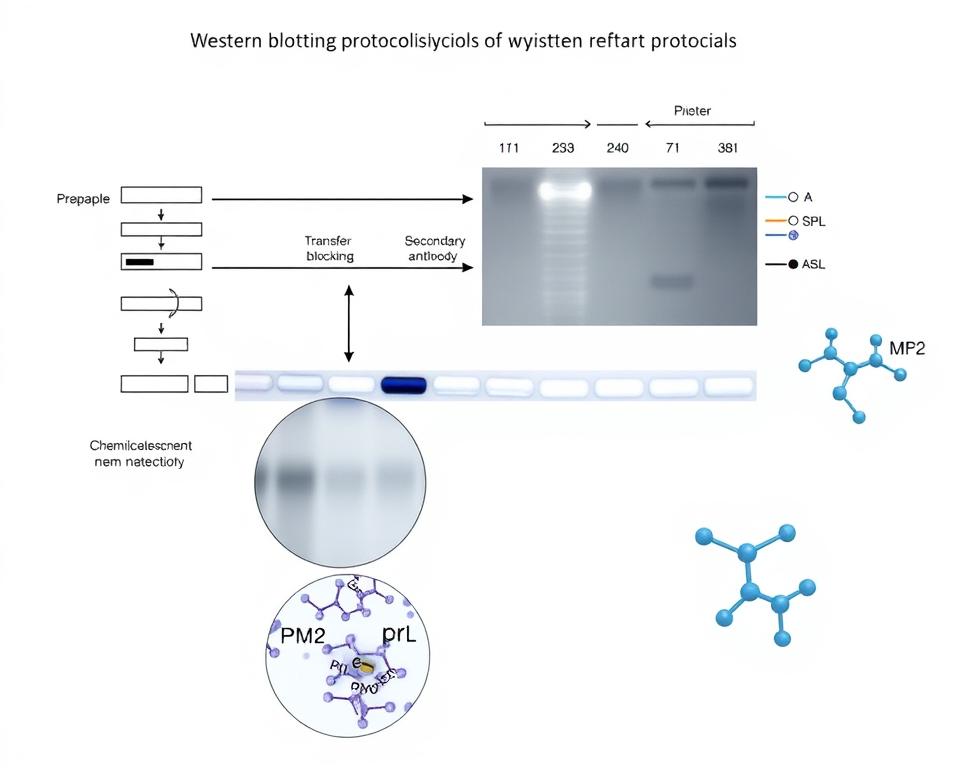
Protein transfer to a membrane requires careful technique. The blocking buffer plays a crucial role in reducing non-specific antibody binding. Researchers typically use 5% milk or BSA solutions for effective blocking.
Antibody Incubation and Detection
Successful antibody incubation depends on optimal concentration and duration. Primary and secondary antibodies must be carefully selected and diluted to ensure specific protein detection. Detection methods like chemiluminescence provide sensitive visualization of protein targets.
Common Problems in Western Blotting
Western blotting experiments can encounter several challenging issues that impact protein quantification and protein detection. Researchers often face complex technical hurdles that require careful troubleshooting and strategic interventions.
Understanding these common problems is crucial for obtaining reliable and reproducible results in scientific research. Let’s explore the most prevalent challenges researchers encounter during Western blot experiments.
Protein Transfer Complications
Protein transfer issues can significantly compromise your experimental outcomes. Uneven or incomplete transfers may result from:
- Inappropriate transfer buffer composition
- Incorrect voltage or transfer time
- Membrane compatibility problems
- Gel percentage variations
Non-specific Antibody Binding
Non-specific antibody binding can create misleading results in protein detection. This problem often arises from:
- Inadequate blocking procedures
- Improper antibody dilution
- Low-quality antibody reagents
- Extended incubation times
Background Noise Challenges
Background noise can obscure critical protein signals, making accurate protein quantification difficult. Key sources of background interference include:
- Excessive washing steps
- Contaminated reagents
- High ambient humidity
- Membrane degradation
Addressing these common problems requires meticulous experimental design, rigorous technique, and a systematic approach to troubleshooting Western blot challenges.
Troubleshooting Tips for Western Blot Experiments
Successful Western Blot Experiments require careful optimization and strategic problem-solving. Researchers often encounter challenges during immunoblotting that can compromise experimental results. Understanding key troubleshooting techniques will help you improve the quality and reliability of your protein analysis.
Effective troubleshooting in Western blot experiments involves addressing several critical areas that can impact your results. By systematically approaching common issues, you can enhance the precision of your immunoblotting techniques.
Optimizing Antibody Concentration
Antibody concentration plays a crucial role in Western blot experiment success. Key strategies include:
- Performing antibody titration experiments
- Using validated, high-quality primary and secondary antibodies
- Carefully diluting antibodies according to manufacturer recommendations
- Checking antibody compatibility with your specific protein of interest
Adjusting Transfer Conditions
Protein transfer efficiency directly impacts Western blotting results. Consider these optimization techniques:
- Modify transfer buffer composition
- Adjust transfer time and voltage
- Select appropriate membrane type
- Ensure consistent gel and membrane contact
Reducing Background Signal
Background noise can obscure meaningful protein signals in immunoblotting. Practical approaches to minimize interference include:
- Optimize blocking conditions using specialized reagents
- Implement rigorous washing protocols
- Use fresh, high-quality blocking solutions
- Control incubation temperatures and durations
By implementing these Western Blot Experiment troubleshooting strategies, researchers can significantly improve their immunoblotting results, ensuring more accurate and reproducible protein analysis.
Applications of Western Blotting in Various Fields
Western blotting has emerged as a powerful technique for protein expression analysis across multiple scientific disciplines. This versatile method enables researchers to investigate complex biological questions with remarkable precision.
The technique plays a critical role in understanding protein interactions and molecular weight determination. Scientists leverage Western blotting to explore intricate cellular mechanisms and diagnostic challenges.
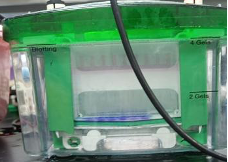
Electrophoresis Tank for WB
Biomedical Research Insights
In biomedical research, Western blotting serves as a fundamental tool for studying protein dynamics. Researchers utilize this technique to:
- Analyze protein expression levels in different cell types
- Investigate cellular signaling pathways
- Examine protein modifications
Clinical Diagnostics and Disease Detection
Western blotting has become instrumental in clinical settings for detecting specific biomarkers. Molecular weight determination helps medical professionals identify protein variations associated with various diseases.
Protein Interaction Studies
Researchers employ Western blotting techniques to map complex protein interactions. This approach allows scientists to:
- Detect protein-protein interactions
- Investigate protein complex formations
- Analyze protein functional relationships
By enabling precise protein expression analysis, Western blotting continues to be an essential method in advancing scientific understanding across multiple research domains.

Gel Casting Mold for WB
Comparison of Western Blotting with Other Techniques
Protein detection techniques play a crucial role in scientific research, with multiple methods offering unique insights into molecular analysis. Western blotting stands out as a powerful approach for protein characterization, but understanding its strengths and limitations requires comparing it with alternative techniques.
ELISA vs. Western Blotting: Detecting Protein Signatures
Researchers frequently compare ELISA and Western blotting for protein detection. While both techniques use antibodies, they differ in critical aspects:
- ELISA provides quantitative protein measurements
- Western blotting offers size and modification information
- ELISA works best for single protein detection
- Western blotting excels in complex protein mixtures
Mass Spectrometry Versus Western Blotting
Mass spectrometry represents another sophisticated protein analysis technique. Gel electrophoresis in Western blotting allows protein separation, while mass spectrometry provides precise molecular weight determination.
| Feature | Western Blotting | Mass Spectrometry |
|---|---|---|
| Sensitivity | Moderate | High |
| Protein Identification | Limited | Comprehensive |
Advantages and Limitations of Western Blotting
Western blotting delivers semi-quantitative protein detection with unique capabilities. Its primary advantages include visualizing protein size, detecting post-translational modifications, and analyzing protein interactions.
- Strengths:
- Specific protein identification
- Molecular weight determination
- Modification detection
- Limitations:
- Not fully quantitative
- Potential for variability
- Time-consuming process
Understanding these nuanced differences helps researchers select the most appropriate protein detection method for their specific experimental requirements.
Case Studies Highlighting Western Blotting
Western blotting has emerged as a powerful technique for protein analysis across multiple research domains. These case studies demonstrate the critical role of protein quantification and sample preparation in advancing scientific understanding.
Research teams worldwide have leveraged Western blotting to unlock insights into complex biological mechanisms. The technique’s versatility allows researchers to investigate protein interactions, detect biomarkers, and explore disease pathogenesis.
Cancer Research Applications
In cancer research, Western blotting has been instrumental in identifying critical protein markers. Researchers utilize precise sample preparation techniques to extract and analyze proteins from tumor tissues, enabling:
- Detection of oncogenic protein expressions
- Mapping signaling pathway alterations
- Evaluating potential therapeutic targets
Infectious Disease Studies
Protein quantification through Western blotting provides crucial information about pathogen-host interactions. Scientists can track immune responses and viral protein expressions with remarkable precision.
| Disease Category | Western Blotting Insights |
|---|---|
| Viral Infections | Viral protein identification |
| Bacterial Infections | Immune response characterization |
| Parasitic Diseases | Pathogen protein expression analysis |
Neurological Disorder Investigations
Neurological research benefits significantly from Western blotting techniques. Protein aggregation studies in conditions like Alzheimer’s and Parkinson’s disease have revealed critical insights into molecular mechanisms of neurodegeneration.
By employing rigorous sample preparation protocols, researchers can detect subtle protein changes that contribute to understanding complex neurological disorders.
Advanced Techniques and Modifications in Western Blotting
The field of protein expression analysis continues to evolve, with researchers developing innovative approaches to enhance Western blot experiment capabilities. These advanced techniques address critical limitations in traditional protein detection methods, offering more sophisticated and precise analytical tools.
Modern Western blotting has transformed protein research through groundbreaking technological developments. Researchers now leverage multiple strategies to improve experimental outcomes and data reliability.
Multiplexing and Fluorescent Western Blotting
Multiplexing represents a significant breakthrough in Western blot experiment methodologies. This technique enables simultaneous detection of multiple proteins on a single membrane, dramatically reducing research time and sample requirements.
- Allows parallel protein expression analysis
- Reduces experimental variability
- Provides comprehensive protein interaction insights
Automated Western Blot Systems
Automation has revolutionized protein expression analysis by introducing standardized, high-throughput approaches. These sophisticated systems minimize human error and enhance experimental reproducibility.
| Automated System Feature | Benefit |
|---|---|
| Consistent reagent application | Improved result reliability |
| Precise incubation times | Reduced experimental variability |
| Digital image documentation | Enhanced data management |
Quantitative Western Blotting
Quantitative approaches in Western blotting now provide unprecedented accuracy in measuring protein expression levels. Advanced detection methods enable researchers to generate more precise and reproducible data.
These cutting-edge modifications continue to push the boundaries of protein research, offering researchers increasingly sophisticated tools for comprehensive molecular analysis.
Conclusion and Future Directions in Western Blotting
Western blotting continues to be a pivotal technique in protein detection and immunoblotting, with remarkable potential for scientific breakthroughs. Researchers are witnessing an exciting era of technological transformation, where advanced methodologies are reshaping our understanding of protein analysis and molecular interactions.
The landscape of protein detection is rapidly evolving, driven by cutting-edge innovations in microfluidic systems and digital immunoassays. These emerging technologies promise increased sensitivity and precision, enabling scientists to explore protein dynamics with unprecedented depth. Sophisticated approaches are expanding the boundaries of immunoblotting, offering more nuanced insights into complex biological mechanisms.
Proteomics research stands at a critical junction, with Western blotting poised to play a crucial role in personalized medicine and diagnostic strategies. Future developments will likely focus on enhancing throughput, improving quantification accuracy, and integrating artificial intelligence algorithms to interpret complex protein interaction networks.
As scientific communities continue pushing technological boundaries, Western blotting remains an indispensable tool. The ongoing quest for more refined protein detection methods will undoubtedly yield groundbreaking discoveries, transforming our understanding of cellular processes and disease mechanisms.
Technological Advancements in Blotting Techniques
Emerging microfluidic platforms and digital immunoassays represent the next frontier in protein analysis. These innovative approaches promise enhanced resolution and sensitivity, potentially revolutionizing how researchers approach protein detection and characterization.
The Future of Western Blotting in Proteomics
Proteomics research is rapidly evolving, with Western blotting positioned to integrate seamlessly with high-throughput technologies. The technique’s adaptability and precision make it an essential component of future molecular diagnostic and research strategies.
References and further readings:
1.Mahmood, T., & Yang, P. C. (2012). Western blot: technique, theory, and application. Protein Expression and Purification, 55(1), 1-10.
2.Bartosch, G., et al. (2004). Common problems and solutions in Western blotting. Journal of Immunological Methods, 290(1–2), 129-134.
3.Wilson, J. L., & Durbin, K. J. (2005). The impact of sample preparation in Western blotting: A guide to avoid common pitfalls. Methods in Molecular Biology, 290, 1-16.
4.Harlow, E., & Lane, D. (2004). Using Antibodies: A Laboratory Manual. Cold Spring Harbor Laboratory Press. (Chapter: Western Blotting Protocols).
5.Shah, S. S., & Bohn, M. M. (2019). Troubleshooting common errors in Western blotting: A comprehensive review of solutions for detecting proteins in electrophoresis and blotting. Journal of Biomedical Science, 26(1), 13-24.
6.Ghosh, R., & Munshi, A. (2018). Practical troubleshooting in Western blotting: Avoiding the most frequent problems and pitfalls. Frontiers in Biology, 13(5), 448-459.
FAQ
What is a Western Blot Experiment?
A Western Blot Experiment is a powerful molecular biology technique used for detecting and analyzing specific proteins in a complex mixture. The process involves separating proteins by gel electrophoresis, transferring them to a membrane, and then using antibodies to identify and quantify target proteins.
What are the key components required for a Western Blot?
The essential components include polyacrylamide gels for protein separation, blotting membranes (such as nitrocellulose or PVDF), primary and secondary antibodies for protein detection, protein samples, transfer buffer, blocking buffer, and detection reagents.
How long does a typical Western Blot experiment take?
A complete Western Blot experiment typically takes 1-2 days, including sample preparation, gel electrophoresis, protein transfer, antibody incubation, and detection steps. The actual time can vary depending on the specific protocol and protein of interest.
What are common problems in Western Blotting?
Common issues include non-specific antibody binding, incomplete protein transfer, high background noise, weak protein signals, and uneven band resolution. These problems can be addressed through careful optimization of blocking conditions, antibody concentrations, and transfer parameters.
How do I improve protein transfer efficiency?
To improve protein transfer, consider adjusting transfer buffer composition, modifying transfer time and voltage, using appropriate membrane types, ensuring even gel-membrane contact, and selecting the right gel percentage for your protein molecular weight.
What applications does Western Blotting have in research?
Western Blotting is crucial in various research fields, including biomedical research, clinical diagnostics, protein expression analysis, disease mechanism studies, drug development, and investigating cellular signaling pathways.
How can I reduce background noise in my Western Blot?
To reduce background noise, use high-quality blocking buffers, optimize antibody dilutions, perform thorough washing steps, use fresh and validated antibodies, and consider using specialized blocking agents like BSA or non-fat dry milk.
What is the difference between primary and secondary antibodies?
Primary antibodies directly recognize and bind to the specific target protein, while secondary antibodies are conjugated with detection molecules (such as fluorescent or enzymatic markers) and bind to the primary antibody, enabling protein visualization and quantification.
Can Western Blotting be used for quantitative protein analysis?
While traditionally semi-quantitative, modern Western Blotting techniques can provide relatively accurate protein quantification when using proper controls, standardized protocols, and advanced imaging systems with densitometry analysis.
What are some advanced Western Blotting techniques?
Advanced techniques include multiplexing (detecting multiple proteins simultaneously), fluorescent Western blotting, automated blot systems, digital immunoassays, and quantitative approaches that improve sensitivity and throughput.
Leo Bios
Hello, I’m Leo Bios. As an assistant lecturer, I teach cellular and
molecular biology to undergraduates at a regional US Midwest university. I started as a research tech in
a biotech startup over a decade ago, working on molecular diagnostic tools. This practical experience
fuels my teaching and writing, keeping me engaged in biology’s evolution.

Leave a Comment
Your email address will not be published. Required fields are marked *