


Secondary antibodies are key to Western blot success. They offer better detection than direct methods. This is because they amplify signals, save costs, and add flexibility to experiments.
Secondary antibodies act as critical detection bridges in immunoblotting. They bind to primary antibodies and carry molecules that help see proteins. This indirect method turns invisible protein-antibody interactions into visible signals.
This method has big technical benefits. It allows for signal amplification because one secondary antibody can bind to many primary antibodies. It also saves money since one secondary antibody can work with many primary antibodies from the same species.
The detection works through molecules attached to secondary antibodies. These molecules create signals through reactions or fluorescence. This makes it possible to analyze proteins in many different research areas.
Key Takeaways
- Secondary antibodies amplify detection signals for enhanced sensitivity
- One secondary antibody works with multiple primary antibodies from the same species
- Reporter molecules conjugated to secondary antibodies enable protein visualization
- Indirect detection provides superior flexibility compared to direct methods
- Cost-effective approach reduces reagent expenses in laboratory workflows
- Signal amplification improves detection of low-abundance proteins
Understanding the Western Blot Technique
Western blotting is a key method that mixes electrophoresis with immunodetection in western blotting for detailed protein study. It helps researchers find specific proteins in complex samples by using antibodies. This method is very accurate and reliable for studying proteins in many fields.
Overview of Western Blotting
“Blotting” means moving biological samples from a gel to a membrane for detection. Towbin and colleagues introduced this technique in 1979. It’s now a common way to analyze proteins.
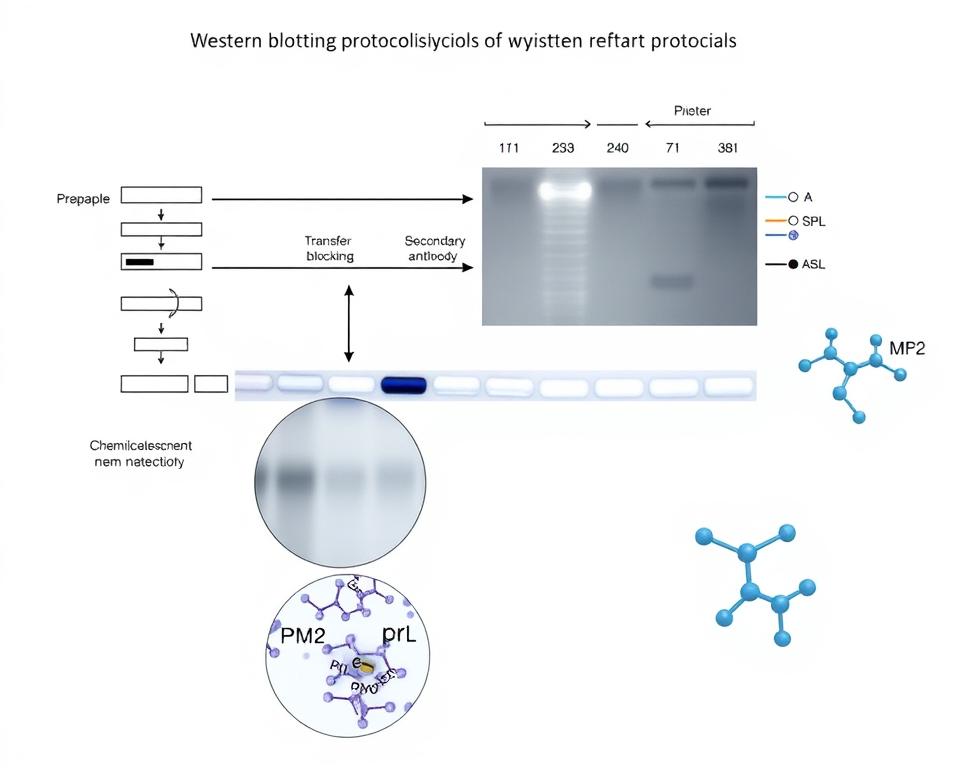
Western blotting has three main steps. First, proteins are separated by size. Then, they are moved to a solid membrane. Finally, immunodetection in western blotting happens through specific antibody binding.
The method’s accuracy comes from how antibodies bind to proteins. This allows for finding specific proteins in mixtures. It’s very useful for research and medical tests, even detecting proteins at very small levels.
Importance of Protein Detection
Protein detection is crucial in many scientific areas. It’s key for understanding cells and diagnosing diseases. Immunodetection in western blotting is very sensitive, making it essential for these tasks.
Changes in protein levels can show disease, drug effects, and cell activities. Researchers use Western blotting to check gene studies and confirm protein findings. It’s a top choice for measuring protein amounts in labs.
Clinical uses include cancer and brain studies. Accurate protein detection helps diagnose diseases early and track treatments. The reliability of immunodetection in western blotting is vital for moving lab findings to medical use.
Main Components of the Process
The first step is gel electrophoresis. Proteins separate by size in a gel matrix. This step helps identify proteins by size.
The second step is transferring proteins to a membrane. This is usually nitrocellulose or PVDF. Good transfer ensures all proteins move well and stay clear.
The final step is choosing a detection system. Immunodetection in western blotting uses antibodies to show signals. You can pick from chemiluminescence, fluorescence, or colorimetric methods based on your needs.
The Role of the Secondary Antibody
Secondary antibodies are key in western blotting. They help detect proteins by binding indirectly. This makes detecting proteins more sensitive and flexible. We use them to find and show proteins in labs.
What is a Secondary Antibody?
A secondary antibody is made to react with primary antibodies from certain animals. It doesn’t directly bind to proteins but to the primary antibodies’ parts.
These antibodies are made by immunizing animals with antibodies from other species. This lets them tell apart antibodies from mice, rabbits, goats, and more. They are very good at finding their target primary antibodies.
Most secondary antibodies are made to carry reporter molecules. These help detect and amplify signals in western blots.
How Secondary Antibodies Function
Secondary antibodies work in two steps to boost signal strength. First, primary antibodies bind to proteins on the membrane.
Then, the HRP conjugated secondary antibody finds and sticks to the primary antibodies. This makes a strong complex that’s good at finding targets and detecting them.
The reporter molecules, like horseradish peroxidase, make the signal stronger. Each secondary antibody can carry many enzymes. This makes the detection much more sensitive than direct methods.
Our western blot protocol shows how this system gives clearer signals than direct methods.
Comparison to Primary Antibodies
Primary and secondary antibodies do different jobs in western blotting. Knowing this helps make experiments better and get better results.
- Target specificity: Primary antibodies find specific proteins, while secondary antibodies find primary antibodies
- Detection capability: Primary antibodies find targets, and secondary antibodies show and make signals stronger
- Versatility: One secondary antibody can find many primary antibodies from the same species
- Cost efficiency: Secondary antibodies save money because they can be used for many targets
Primary antibodies are key for finding specific proteins. Secondary antibodies are for making the detection better and stronger.
Together, primary and secondary antibodies make a strong system. They find proteins well and make the detection even stronger.
Why Use a Secondary Antibody?
Secondary antibodies are key in the western blot detection system because they offer big advantages. They help in getting better results in many research areas. This is why they are the top choice for many scientists.
Using secondary antibodies helps solve big problems in protein research. They give stronger signals, better accuracy, and save money. These benefits make them the best option for most western blotting needs.
Amplification of the Signal
Secondary antibodies greatly boost the signal in your western blot detection system. They bind to primary antibodies, creating a chain reaction. This reaction makes the signal much stronger.
This works because each secondary antibody has many reporter molecules. For example, five secondary antibodies with ten reporter molecules each can amplify the signal by 50 times. This means you can see proteins that would be too low to detect otherwise.
This is especially helpful for scientists working with challenging samples or rare proteins. It lets you use less primary antibody while still getting great results. This saves money and helps you use your primary antibodies more efficiently.
Enhanced Specificity and Sensitivity
Secondary antibodies keep the primary antibodies’ binding specific. Directly attaching reporter molecules to primary antibodies can mess with their ability to bind. This can make the results less accurate.
By using secondary antibodies, the primary antibodies work better. This means you get more reliable results. The western blot detection system becomes more sensitive because the primary antibodies can bind fully.
This sensitivity is crucial for finding proteins in very small amounts in complex samples. It’s essential for studying disease markers and other proteins that are hard to find. This opens up more possibilities for your research.
Cost-Effectiveness in Experimental Design
Secondary antibodies are very cost-effective. They can be used with many primary antibodies from the same host species. This makes planning your experiments easier and cheaper.
They also save you money in the long run. You don’t need to spend on custom conjugation services. Pre-conjugated secondary antibodies are easy to find, saving you time and money. This ensures your experiments are consistent and of high quality.
It’s wise to have a basic set of secondary antibodies. This covers most common host species and detection methods. It helps you do different research projects without spending too much on reagents. The long-term savings make the initial investment worth it.
| Detection Method | Signal Amplification | Cost per Experiment | Flexibility | Sensitivity Level |
|---|---|---|---|---|
| Direct Detection | 1x baseline | High | Limited | Standard |
| Secondary Antibody | 10-100x enhanced | Low | High | Superior |
| Tertiary Systems | 100-1000x maximum | Moderate | Moderate | Maximum |
| Fluorescent Direct | 2-5x moderate | Very High | Limited | Good |
This comparison shows why secondary antibodies are the best choice for western blotting. They offer great performance, cost-effectiveness, and flexibility. This makes them the go-to option for many scientists in today’s labs.
Types of Secondary Antibodies
Secondary antibodies come in many types for different research needs. They help detect proteins and amplify signals in Western blots. Each type has its own benefits for your experiments.
These antibodies are linked to various reporter molecules. You can find them with enzymes, fluorescent dyes, proteins, and biotin. The type you choose affects your results and how well you detect signals.
Host Species Antibodies
Secondary antibodies are classified by their host species. This determines how well they work with your primary antibodies. Common types include goat anti-mouse, goat anti-rabbit, and donkey anti-goat.
The goat anti-mouse secondary antibody is very popular in research. It’s often used because many primary antibodies are made in mice. Make sure the host species matches your primary antibodies to avoid problems.
Other combinations, like donkey anti-goat and rabbit anti-chicken, offer more options for your experiments. Choose hosts that don’t react with your sample proteins or other primary antibodies for better results.
Conjugated vs. Unconjugated Secondary Antibodies
Conjugated secondary antibodies are ready to detect right away. They’re linked to enzymes like HRP and alkaline phosphatase for colorimetric detection. Fluorescent secondary antibodies are great for seeing proteins and work well in multiplex experiments.
Enzyme-linked antibodies amplify signals by converting substrates. HRP gives strong signals with chemiluminescent substrates. Alkaline phosphatase works well with colorimetric substrates and provides stable signals.
Fluorescent secondary antibodies make protein detection easy by showing them directly. They don’t need enzymatic steps but are still very sensitive. You can use different colors for co-localization studies.
Unconjugated antibodies need extra steps but offer flexibility. You can choose your detection method later. This is useful when you’re testing different methods or can’t find conjugated antibodies.
Isotype Variants
Isotype variants target specific parts of antibodies. Anti-IgG (H+L) antibodies work with both heavy and light chains of IgG. Since most primary antibodies are IgG, these are often the best choice.
Fc-specific antibodies are more specific by targeting only the heavy chain. This reduces cross-reactions with other immunoglobulins. Isotype specificity is key when dealing with complex samples.
There are specialized isotype variants for specific needs. Anti-IgM antibodies detect pentameric immunoglobulins in immune studies. Anti-IgA antibodies are for mucosal immunity research. We help you understand the right type for your experiment.
Selecting the Right Secondary Antibody
Choosing the right secondary antibody is key to getting good results in protein detection. We’ll show you how to pick the best one for your Western blot needs. It’s all about matching the antibody to your experiment’s conditions.
The right choice can make your results clear and reliable. Knowing what to look for helps you get consistent results every time.
Factors to Consider
Several important factors affect how well a secondary antibody works in Western blots. Antibody concentration optimization is crucial. You also need to think about the incubation conditions, like temperature and time.
Storage stability is also important for keeping your experiments consistent over time. Here are some key things to consider:
- Antibody titer and working dilution ranges
- Incubation temperature and time requirements
- Buffer compatibility and pH stability
- Storage conditions and shelf life
- Lot-to-lot consistency and validation data
How complex your experiment is also matters. Simple experiments need different antibodies than more complex ones.
Species Reactivity and Compatibility
Choosing the right host species for your secondary antibody is essential. Cross-reactivity in immunoblotting can ruin your results if the secondary antibody binds to the wrong targets.
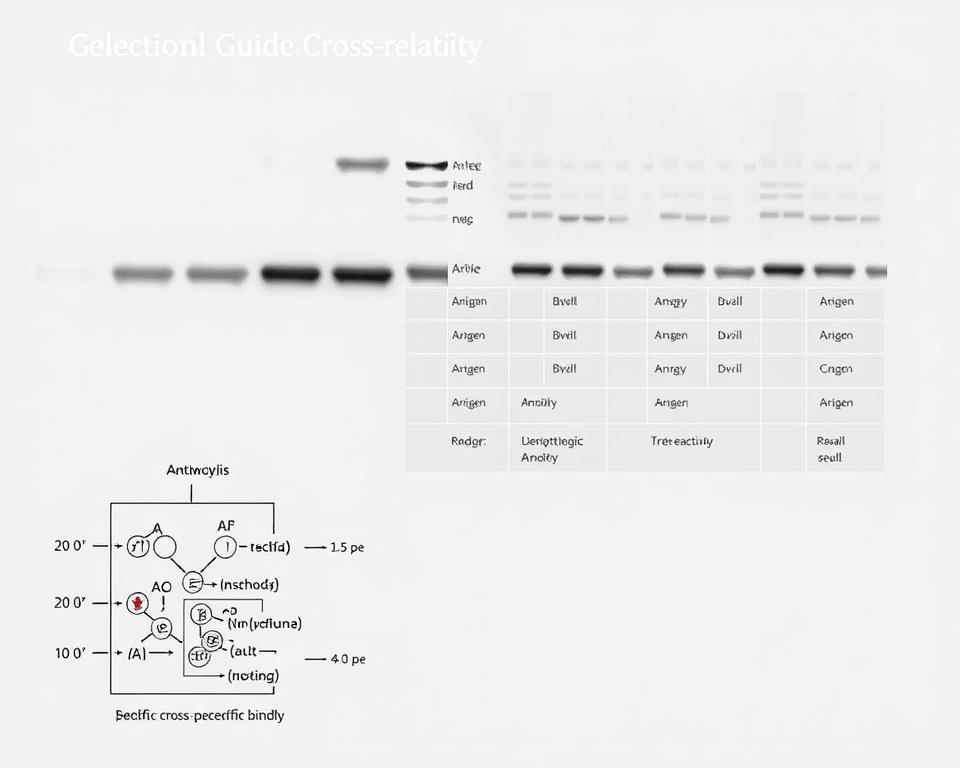
When using multiple primary antibodies, pick secondary antibodies from the same host species. This reduces cross-reactivity issues in multiplex experiments.
Cross-adsorption is important in some cases, especially when dealing with samples that have endogenous immunoglobulins. This process removes antibodies that might bind to your sample’s proteins.
Species compatibility assessment is about checking for potential cross-reactions with your sample’s proteins and other antibodies.
Detection Methods
The detection method you choose affects which secondary antibody you need. Enzyme-based chemiluminescence systems use HRP or AP conjugated antibodies. They are very sensitive and work well for quantitative studies.
Fluorescent detection methods use fluorophore-conjugated secondary antibodies for imaging and analysis. Here are some options to consider:
- Chemiluminescent detection – High sensitivity, cost-effective
- Fluorescent detection – Multiplex capability, quantitative analysis
- Colorimetric detection – Visual results, permanent records
- Near-infrared detection – Low background, multiplexing potential
Your choice of detection system impacts which antibody to use, what equipment you need, and how to analyze your data. We guide you to find the best balance for your research goals.
Application Scenarios for Secondary Antibodies
Modern labs use secondary antibodies to solve big questions in disease research and drug making. These tools help scientists study complex biological processes in many ways. We offer solutions that meet your research goals with the right secondary antibodies.
The Western blot technique is key for finding proteins in samples. It shows how big and much proteins are there. This method is great for studying protein-DNA interactions and where proteins are in cells.
Research in Disease Mechanisms
Advanced protein visualization techniques are crucial in disease research. They show how proteins change in diseases. This helps us understand how diseases get worse.
Secondary antibodies help track biomarkers in diseases. This is important for finding new treatments in cancer and other diseases.
Studying diseases at the molecular level is vital. Secondary antibodies help detect protein changes in diseases. This helps us understand how diseases start and grow.
Validation of Protein Expression
Secondary antibodies are very useful in checking protein levels. They help see if genes are turned off or on. This is important for RNA interference studies.
They also help check if proteins are made right in experiments. Protein visualization techniques show if proteins are made in the right amounts.
Comparing groups in experiments is easier with secondary antibodies. They give consistent results. This helps in making sure experiments can be repeated.
Drug Development and Screening
Secondary antibodies are key in drug making. They help see how well drugs work and where they bind. This is important for testing new treatments.
They are needed for studying how drugs interact with proteins. Secondary antibodies help spot small changes in protein levels after treatment.
They also help track how drugs affect proteins in the body. This method lets us see how drugs work on the right proteins and others.
Secondary antibodies are also used in studying protein interactions and where proteins are in cells. Our solutions help with both detailed and rough analysis. This is for many types of samples. Knowing how to choose the right secondary antibodies is key for better lab work.
Troubleshooting Common Issues
Technical problems in Western blot analysis often come from secondary antibodies. We offer ways to find and fix common issues. This helps you get reliable results in protein detection experiments.
Fixing problems needs a careful method. Look at each part of your experiment. Our knowledge in lab solutions helps you solve these problems.
Poor Signal Detection
Poor signal strength is a big challenge. It can be due to low antibody amounts, bad incubation, or weak detection. First, check your antibody amounts through titration.
Longer incubation times can help with weak signals. Try increasing the time while watching for background. Also, the right temperature can improve antibody binding.
The sensitivity of your detection system is key. Chemiluminescence detection antibodies need the right substrate for best results. You might need a more sensitive method or better imaging equipment.
High Background Noise
High background signals can hide your protein bands. This problem often comes from bad blocking, wrong antibody amounts, or cross-reactivity. Choosing the right blocking buffer is crucial.
Adjusting antibody amounts can help with background. Start with the recommended dilutions and adjust as needed. Cross-reactive antibodies can bind to non-target proteins or surfaces.
Washing your membranes well is important. Use the right wash buffers and wash for a good amount of time. This helps remove unbound antibodies.
Non-specific Binding
Non-specific binding can give you false positives. This means your results might not be accurate. Secondary antibody-only controls can show if the problem is with the secondary antibodies.
Using cross-adsorbed secondary antibodies can help. These antibodies are made to not bind to your sample’s immunoglobulins. This is especially important with tissue or cell samples.
Choosing the right blocking buffer is key. Try different proteins and amounts. Some antibodies work better with certain blockers.
| Issue Type | Primary Causes | Diagnostic Steps | Solutions |
|---|---|---|---|
| Poor Signal | Low antibody concentration, short incubation, weak detection | Titrate antibodies, check protein loading, verify transfer | Increase concentrations, extend incubation, enhance detection |
| High Background | Insufficient blocking, excess antibodies, cross-reactivity | Run secondary-only control, check blocking efficiency | Optimize blocking, reduce antibody concentrations, improve washing |
| Non-specific Binding | Poor antibody specificity, inadequate cross-adsorption | Use negative controls, verify antibody validation data | Select cross-adsorbed antibodies, optimize blocking conditions |
| Uneven Signals | Transfer problems, membrane handling, antibody distribution | Check transfer efficiency, examine membrane integrity | Optimize transfer conditions, ensure even antibody coverage |
Also, think about the type of membrane you use and how well you transfer your samples. Different membranes react differently with your antibodies and samples. Make sure your detection system works with your antibodies and substrates.
We offer practical solutions to improve your results. We help you solve problems and get consistent results through careful analysis and targeted fixes.
Case Studies Highlighting Secondary Antibody Use
Laboratory case studies show how choosing the right secondary antibodies changes research results. They come from top research places and show how good secondary antibodies help. These examples highlight how crucial they are for scientific progress.
Successful Protein Identification Examples
At Stanford University, scientists found proteins at very low levels. They used an antibody incubation protocol with HRP-conjugated antibodies. The dilutions were from 1:20,000 to 1:100,000.
This method reached detection levels in the nanogram range. The team incubated primary antibodies overnight at 4°C. Then, they applied secondary antibodies for two hours at room temperature. This antibody incubation protocol let them spot proteins that were hard to find before.
At Johns Hopkins, researchers found cancer biomarkers using fluorescent secondary antibodies. They could look at three proteins at once. This saved 70% of samples while keeping accuracy high.
Comparative Analysis of Signal Strength
Studies on signal amplification show big differences between secondary antibodies. We looked at data from many labs. They compared HRP, alkaline phosphatase, and fluorescent conjugates under the same conditions.
| Secondary Antibody Type | Detection Method | Signal Strength | Background Noise | Detection Limit |
|---|---|---|---|---|
| HRP-conjugated | Chemiluminescence | High | Low | 0.1 ng |
| AP-conjugated | Colorimetric | Moderate | Moderate | 1.0 ng |
| Fluorescent | Fluorescence | Very High | Very Low | 0.05 ng |
| Biotin-conjugated | Streptavidin-HRP | Very High | Low | 0.02 ng |
Studies on dot blots show better detection with the right antibody titration. Teams using careful dilution got better results. Finding the best conditions usually takes 2-3 tries.
HRP conjugates with ECL substrates are very sensitive. Dilutions between 1:20,000 and 1:100,000 work well when optimized.
Impact on Research Outcomes
Secondary antibodies are key in drug development. Companies say optimized protocols cut down false negatives by 85%. This leads to better drug screening and saves money.
Research on diseases like Alzheimer’s gets a big boost. Teams found tau protein in brain samples with special antibody incubation protocols. This let them see early signs of the disease.
Studies on biomarkers show great success with optimized antibodies. Labs say they’re 95% accurate with the right protocols. This helps doctors make better treatment plans.
Labs that use optimized antibodies finish experiments 40% faster. They don’t need to repeat tests as much. This saves time and money. You can do the same by optimizing your research.
Getting published is easier when you use the right antibodies. Journals want to see detailed antibody incubation protocols. Studies with good methods get accepted more often. This shows how important it is to do research well.
Future Trends in Secondary Antibody Use
The world of secondary antibodies is changing fast. New technologies are making immunodetection in western blotting better. These changes will change how we study proteins and detect them.
New technologies are changing labs everywhere. Soon, you’ll see better detection, faster experiments, and more detailed analysis.
Advances in Antibody Technology
Modern antibody engineering is making big leaps. We’re creating smaller antibodies that get into tissues better. They also don’t get in the way as much when they bind.
Stable conjugates are another big step. These antibodies stay strong even in tough conditions. They last longer and work well in many labs.
New antibodies are also less likely to react with the wrong things. This is thanks to careful engineering. It makes your results more reliable and accurate.
Development of New Detection Strategies
Fluorescent blotting is changing immunodetection in western blotting. It lets you see many proteins at once on one blot. This is a big deal for research.
Using fluorescent antibodies means no more old-school detection methods. You can look at two proteins at once. This makes your work faster and more detailed.
Near-infrared fluorescent antibodies are taking detection even further. They give clearer signals and let you see deeper into tissues. Digital systems are replacing old film methods, giving you better data.
Implications for Biomedical Research
New immunodetection in western blotting tech is speeding up drug discovery. It’s making diagnostics more accurate and sensitive. This is a big win for medicine.
Multiplex detection is opening up new research areas. It lets you study proteins in detail. You can understand complex interactions and pathways better than ever.
Future work will focus on making things easier and more automated. We’re working hard to improve your research tools. The mix of AI and antibody tech will bring even more advanced methods soon.
Summary and Key Takeaways
Secondary antibodies are key in Western blot protocols. They turn basic detection systems into powerful tools. These tools offer high sensitivity and specificity.
Critical Role in Protein Analysis
Secondary antibodies boost signal strength without harming primary antibodies. Success in experiments comes from knowing that no single blocking agent works for all. Each antibody-antigen pair needs its own blocking buffer test for the best results.
Optimization Strategies
Choosing the right secondary antibody is crucial. It depends on the primary antibody’s host species or any tags. Always test secondary antibodies alone to check for background issues. Cross-adsorbed antibodies work best with complex samples.
Best Practice Implementation
For successful Western blot, pay attention to storage and document optimization steps. Do titration experiments to find the best antibody concentration. Keep incubation conditions the same and check detection system compatibility for consistent results.
We help you achieve your protein analysis goals. Our guidance on secondary antibody selection and optimization protocols is reliable.
References and further readings:
1.Kurien BT, Scofield RH. Western blotting. Methods. 2006;38(4):283-293. doi:10.1016/j.ymeth.2005.11.007.
https://www.sciencedirect.com/science/article/pii/S1046202306000065?via%3Dihub2.Tiselius A. Electrophoresis of serum globulin: electrophoretic analysis of normal and immune sera. Biochem J. 1937;31(9):1464-1477.
https://portlandpress.com/biochemj/article-abstract/31/9/1464/29633/Electrophoresis-of-serum-globulinElectrophoretic?redirectedFrom=fulltext3.Renart J, Reiser J, Stark GR. Transfer of proteins from gels to diazobenzyloxymethyl-paper and detection with antisera: a method for studying antibody specificity and antigen structure. Proc Natl Acad Sci U S A. 1979;76(7):3116-3120.
https://www.pnas.org/doi/abs/10.1073/pnas.76.7.3116
4.Mahmood T. Protein detection and quantification by western blotting. Methods Mol Biol. 2015;1312:391-405. doi:10.1007/978-1-4939-2694-7_25.
https://link.springer.com/protocol/10.1007/978-1-4939-2694-7_25
FAQ
Why is a secondary antibody necessary in Western blot instead of using direct detection?
Secondary antibodies amplify the signal by binding to primary antibodies multiple times. Each secondary antibody carries many reporter molecules like HRP. This boosts the signal, making it easier to spot low-abundance proteins.
Also, secondary antibodies don’t mess up the primary antibodies’ work. This is because the way they’re made doesn’t affect where they bind to proteins.
What is the difference between HRP conjugated secondary antibody and fluorescent secondary antibodies?
HRP conjugated secondary antibodies use light signals from chemiluminescence. They’re very sensitive and affordable for detecting one protein at a time.
On the other hand, fluorescent secondary antibodies let you see many proteins at once. They’re better for counting proteins and don’t need any extra chemicals to work.
How do I choose between goat anti-mouse secondary antibody and other host species combinations?
Most research uses mouse antibodies, so goat anti-mouse is often the best choice. Pick a secondary antibody that matches your primary antibody’s host species. This helps avoid unwanted reactions.
Be careful if your samples have proteins from different species. This can affect how well your antibodies work.
What causes high background noise in immunodetection and how can I resolve it?
High background noise often comes from not blocking enough, using too much antibody, or antibodies binding to the wrong places. To fix this, improve your blocking buffer and find the right amount of antibodies to use.
Use antibodies that are less likely to bind to the wrong places. Also, test your antibodies alone to see where the background comes from.
How does the western blot detection system affect secondary antibody performance?
The detection system you use can change how well you see signals. Chemiluminescence is very sensitive but has its limits. Fluorescent detection is better for counting proteins and can see many at once.
Digital systems are even better for counting and offer clearer results than film.
What is the optimal antibody incubation protocol for secondary antibodies?
Start by diluting your secondary antibodies 1:20,000 to 1:100,000 in blocking buffer. Then, incubate them for 1-2 hours at room temperature or overnight at 4°C.
Do some tests to find the best concentration for your setup. Make sure to wash well between steps to keep the signal clear.
How can I prevent cross-reactivity in immunoblotting when using multiple antibodies?
To avoid cross-reactivity, choose secondary antibodies that are safe for your experiment. Use antibodies from different species for multiple targets. Always test your antibodies alone to check for unwanted binding.
Think about what proteins are naturally in your samples when picking antibodies.
What are the advantages of using protein visualization techniques with secondary antibodies?
Using secondary antibodies makes it easier to see proteins, even in small amounts. They work well with many primary antibodies from the same species. This is cheaper and boosts the signal while keeping the primary antibodies specific.
How do chemiluminescence detection antibodies compare to other detection methods?
Chemiluminescence antibodies are very sensitive and work well with many Western blot setups. They give clear signals but have limits. Fluorescent detection is better for counting and seeing many proteins at once.
Colorimetric detection is good for quick results but isn’t as sensitive.
What factors should I consider when optimizing secondary antibody concentrations?
Start by following the manufacturer’s guidelines for secondary antibody dilution. Then, adjust based on how strong the signal is and how much background you see. Think about how sensitive your detection system is and how much of your target protein you have.
Use dot blots to find the best dilution before doing a full Western blot. Keep track of what works best for consistent results.
Leo Bios
Hello, I’m Leo Bios. As an assistant lecturer, I teach cellular and
molecular biology to undergraduates at a regional US Midwest university. I started as a research tech in
a biotech startup over a decade ago, working on molecular diagnostic tools. This practical experience
fuels my teaching and writing, keeping me engaged in biology’s evolution.
Leave a Comment
Your email address will not be published. Required fields are marked *