SKU: WR4455 Categories: ,

U-Blot® ATG16L1 Rabbit mAb

Price range: $268.00 through $328.00

SKU: WR4455-50
Enter the quantity you would like, or drag the panel to find the quantity and price that best for you
Bulk QuoteAuthorize OEM & ODM

Product details

Background:The protein encoded by this gene is part of a large protein complex that is necessary for autophagy, the major process by which intracellular components are targeted to lysosomes for degradation. Defects in this gene are a cause of susceptibility to inflammatory bowel disease type 10 (IBD10). Several transcript variants encoding different isoforms have been found for this gene.[provided by RefSeq, Jun 2010],

Specifications

Size50μL/100μL
TargetATG16L1
ReactivityHuman, Mouse, Rat
ApplicationsWB, IHC, IF, ELISA
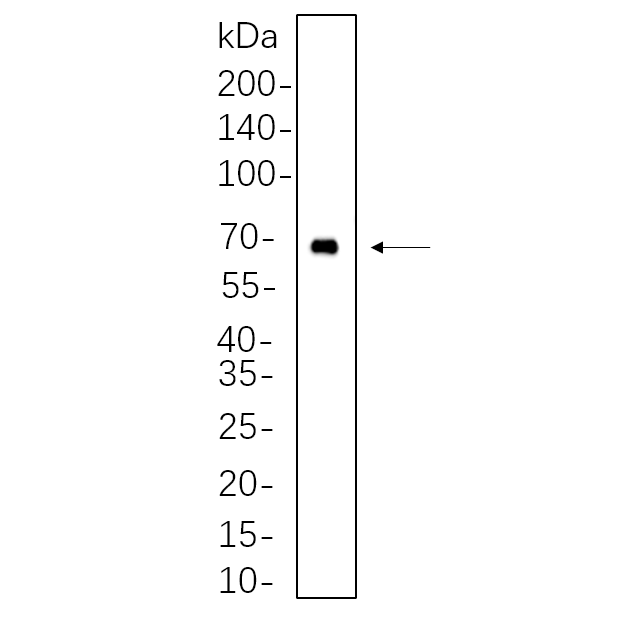
MW(Calculated)68kD
MW(Observed)68kD
Host SpeciesRabbit
IsotypeIgG,Kappa
Conjugate/ModificationUnmodified
Recommended Dilution RatioIHC 1:1000-1:4000; WB 1:2000-1:10000; IF 1:200-1:1000; ELISA 1:5000-1:20000; / Note: For IHC, we suggest antigen retrieval with TE buffer pH 9.0 (Cat#WT1004)
FormulationPBS, 50% glycerol, 0.05% Proclin 300, 0.05%BSA
PurificationRecombinant Antibody expressed in animal component-free (ACF) media, purified via Protein A affinity chromatography.
Storage-15°C to -25°C/1 year(Do not lower than -25°C)
Concentration
ClonalityMonoclonal
Clone NumberRM0690R
ImmunogenThe specific immunogen used to produce this antibody is proprietary information.
SpecificityEndogenous
Gene NameATG16L1
Protein NameAutophagy-related protein 16-1
Other NameATG16L1; / APG16L; / Autophagy-related protein 16-1; / APG16-like 1
SpeciesHuman
Gene ID695
UniprotQ676U5,
Species.1Mouse
Gene ID.1
Uniprot.1Q8C0J2
Species.2
Gene ID.2
Uniprot.2
Cellular LocalizationCytoplasm
Tissue ExpressionPredominantly expressed in B-lymphocytes.
Signaling_pathwayOrganismal Systems >> Immune system >> Platelet activation;Organismal Systems >> Immune system >> B cell receptor signaling pathway;Organismal Systems >> Immune system >> Fc epsilon RI signaling pathway;Organismal Systems >> Development and regeneration >> Osteoclast differentiation;Human Diseases >> Immune disease >> Primary immunodeficiency;Environmental Information Processing >> Signal transduction >> NF-kappa B signaling pathway
Research Areas>>NF-kappa B signaling pathway; / >>Osteoclast differentiation; / >>Platelet activation; / >>B cell receptor signaling pathway; / >>Fc epsilon RI signaling pathway; / >>Epstein-Barr virus infection; / >>Primary immunodeficiency
FunctionDisease:Genetic variations in ATG16L1 are associated with susceptibility to inflammatory bowel disease type 10 (IBD10) [MIM:611081]. IBD is characterized by a chronic relapsing intestinal inflammation. IBD is subdivided into Crohn disease (CD) and ulcerative colitis phenotypes. IBD10 individuals show the phenotype characteristic to CD. It may involve any part of the gastrointestinal tract, but most frequently the terminal ileum and colon. CD is commonly classified as autoimmune disease.,Function:Plays an essential role in autophagy.,sequence Caution:Wrong choice of CDS.,similarity:Belongs to the WD repeat ATG16 family.,similarity:Contains 7 WD repeats.,subcellular location:Localized to preautophagosomal structure (PAS) where it is involved in the membrane targeting of ATG5.,subunit:Homooligomer. Interacts with ATG5. Part of either the minor and major complexes respectively composed of 4 sets of ATG12-ATG5 and ATG16L1 (400 kDa) or 8 sets of ATG12-ATG5 and ATG16L1 (800 kDa).,
Please login to post questions

Back to Top
Product has been added to your cart
