SKU: WP12944 Categories: ,

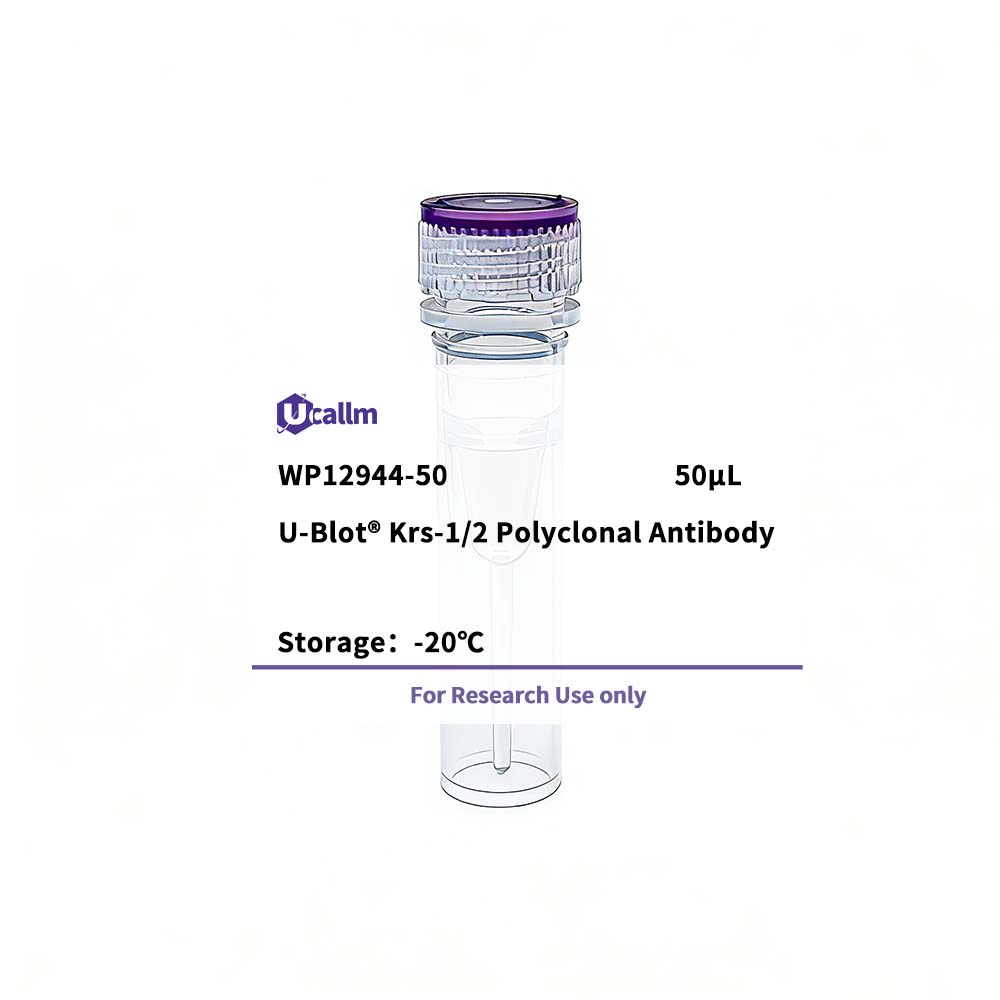
Krs-1/2 Polyclonal Antibody

Price range: $268.00 through $328.00

SKU: WP12944-100
Enter the quantity you would like, or drag the panel to find the quantity and price that best for you
Bulk QuoteAuthorize OEM & ODM

Product details

Background:

serine/threonine kinase 3(STK3) Homo sapiens This gene encodes a serine/threonine protein kinase activated by proapoptotic molecules indicating the encoded protein functions as a growth suppressor. Cleavage of the protein product by caspase removes the inhibitory C-terminal portion. The N-terminal portion is transported to the nucleus where it homodimerizes to form the active kinase which promotes the condensation of chromatin during apoptosis. Multiple transcript variants encoding different isoforms have been found for this gene. [provided by RefSeq, Jan 2012],

Specifications

Size50μL/100μL
TargetKrs-1/2
ReactivityHuman, Mouse
ApplicationsWB, IHC, IF, ELISA
MW(Calculated)
MW(Observed)56kD
Host SpeciesRabbit
IsotypeIgG
Conjugate/ModificationUnmodified
Recommended Dilution RatioWB 1:500-1:2000; IHC 1:100-1:300; ELISA 1:5000; IF 1:50-200 / Note: For IHC, we suggest antigen retrieval with TE buffer pH 9.0 (Cat#WT1004)
FormulationLiquid in PBS containing 50% glycerol, 0.5% BSA and 0.02% sodium azide.
PurificationThe antibody was affinity-purified from rabbit antiserum by affinity-chromatography using epitope-specific immunogen.
Storage-15°C to -25°C/1 year(Do not lower than -25°C)
Concentration1 mg/ml
ClonalityPolyclonal
Clone Number
ImmunogenThe antiserum was produced against synthesized peptide derived from human Mst1/2. AA range:149-198
SpecificityKrs-1/2 Polyclonal Antibody detects endogenous levels of Krs-1/2 protein.
Gene NameSTK3/STK4
Protein NameSerine/threonine-protein kinase 3/4
Other NameSTK3; / KRS1; / MST2; / Serine/threonine-protein kinase 3; / Mammalian STE20-like protein kinase 2; / MST-2; / STE20-like kinase MST2; / Serine/threonine-protein kinase Krs-1; / STK4; / KRS2; / MST1; / Serine/threonine-protein kinase 4; / Mammalian STE20-like prot
SpeciesHuman
Gene ID6788;6789
UniprotQ13188;Q13043,
Species.1Mouse
Gene ID.156274;58231
Uniprot.1
Species.2
Gene ID.2
Uniprot.2
Cellular LocalizationCytoplasm . Nucleus . The caspase-cleaved form cycles between nucleus and cytoplasm (PubMed:19525978, PubMed:11278283). Phosphorylation at Thr-117 leads to inhibition of nuclear translocation (PubMed:19525978). .
Tissue ExpressionExpressed at high levels in adult kidney, skeletal and placenta tissues and at very low levels in adult heart, lung and brain tissues.
Signaling_pathwayHuman Diseases >> Cancer: overview >> Pathways in cancer;Human Diseases >> Cancer: specific types >> Non-small cell lung cancer;Environmental Information Processing >> Signal transduction >> MAPK signaling pathway;Environmental Information Processing >> Signal transduction >> Ras signaling pathway;Environmental Information Processing >> Signal transduction >> Hippo signaling pathway;Environmental Information Processing >> Signal transduction >> Hippo signaling pathway - multiple species;Environmental Information Processing >> Signal transduction >> FoxO signaling pathway
Research Areas>>MAPK signaling pathway; / >>Hippo signaling pathway; / >>Hippo signaling pathway - multiple species
FunctionCatalytic activity:ATP + a protein = ADP + a phosphoprotein.,cofactor:Magnesium.,enzyme regulation:Inhibited by the C-terminal non-catalytic region. Activated by caspase-cleavage. Full activation also requires homodimerization and autophosphorylation of Thr-180, which are inhibited by the proto-oncogene product RAF1.,Function:Stress-activated, pro-apoptotic kinase which, following caspase-cleavage, enters the nucleus and induces chromatin condensation followed by internucleosomal DNA fragmentation. Phosphorylates NKX2-1 (By similarity). Phosphorylates and activates LATS1 and LATS2.,similarity:Belongs to the protein kinase superfamily. STE Ser/Thr protein kinase family. STE20 subfamily.,similarity:Contains 1 protein kinase domain.,similarity:Contains 1 SARAH domain.,subcellular location:The caspase-cleaved form cycles between nucleus and cytoplasm.,subunit:Homodimer; mediated via the coiled-coil region. Interacts with NORE1, which inhibits autoactivation (By similarity). Interacts with and stabilizes SAV1. Interacts with RAF1, which prevents dimerization and phosphorylation. Interacts with RASSF1, which leads to enzyme activation.,tissue specificity:Expressed at high levels in adult kidney, skeletal and placenta tissues and at very low levels in adult heart, lung and brain tissues.,
Please login to post questions
Back to Top
Product has been added to your cart

